Three Dreams and A Dragon

When I was thirteen, I bought a small, blue, canvas-bound book whose title, scrawled in loopy silver script, read, “The Interpretation of Dreams.” I purchased it because every morning, I awoke with vivid memories of three, sometimes four, dreams. About half of them were nightmares, but they didn’t trouble me as much as what I called the Sagas. In those dreams, I lived entire lives, and when I woke up and realized that none of it was real, the resulting devastation was almost as intense as if I just lost actual friends, a husband, children. I hoped that I would find answers about what the Sagas meant and achieve peace by way of the knowledge.

I never found my answers; when I started taking anti-depressants at age fourteen, the Sagas disappeared, so I abandoned my research. However, the nightmares began to run rampant.

Lately, my nightmares have been especially painful. I have three that take turns playing in my nocturnal theater. First, I dream that fierce predators escape from the zoo, lurking the city’s streets, lying in wait for unsuspecting humans to cross their path. Unfortunately, I’m the only one who knows this, so it falls to me to protect my husband and sister even though I don’t have a single weapon.

Next up, I awake on a dark beach. I lay on the rough sand, utterly confused by my surroundings. Then a pair of hands reach down to help me up. I realize too late that they belong to my rapist. Raising a hand to caress my cheek, he says, “We’re the last people on earth. It’s just us. Now we can be together forever.” It’s then that I notice I’m wearing my wedding dress.

The worst dream starts before I even fall asleep. As I drift, memories of the words of my last Lower School Director and the Head of School echo in my head…

“Your students are bored.”

“Their parents lack confidence in you.”

“Maybe your personality is the issue. Go observe the Spanish teacher. Try to be like her.”

“You lack presence in the classroom.”

“Have you considered being a librarian? Then you won’t work with children every day, and you can be around those books you love so much.”

“You’re too academic.”

“Try not to look so frail. Stop hunching over your cane.”

“Are you really teaching if the kids aren’t learning? ”

“Fifth grade is an important year, and we need a teacher so fantastic that families don’t even think of transferring to another school for sixth grade. There are five families thinking of leaving – you’re not a strong enough teacher.”

“I’ve been disappointed in you from day one.”

Then, when sleep finally comes, I am teaching in a classroom with glass walls. I don’t have a lesson plan, and when I see the Lower School Director and the Head of School watching me, I panic, making one stupid mistake after another, knowing each is a nail in my coffin. The dream fades when memory wipes away the fear and reminds me that it’s over now. I survived being kicked to the curb, and – awful as it was to end my career on a low note – they can’t hurt me anymore.

I don’t need the book to pick up the themes these dreams share; in each one, I am caught off guard and helpless. That is the essence of ALS. No one is prepared for the diagnosis (most cases can’t be tied to a family history, and lifestyle seems completely irrelevant). To make matters worse, the diagnosis comes with a decree of helplessness since there isn’t a thing you can do to fight back. I’m guessing that I am reliving the trauma of the diagnosis, but I don’t think it has to continue.

I recently realized that I am not helpless, not by a long shot. How many pieces have I written detailing my commitment to my range of motion exercises, my eagerness to participate in drug trials 135164, my openness to new medications and protocols 136165 to manage my symptoms? I use the cough assist 137166 to keep my lungs strong, my feeding tube to maintain proper nutrition and hydration, and my tobii to prepare for when I lose my ability to speak. I am not sitting on the sidelines watching this monster consume me. I am fighting the dragon with a small dagger, slashing and slicing bit by bit until I bleed it dry. From now on, I will hold this gruesome, glorious image in my mind as I fall asleep. Maybe then I’ll dream of slaying the beast.


Drug Trial FOMO

I have a serious case of drug trial FOMO (fear of missing out). I just completed my year-long Tirasemtiv drug trial. I don’t know whether I was on the placebo or active drug. However, I have been invited to join the open-label extension of the clinical trial. That would mean I definitely would have an active dose. Meanwhile, the company that created Tirasemtiv is applying for FDA approval at this very moment. I take all of this information to mean that the medication worked: it preserved strength in the diaphragm, preventing a decline in lung function. In that case, being in the open-label trial is a great opportunity because I will have the drug immediately and keep my lungs from deteriorating.

There is a complication, though. If I join the open-label extension, I will take Tirasemtiv for the rest of my life as a way to research long-term safety of the medication. The open-label extension also requires that I not participate in any other trials. There is a trial coming up in April that I have been excited about, but is it promising enough to give up Tirasemtiv? It would help if I knew how well Tirasemtiv works, but I don’t think that is clear yet, even to the research team. I do know that throughout the study, my lung function did not decline at all. So is Tirasemtiv the safe bet?

Reading the news, it seems that possible cures are being found more and more quickly. Tirasemtiv is a treatment, not a cure. Let’s hop back to the experiment I mentioned that will take place in April. That one might be a cure. How can I turn my back on that? It seems like if I play it safe, I could be excluding myself from something miraculous. On the other hand, if the drug trial in April fails, I will have given up lung protection for nothing.

The original plan was to protect my lungs at all costs no matter the collateral damage, and that way, when the cure comes, my vital functions will be strong enough for me to properly heal. And what is this collateral damage? It is pain. For the past year, I have chosen pain in order to be in this trial. Being on Tirasemtiv means I cannot safely take Zanaflex, the medication that completely erases my spasms and muscle cramps. Instead, I am on a cocktail of a narcotic (Vicodin), a controlled substance anxiety medication called Clonazepam, and the muscle relaxer Baclofen. Evan also massages Bengay all over my limbs when my cramps get bad. Plus, I have a sizeable stash of medical marijuana (60% CBD) that is also working to loosen my joints and muscles. That is the price of my involvement in the study, and I will continue to pay it if I join open-label.

Just like the structure of this narrative has spiraled into dizzying circles, my thoughts are a tornado. It hops throughout my imagination, stirring up awful and wonderful scenarios. It rips through my sleep, and there is no seller with Aunty Em waiting to make it all better. I’m Dorothy out in the storm dreaming of Oz with no idea how to get there.

wizard-2-copy

How To Pee From A Sling With Dignity

Immediately upon being diagnosed with ALS, I heard from doctors, support groups, books, and websites that this disease will steal my dignity. I wanted to be on guard against this, but there was a problem: I didn’t have a clear understanding of what dignity means. It was always just a collage of images: Dame Judi Dench’s face, a smattering red shame, and a slug trail across the canvas indicating where self-respect left the building. Only when I was in danger of losing my dignity did I feel it running through me.

The night I learned about dignity started with horrible muscle spasms in my limbs. Fresh out of marijuana, I had to fall back on Vicodin, which is less effective and leaves me unable to move because my balance suffers so greatly. I was only a few hours into my deep narcotic sleep when I woke up with a serious problem: a painfully full bladder.

“Evan,” I whimpered to my sleeping husband. “I have to pee really bad!”

“I’ll get the walker,” he mumbled, easing out of bed.

“I can’t stand up for the transfer to the commode. The vicodin gave me noodle legs.”  I tried to keep my voice steady, but I was afraid that if I didn’t get to the commode fast enough, I would have an accident. It had happened a few times at the beginning of ALS. This was before I started a medicine that silenced the fried nerves tricking my poor bladder into letting go.

Evan paused, considering. “We have to use the Hoyer lift,” he concluded. “It’s our only option.”

I wiggled to help Evan put the Hoyer lift sling underneath me. Normally, it would wrap around my legs as well and hold me in the fetal position while Evan used the lift to raise me off the bed and put me in the wheelchair. However, now that I needed to land on the commode, my pants had to come off.

For the record, hanging pantsless in mid-air in one’s bedroom is not nearly as fun as it sounds, especially when abrasive canvas ropes curl a person so her legs are smashing a full bladder.

“Hurry,” I squeaked from inside the sling, trying hard not to panic.

“I’m lowering you over the commode now.”

Except when I landed on the commode, I was on my back. The commode is narrow and shallow. It does not tilt like my wheelchair to catch me as I descend. Evan immediately raised me up, promising, “I’ll try again. We’ll figure it out.”

At this point, the Vicodin had me thinking I was becoming a chimpanzee baby in a swinging leaf-cradle. I was not really in a place to strategize, and I silently thanked god for Evan.

However, one more try, and it was clear I would not be landing on the commode. I started crying. Between the way the Hoyer irritated my bare legs and my burgeoning belief that I would never be able to pee again (courtesy of the Vicodin), I was losing it.

“I think,” Evan began, then paused just long enough that I knew I wouldn’t like what he said next. He started again: “I’m going to hold the bucket from the commode under you; you’ll have to pee like that.”

By then, I was sobbing. “I can’t,” I cried. “It’s too humiliating.”

“It’ll be fine,” he soothed. “I swear this will work out just fine.”

As he said these last words, I felt the bucket press against the back of my thighs. I cried harder, the pain in my bladder sharpening.

“You can do this,” Evan encouraged me gently. “I’m right here.”

Choking on the mucus and tears of my embarrassment, I finally let my bladder go, mostly because I could not control it anymore. My hair clung to my sticky face, tangling in my lashes, and I looked for patterns in the textured ceiling to get my mind away from this horror. I couldn’t escape my feelings, though. Something vital around my heart fractured.

“That’s my dignity,” I thought, imagining I could see it floating away.

And then…

“You’re doing so well, honey,” Evan said, full of warmth and pride, all because I was peeing into the bucket he held.

The sound of his voice arrested the pieces in their ascent.

“Everything’s going well. There are no spills. I’m so proud of you.”

The pieces hovered and, in the unhurried way of feathers, drifted back down to me.

Then it was over. Evan removed the bucket and put it back in the commode. He put his face by mine, his hands brushing my hair and tears from my cheek, then kissed my forehead and said, “It’s all over, and you did so well. Do you feel better?”

“Yeah,” I replied softly, my breathing evening out.

Evan used the lift to settle me back in bed. He pulled up my pants and tucked me in. After the rough sling, my sheets felt luxurious. As I fell asleep, my thoughts returned to dignity, and I finally saw it clearly. Now I know how to use it.

Here’s how to pee from a sling (or do any other wacky thing your heart desires) with dignity :

  1. Know the nature of dignity: Understand that dignity is a fine gold filament threaded through the spine and pulled taut so a person can stand straight.
  2. Surround yourself with people who value your dignity: Your sense of dignity can be delicate. It has to be nurtured.
  3. Have confidence: With the right attitude and a solid friend, you can get away with almost anything. Just hold your head up and think of running water.

Writing Through It

Ever since Donald Trump won the election, I am a stranger in a strange land. For our next leader, my country chose a man who personifies rape culture. My PTSD from when I was sexually assaulted is already severe because of him. Listening to him for the next four years and knowing he has power over me will make it worse. Plus, Trump wants to slash the health care legislation that allows me to receive wonderful treatment. Without my current insurance, my medical expenses are $200,000 per year. Things could get really bad. My sister has already offered to sell a kidney and her eggs if I lose my coverage.

I hang onto my sanity by writing through the madness. I now have the privilege of writing regularly for The Huffington Post and am currently composing an essay on Portland’s post-election protests and riots. Working on this piece has been an emotional process. It forces me to sort through my heartbreak. It challenges me to experience the election and protests in a way that aligns with one of my core values: choose hope over fear.

Fear’s long, dark fingers are already trailing down my back, though. They tug at me persistently. Giving in would be so easy, it would almost be a relief. But then I think back to that stream, the one that carries my emotions like leaves. There are many leaves in the stream. I picked up fear, but I can put it back in the water and watch it drift away. Maybe this is how I’ll choose hope: by opening my fists and letting everything else go.

“All your darkest sorrows, did you ever just give them back?” – Stevie Nicks, “Has Anyone Ever Written Anything for You?”


Fortune’s Fool

When I was sixteen, a fortune teller at a fair predicted I would meet and fall in love with a man who would physically take care of me. At the time, I didn’t understand what she could possibly mean. Would I rely on my husband for money? I was hungry for independence and therefore a bit insulted, but most of all, I was bewildered. I needed more time with the fortune teller in her enchanting red silk tent, but she looked pointedly at her watch, then tapped the cash tray. My empty wallet made me unwelcome.

When I asked about the man I would marry at the beginning of our session, I did not imagine the ten minutes I paid for would pass so quickly and end so mysteriously. I wondered about her words for more than a decade, right up until my ALS diagnosis twelve years later. That day, I finally got the answer I sought. Doors slammed in my face. All around, clock needles spun backward. My end crept forward in every shadow.

Now, I rely on Evan to bathe, feed, and dress me, to keep me steady when I use my walker in the bathroom, even to wipe me after I use the toilet. He holds all the crumbling pieces of my body tight in his hands, as though trying to keep them safe until the miracle pill that can put me back together again finally arrives. My marriage looks nothing like it did when we were twenty-one or twenty-five, or even last year. Playtime is over, and we struggle daily to survive.

However, I realized as Evan delivered medication into my body via my brand new feeding tube, that what really matters remains unbroken. Even after all we’ve lost, he still loves me, and I will always love him. That knowledge is the bedrock of my existence, and it has yet to crack. Together, we chase happiness through a tangle of feed lines and IVs, not ready to surrender to how we live now. Side by side, with white knuckles and bloody nails, we crawl forward.

Benvolio: Romeo, away, be gone! Stand not amaz’d, the Prince will doom thee death if thou art taken. Hence be gone, away!

Romeo: O, I am fortune’s fool!

Romeo And Juliet Act 3, scene 1, 132–136

A Wind in the Door

Only two more days until my Tobii Dynavox comes. I cannot wrap my head around this. I’m getting back the ability to text and talk on the phone. I will be able to write emails and blog posts at a more normal pace (right now, my fingers are a total mess, so I type like a snail).

Change is in the air, a wind is in the door. My voice is slipping away, and technology to replace it is stepping in. The arrival of my Tobii Dynavox will be an emotional time; I’m scared I will cry.


“I wish human beings couldn’t have feelings. I am having feelings. They hurt.”
― Madeleine L’Engle, A Wind in the Door

Cough Assist

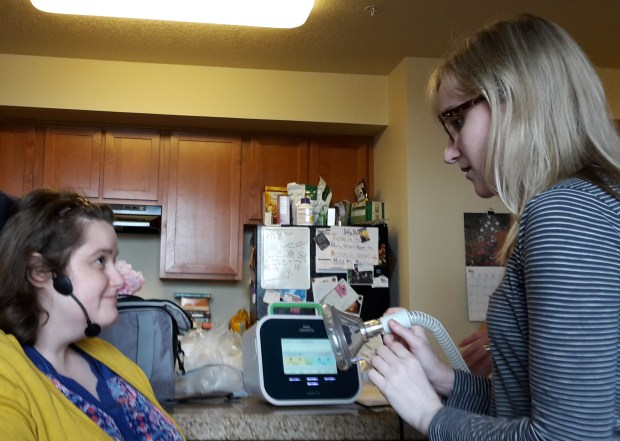
Recently, I got my Cough Assist breathing machine. It will help prevent me from getting pneumonia and exercise my lungs to keep them strong (you know, since I’m not doing yoga and cross training so much lately). It pushes air into my lungs and sucks it out, forcing me to breathe deeply as though running a marathon and then cough as I exhale in order to clear my lungs. However, I’ve used it twice so far, and what it really reminds me of is that machine from “The Princess Bride” that sucks the hero’s life away. I’ve been assured this in fact does the opposite. For now I remain suspicious…

Cough Assist

My sister Laura practices using the Cough Assist on me

The Wheelchair and the Labyrinth

Entering the labyrinth of vintage furniture store Lounge Lizard, where the test begins. Do not be distracted by baubles, for the path is fraught with many dangers and temptations.

ronkaplanphotography-9

You see, the ultimate test of wheelchair agility is successfully navigating a vintage store without breaking anything…

Even when adding a tiny dent might drive the price of that mid-century modern desk down…

Even when there is a pink cement poodle lamp in the way that could use a nudge…

Talk about self-control and excellent steering.

I have heard the siren’s call, though. I’ve bought four chairs, two dressers, and two night tables from this delightful maze. There s no true escape for me. I will traverse these aisles again soon, battling with both my wheelchair and my heart…

Welcome to the Helicarrier

Warning: Excessive Marvel references ahead.

This is not the story I wanted to write today. I planned on sharing something emotional and joyful. It was going to be a bigger piece, and I looked forward to a long stretch of appointment-free hours to get it done. However, ALS doesn’t care about plans. Like Loki in “The Avengers,” it lives for chaos.

helicarrier-ideation-19c_web

When I got out of bed, it was like stumbling onto the Helicarrier when Thor and the Hulk used it as an arena. The stress had my heart racing and made my speech even messier than usual. Evan was marching around the apartment on the phone trying to get an explanation for an unexpected and rather staggering medical bill. My theory is that marching keeps his energy up during marathon conversations about insurance and durable medical equipment – not naturally thrilling topics. Laura was on the phone at the table hunting down the right type of medical mattress for the hospital bed being donated to me (!!!!). I settled in beside her and she started spooning yogurt and pills into my mouth while on hold. Things must have been going well for her since she still in Bruce Banner mode. God help whoever tried to blow her off; she’s secretly the Hulk, and she’s on my side. Between her fierceness and Evan’s Captain America-esque determination, I felt plenty loved.

I also felt useless.

We finished with the pills, and Laura took the dishes to the sink. Then, as she dialed another number, she slid a piece of paper my way with notes about what she learned so far to catch me up. She went into her room to continue her work, and Evan parked himself next to me, hanging up and diving straight into a summary of where he was in his investigation. I made some notes about emails I could be writing to help, and noticed my voice getting stronger. His phone rang, he kissed my head, and he was off.

Laura’s door flew open at that moment. She raced to the table, skidding across the floor in her rush to get more scratch paper. I laughed hard, and she struggled to remain calm and polite to whoever was on the other end. Business now; laughter later.

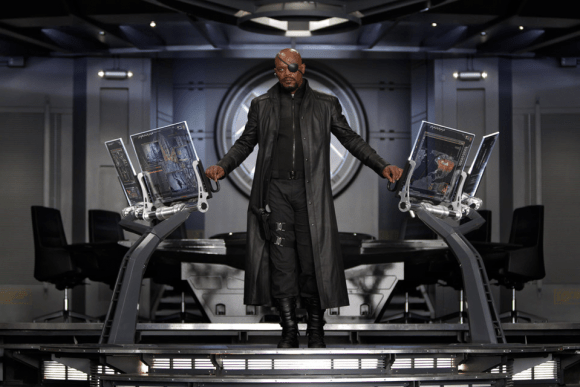
Good caregivers can make people with ALS feel like Helicarrier leader and superhero guide Nick Fury. We can’t always speak or even hold a pen to write a phone number. If we are having a really bad day, yeah, we might be wearing an eye patch. Our minds are still sharp, though. There are days when we need rest, but there are also days when we like commanding the Helicarrier by pitching in, being informed, sharing our opinions.

We are grateful to the caregivers who know how to let us take back some control, the ones who remember that every now and then, even the weakest among us likes to stand at the helm, if only to remember how it felt to fly.


nick_fury_helicarrier