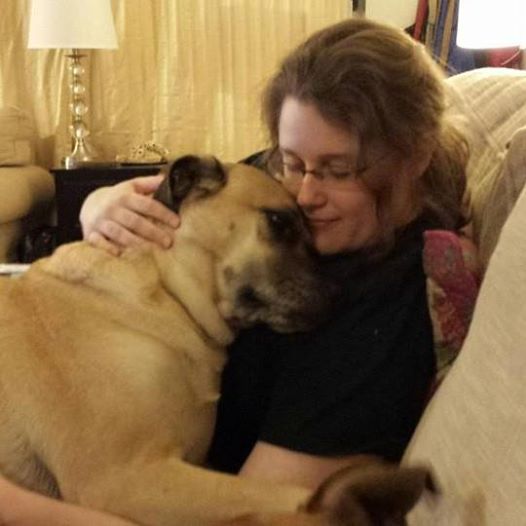
Drug Trial FOMO

I have a serious case of drug trial FOMO (fear of missing out). I just completed my year-long Tirasemtiv drug trial. I don’t know whether I was on the placebo or active drug. However, I have been invited to join the open-label extension of the clinical trial. That would mean I definitely would have an active dose. Meanwhile, the company that created Tirasemtiv is applying for FDA approval at this very moment. I take all of this information to mean that the medication worked: it preserved strength in the diaphragm, preventing a decline in lung function. In that case, being in the open-label trial is a great opportunity because I will have the drug immediately and keep my lungs from deteriorating.

There is a complication, though. If I join the open-label extension, I will take Tirasemtiv for the rest of my life as a way to research long-term safety of the medication. The open-label extension also requires that I not participate in any other trials. There is a trial coming up in April that I have been excited about, but is it promising enough to give up Tirasemtiv? It would help if I knew how well Tirasemtiv works, but I don’t think that is clear yet, even to the research team. I do know that throughout the study, my lung function did not decline at all. So is Tirasemtiv the safe bet?

Reading the news, it seems that possible cures are being found more and more quickly. Tirasemtiv is a treatment, not a cure. Let’s hop back to the experiment I mentioned that will take place in April. That one might be a cure. How can I turn my back on that? It seems like if I play it safe, I could be excluding myself from something miraculous. On the other hand, if the drug trial in April fails, I will have given up lung protection for nothing.

The original plan was to protect my lungs at all costs no matter the collateral damage, and that way, when the cure comes, my vital functions will be strong enough for me to properly heal. And what is this collateral damage? It is pain. For the past year, I have chosen pain in order to be in this trial. Being on Tirasemtiv means I cannot safely take Zanaflex, the medication that completely erases my spasms and muscle cramps. Instead, I am on a cocktail of a narcotic (Vicodin), a controlled substance anxiety medication called Clonazepam, and the muscle relaxer Baclofen. Evan also massages Bengay all over my limbs when my cramps get bad. Plus, I have a sizeable stash of medical marijuana (60% CBD) that is also working to loosen my joints and muscles. That is the price of my involvement in the study, and I will continue to pay it if I join open-label.

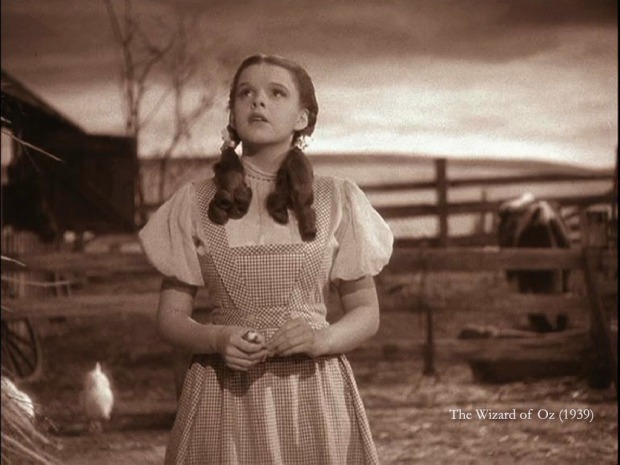
Just like the structure of this narrative has spiraled into dizzying circles, my thoughts are a tornado. It hops throughout my imagination, stirring up awful and wonderful scenarios. It rips through my sleep, and there is no seller with Aunty Em waiting to make it all better. I’m Dorothy out in the storm dreaming of Oz with no idea how to get there.

wizard-2-copy

How To Pee From A Sling With Dignity

Immediately upon being diagnosed with ALS, I heard from doctors, support groups, books, and websites that this disease will steal my dignity. I wanted to be on guard against this, but there was a problem: I didn’t have a clear understanding of what dignity means. It was always just a collage of images: Dame Judi Dench’s face, a smattering red shame, and a slug trail across the canvas indicating where self-respect left the building. Only when I was in danger of losing my dignity did I feel it running through me.

The night I learned about dignity started with horrible muscle spasms in my limbs. Fresh out of marijuana, I had to fall back on Vicodin, which is less effective and leaves me unable to move because my balance suffers so greatly. I was only a few hours into my deep narcotic sleep when I woke up with a serious problem: a painfully full bladder.

“Evan,” I whimpered to my sleeping husband. “I have to pee really bad!”

“I’ll get the walker,” he mumbled, easing out of bed.

“I can’t stand up for the transfer to the commode. The vicodin gave me noodle legs.”  I tried to keep my voice steady, but I was afraid that if I didn’t get to the commode fast enough, I would have an accident. It had happened a few times at the beginning of ALS. This was before I started a medicine that silenced the fried nerves tricking my poor bladder into letting go.

Evan paused, considering. “We have to use the Hoyer lift,” he concluded. “It’s our only option.”

I wiggled to help Evan put the Hoyer lift sling underneath me. Normally, it would wrap around my legs as well and hold me in the fetal position while Evan used the lift to raise me off the bed and put me in the wheelchair. However, now that I needed to land on the commode, my pants had to come off.

For the record, hanging pantsless in mid-air in one’s bedroom is not nearly as fun as it sounds, especially when abrasive canvas ropes curl a person so her legs are smashing a full bladder.

“Hurry,” I squeaked from inside the sling, trying hard not to panic.

“I’m lowering you over the commode now.”

Except when I landed on the commode, I was on my back. The commode is narrow and shallow. It does not tilt like my wheelchair to catch me as I descend. Evan immediately raised me up, promising, “I’ll try again. We’ll figure it out.”

At this point, the Vicodin had me thinking I was becoming a chimpanzee baby in a swinging leaf-cradle. I was not really in a place to strategize, and I silently thanked god for Evan.

However, one more try, and it was clear I would not be landing on the commode. I started crying. Between the way the Hoyer irritated my bare legs and my burgeoning belief that I would never be able to pee again (courtesy of the Vicodin), I was losing it.

“I think,” Evan began, then paused just long enough that I knew I wouldn’t like what he said next. He started again: “I’m going to hold the bucket from the commode under you; you’ll have to pee like that.”

By then, I was sobbing. “I can’t,” I cried. “It’s too humiliating.”

“It’ll be fine,” he soothed. “I swear this will work out just fine.”

As he said these last words, I felt the bucket press against the back of my thighs. I cried harder, the pain in my bladder sharpening.

“You can do this,” Evan encouraged me gently. “I’m right here.”

Choking on the mucus and tears of my embarrassment, I finally let my bladder go, mostly because I could not control it anymore. My hair clung to my sticky face, tangling in my lashes, and I looked for patterns in the textured ceiling to get my mind away from this horror. I couldn’t escape my feelings, though. Something vital around my heart fractured.

“That’s my dignity,” I thought, imagining I could see it floating away.

And then…

“You’re doing so well, honey,” Evan said, full of warmth and pride, all because I was peeing into the bucket he held.

The sound of his voice arrested the pieces in their ascent.

“Everything’s going well. There are no spills. I’m so proud of you.”

The pieces hovered and, in the unhurried way of feathers, drifted back down to me.

Then it was over. Evan removed the bucket and put it back in the commode. He put his face by mine, his hands brushing my hair and tears from my cheek, then kissed my forehead and said, “It’s all over, and you did so well. Do you feel better?”

“Yeah,” I replied softly, my breathing evening out.

Evan used the lift to settle me back in bed. He pulled up my pants and tucked me in. After the rough sling, my sheets felt luxurious. As I fell asleep, my thoughts returned to dignity, and I finally saw it clearly. Now I know how to use it.

Here’s how to pee from a sling (or do any other wacky thing your heart desires) with dignity :

  1. Know the nature of dignity: Understand that dignity is a fine gold filament threaded through the spine and pulled taut so a person can stand straight.
  2. Surround yourself with people who value your dignity: Your sense of dignity can be delicate. It has to be nurtured.
  3. Have confidence: With the right attitude and a solid friend, you can get away with almost anything. Just hold your head up and think of running water.

Hands: Part 2

As long as I’m listing what I miss using my hands for, I might as well ramble on a bit more. I miss the responsibility my hands gave me. I miss choosing fruit at the farmer’s market: laying a smooth, firm tomato in my hand, rubbing my thumb over the amber fuzz of a peach, picking up produce to examine the color. Raising greens and herbs to my nose is a sweet little luxury I never knew to cherish. Sometimes at the farmer’s market, Evan would buy me flowers. One time, he bought me a three-foot tall sunflower. I held it over my shoulder like a parasol. Usually, though, he would buy me white hydrangeas – the flowers I carried on our wedding day. I long to wrap my hands around them again and hold them in front of my heart.

Then, of course, the cooking was such a joy. I carefully made a menu and gathered ingredients at the market. Next, I used ceramic knives to slice through the fruits and vegetables, tomato pulp leaking onto my cutting board, strawberry juice staining my butcher block. I miss the rough wooden spoons I use to mix beans, lentils, and spices in with my market finds.

I even loved cleaning up after cooking. My mother-in-law, Brenda, bought me an amazing book for my birthday. Basically, it gave formulas for how to make household cleaners, disinfectants, scrubs, and detergents using natural ingredients like lemon, white vinegar, and castile soap. I used to slice and squeeze lemons, collecting the juice in empty jars I saved throughout the week. I would add in the right amounts of soap or water, vinegar or salt, and make pretty labels for them. I loved how my hands smelled clean and a bit like sunshine after I spent a few hours scrubbing the bathtub, all the sinks, countertops, and table. At the end of all that cooking and cleaning, my hands were dry and tired, and I felt at peace, like I had captured the present and lived in my senses with my human needs. I still find serenity in the sound of a rough sponge scrubbing.

I also miss scratching and massaging my dogs, but I cannot talk about that too much without getting sad. I pet them with my knuckles now that my fingers curl in. I hope they can feel that I love them. Honestly, though, I am afraid they won’t feel my affection and will grow away from me. My hands were our only common language.

13872779_10100918527914567_2980573773885241777_n

Hands: Part 1

If I had full use of my hands again, the first thing I would do is hold Evan’s hand. It is impossible to interlace our fingers when mine are so weak and wobbly. I also miss my hands as instruments of creativity. I used to sketch, paint, and even sculpt. I wanted to pursue my pottery, especially raku technique, but I did not make time for that endeavor while I was healthy. Teaching took up most of my time, not that I regret the hours I spent grading papers and planning lessons. I am lucky to have had a career I loved so dearly.

If I had strong fingers, I would sew. I loved sewing aprons for my mom and gifts for family and friends. Of course, the major advantage of strong fingers (in my opinion as a writer) is being able to type. I am grateful for the eye gaze technology that allows me to write without relying on my hands, but I miss the speed of typing, particularly when my ideas are flowing like rapids over jagged rocks, desperate to get out.

I would also learn new skills. Mainly, I would want to learn to play an instrument. I love watching Evan play the guitar, and I think it would be wonderful to accompany him somehow, probably on the piano. The piano was special to my Grandma Rosemary, and I still remember her teaching me a few basic melodies.

I might miss my hands more than my legs. Hands are so quintessentially human. I am isolated from displaying affection when my fingers curl in on themselves like claws. I scramble to find new creative outlets and accept that some art forms are simply lost to me.

img_0009

White-Knuckle Miracle

I had to work for my miracle, sweat for it, white-knuckle it, but I didn’t mind; I never expected a miracle to be easy. No one promised me a rose garden.

I woke up from a nap today needing to use the bathroom, so I hit the button that pages my sister and planned how we would transfer me to the wheelchair. As she helped me get to the edge of my bed, I felt a rush of strength. Synapses sparked, lighting up my mind with the memory of walking. The path down the hallway ahead of me was clear and bright, and I saw what I could do.

“I want to walk to the bathroom,” I announced. I’ve had ALS two and a half years. At this point, abandoning my wheelchair to go for a stroll is almost as ludicrous as trying to fly.

“OK,” my sister replied without hesitation, pulling my walker in front of me. She got behind me on the bed, pushed me until I was standing, and placed her hands on my hips to steady me. “Whenever you’re ready.”

There will never be a better way to explain my sister than describing her actions in this moment.

I shuffled forward. My stiff ankles and knees, slowly remembering their job, loosened. In my mind’s eye, stringy, dry muscles were being marinated in blood pumped from my eager heart. With each step, the muscle tissue grew more swollen with life.

Over the course of ten minutes, I walked twenty feet. That’s ten minutes of a deathgrip on my walker, of clammy hands and a trembling jaw. Ten minutes of wonder and joy. I landed safely, marveling at what I accomplished.

“I’m not even out of breath,”I said, looking up at my sister. “It’s incredible.”

“I was worried about that,” she confessed, though she seemed so calm, I hadn’t even guessed. ALS affects everyone differently, but it always mounts a vicious assault on the lungs. That’s what kills us all in the end.

“I forgot to be scared,” I replied, enchanted by the sound of my own steady breathing. For those ten minutes, even my thoughts were freed from my disease. This was my very own little miracle, a butterfly dancing briefly on my open palm before fluttering away.

I once heard luck defined as the place where hard work meets an opportunity. After today, I would define a miracle as the place where hard work meets an extraordinary opportunity.  This opportunity comes through a tear in reality to bear you forward on a  divine wind. There are conditions, though. You must be ready and willing to see the tear in the fabric; that’s called hope. Understand that the wind has the strength of a hurricane (how else could it carry you?) and may batter you even as it saves you. Miracles thrive on perseverance and strong hearts.

I accept this. I am undaunted by exhaustion, bone-grinding effort, or crippling pain. I am not afraid because I have survived it all over the course of my disease and during the drug trial which, most likely, enabled me to walk today. From now on, if you come searching for me, check the crow’s nest. I’ll be perched there, on the lookout for miracles with my father’s binoculars and my mother’s optimism. I’ll be whispering, “Come. Fly over the horizon. Take your time if you must. I still believe in you.”

Fortune’s Fool

When I was sixteen, a fortune teller at a fair predicted I would meet and fall in love with a man who would physically take care of me. At the time, I didn’t understand what she could possibly mean. Would I rely on my husband for money? I was hungry for independence and therefore a bit insulted, but most of all, I was bewildered. I needed more time with the fortune teller in her enchanting red silk tent, but she looked pointedly at her watch, then tapped the cash tray. My empty wallet made me unwelcome.

When I asked about the man I would marry at the beginning of our session, I did not imagine the ten minutes I paid for would pass so quickly and end so mysteriously. I wondered about her words for more than a decade, right up until my ALS diagnosis twelve years later. That day, I finally got the answer I sought. Doors slammed in my face. All around, clock needles spun backward. My end crept forward in every shadow.

Now, I rely on Evan to bathe, feed, and dress me, to keep me steady when I use my walker in the bathroom, even to wipe me after I use the toilet. He holds all the crumbling pieces of my body tight in his hands, as though trying to keep them safe until the miracle pill that can put me back together again finally arrives. My marriage looks nothing like it did when we were twenty-one or twenty-five, or even last year. Playtime is over, and we struggle daily to survive.

However, I realized as Evan delivered medication into my body via my brand new feeding tube, that what really matters remains unbroken. Even after all we’ve lost, he still loves me, and I will always love him. That knowledge is the bedrock of my existence, and it has yet to crack. Together, we chase happiness through a tangle of feed lines and IVs, not ready to surrender to how we live now. Side by side, with white knuckles and bloody nails, we crawl forward.

Benvolio: Romeo, away, be gone! Stand not amaz’d, the Prince will doom thee death if thou art taken. Hence be gone, away!

Romeo: O, I am fortune’s fool!

Romeo And Juliet Act 3, scene 1, 132–136

Cathedrals: On Losing My Voice

“In my mind I am eloquent; I can climb intricate scaffolds of words to reach the highest cathedral ceilings and paint my thoughts. But when I open my mouth, everything collapses.”

― Isaac Marion, Warm Bodies

A Wind in the Door

Only two more days until my Tobii Dynavox comes. I cannot wrap my head around this. I’m getting back the ability to text and talk on the phone. I will be able to write emails and blog posts at a more normal pace (right now, my fingers are a total mess, so I type like a snail).

Change is in the air, a wind is in the door. My voice is slipping away, and technology to replace it is stepping in. The arrival of my Tobii Dynavox will be an emotional time; I’m scared I will cry.


“I wish human beings couldn’t have feelings. I am having feelings. They hurt.”
― Madeleine L’Engle, A Wind in the Door