How To Pee From A Sling With Dignity

Immediately upon being diagnosed with ALS, I heard from doctors, support groups, books, and websites that this disease will steal my dignity. I wanted to be on guard against this, but there was a problem: I didn’t have a clear understanding of what dignity means. It was always just a collage of images: Dame Judi Dench’s face, a smattering red shame, and a slug trail across the canvas indicating where self-respect left the building. Only when I was in danger of losing my dignity did I feel it running through me.

The night I learned about dignity started with horrible muscle spasms in my limbs. Fresh out of marijuana, I had to fall back on Vicodin, which is less effective and leaves me unable to move because my balance suffers so greatly. I was only a few hours into my deep narcotic sleep when I woke up with a serious problem: a painfully full bladder.

“Evan,” I whimpered to my sleeping husband. “I have to pee really bad!”

“I’ll get the walker,” he mumbled, easing out of bed.

“I can’t stand up for the transfer to the commode. The vicodin gave me noodle legs.”  I tried to keep my voice steady, but I was afraid that if I didn’t get to the commode fast enough, I would have an accident. It had happened a few times at the beginning of ALS. This was before I started a medicine that silenced the fried nerves tricking my poor bladder into letting go.

Evan paused, considering. “We have to use the Hoyer lift,” he concluded. “It’s our only option.”

I wiggled to help Evan put the Hoyer lift sling underneath me. Normally, it would wrap around my legs as well and hold me in the fetal position while Evan used the lift to raise me off the bed and put me in the wheelchair. However, now that I needed to land on the commode, my pants had to come off.

For the record, hanging pantsless in mid-air in one’s bedroom is not nearly as fun as it sounds, especially when abrasive canvas ropes curl a person so her legs are smashing a full bladder.

“Hurry,” I squeaked from inside the sling, trying hard not to panic.

“I’m lowering you over the commode now.”

Except when I landed on the commode, I was on my back. The commode is narrow and shallow. It does not tilt like my wheelchair to catch me as I descend. Evan immediately raised me up, promising, “I’ll try again. We’ll figure it out.”

At this point, the Vicodin had me thinking I was becoming a chimpanzee baby in a swinging leaf-cradle. I was not really in a place to strategize, and I silently thanked god for Evan.

However, one more try, and it was clear I would not be landing on the commode. I started crying. Between the way the Hoyer irritated my bare legs and my burgeoning belief that I would never be able to pee again (courtesy of the Vicodin), I was losing it.

“I think,” Evan began, then paused just long enough that I knew I wouldn’t like what he said next. He started again: “I’m going to hold the bucket from the commode under you; you’ll have to pee like that.”

By then, I was sobbing. “I can’t,” I cried. “It’s too humiliating.”

“It’ll be fine,” he soothed. “I swear this will work out just fine.”

As he said these last words, I felt the bucket press against the back of my thighs. I cried harder, the pain in my bladder sharpening.

“You can do this,” Evan encouraged me gently. “I’m right here.”

Choking on the mucus and tears of my embarrassment, I finally let my bladder go, mostly because I could not control it anymore. My hair clung to my sticky face, tangling in my lashes, and I looked for patterns in the textured ceiling to get my mind away from this horror. I couldn’t escape my feelings, though. Something vital around my heart fractured.

“That’s my dignity,” I thought, imagining I could see it floating away.

And then…

“You’re doing so well, honey,” Evan said, full of warmth and pride, all because I was peeing into the bucket he held.

The sound of his voice arrested the pieces in their ascent.

“Everything’s going well. There are no spills. I’m so proud of you.”

The pieces hovered and, in the unhurried way of feathers, drifted back down to me.

Then it was over. Evan removed the bucket and put it back in the commode. He put his face by mine, his hands brushing my hair and tears from my cheek, then kissed my forehead and said, “It’s all over, and you did so well. Do you feel better?”

“Yeah,” I replied softly, my breathing evening out.

Evan used the lift to settle me back in bed. He pulled up my pants and tucked me in. After the rough sling, my sheets felt luxurious. As I fell asleep, my thoughts returned to dignity, and I finally saw it clearly. Now I know how to use it.

Here’s how to pee from a sling (or do any other wacky thing your heart desires) with dignity :

  1. Know the nature of dignity: Understand that dignity is a fine gold filament threaded through the spine and pulled taut so a person can stand straight.
  2. Surround yourself with people who value your dignity: Your sense of dignity can be delicate. It has to be nurtured.
  3. Have confidence: With the right attitude and a solid friend, you can get away with almost anything. Just hold your head up and think of running water.

Hands: Part 2

As long as I’m listing what I miss using my hands for, I might as well ramble on a bit more. I miss the responsibility my hands gave me. I miss choosing fruit at the farmer’s market: laying a smooth, firm tomato in my hand, rubbing my thumb over the amber fuzz of a peach, picking up produce to examine the color. Raising greens and herbs to my nose is a sweet little luxury I never knew to cherish. Sometimes at the farmer’s market, Evan would buy me flowers. One time, he bought me a three-foot tall sunflower. I held it over my shoulder like a parasol. Usually, though, he would buy me white hydrangeas – the flowers I carried on our wedding day. I long to wrap my hands around them again and hold them in front of my heart.

Then, of course, the cooking was such a joy. I carefully made a menu and gathered ingredients at the market. Next, I used ceramic knives to slice through the fruits and vegetables, tomato pulp leaking onto my cutting board, strawberry juice staining my butcher block. I miss the rough wooden spoons I use to mix beans, lentils, and spices in with my market finds.

I even loved cleaning up after cooking. My mother-in-law, Brenda, bought me an amazing book for my birthday. Basically, it gave formulas for how to make household cleaners, disinfectants, scrubs, and detergents using natural ingredients like lemon, white vinegar, and castile soap. I used to slice and squeeze lemons, collecting the juice in empty jars I saved throughout the week. I would add in the right amounts of soap or water, vinegar or salt, and make pretty labels for them. I loved how my hands smelled clean and a bit like sunshine after I spent a few hours scrubbing the bathtub, all the sinks, countertops, and table. At the end of all that cooking and cleaning, my hands were dry and tired, and I felt at peace, like I had captured the present and lived in my senses with my human needs. I still find serenity in the sound of a rough sponge scrubbing.

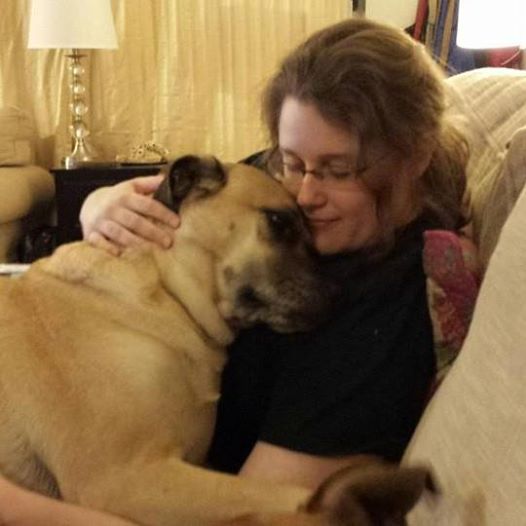
I also miss scratching and massaging my dogs, but I cannot talk about that too much without getting sad. I pet them with my knuckles now that my fingers curl in. I hope they can feel that I love them. Honestly, though, I am afraid they won’t feel my affection and will grow away from me. My hands were our only common language.

13872779_10100918527914567_2980573773885241777_n

Cathedrals: On Losing My Voice

“In my mind I am eloquent; I can climb intricate scaffolds of words to reach the highest cathedral ceilings and paint my thoughts. But when I open my mouth, everything collapses.”

― Isaac Marion, Warm Bodies

A Wind in the Door

Only two more days until my Tobii Dynavox comes. I cannot wrap my head around this. I’m getting back the ability to text and talk on the phone. I will be able to write emails and blog posts at a more normal pace (right now, my fingers are a total mess, so I type like a snail).

Change is in the air, a wind is in the door. My voice is slipping away, and technology to replace it is stepping in. The arrival of my Tobii Dynavox will be an emotional time; I’m scared I will cry.


“I wish human beings couldn’t have feelings. I am having feelings. They hurt.”
― Madeleine L’Engle, A Wind in the Door

The Opera and Mosquitoes

This morning I tried to buy opera tickets as a surprise for Evan (he is a major fan), and all accessible seats were sold out. I know it’s not the end of the world, or even cause for tears. Operas are clearly a luxury. Still, incidents like this chip away at my loved ones’ assurances that I am not bringing them down. I remember the countless, tiny limitations hovering around me like a cloud of mosquitoes. I remember I can’t be the wife I was: the one who goes on romantic sunset canoe trips, holds hands with her husband while walking beside him, hikes with him in the afternoon, and goes stargazing in the park with him at night.

Wheels

My enunciation is getting rough. The letter “s” is my particular nemesis. I slur and lisp so badly, I have stopped using plural forms, and I avoid contractions. This afternoon, though, my sloppy “s” saved the day.

By 4:00, it felt like everything that could go wrong had already happened. A scheduling error left me without a caregiver, Pickle threw up after eating too much of the food that our parrot Jasper enjoys tossing to him, and the taxi I had booked way in advance never arrived to take me to a doctor appointment.

However, I didn’t want to end the day this way. I simply refused to let the sun set on this note. You see, I have a mindset that has led to me being labelled naive and unrealistic, but I can’t seem to shake it. I suffer from a relentless optimism, a belief that it is never too late for things to get better. Maybe that really does make me naive, but I like to describe myself with such words as “resilient,” “resourceful,” and “dauntless” instead.

Consequently, when my new cab arrived bearing a kindred spirit, I was delighted but not surprised. Every day holds some shred of happiness if only you remember to look for it. Doju, my driver, also had a rough start to his day. The cab he usually drove was out of commission, so his boss saddled him with the taxi outfitted as a wheelchair van… a vehicle full of equipment Doju had never seen before.

Anxious not to mislead me, as soon as he parked at the curb, he confessed, “I’ve never worked with a wheelchair van. I don’t know exactly what to do.” His anxiety aggravated his speech impediment, and I could tell he was now embarrassed on multiple fronts.

“That’s OK,” I replied, not bothering to hide my slur over the contraction; you have to be willing to give if you’re going to get anywhere important. “Let’s figure it out together.”

And we did. Rather quickly.

We fell right into conversation once we hit the road. His stutter grew less pronounced as I waited with patience to hear him out. He got the hang of my own impediment, and then it was easy to talk and listen. We shared chocolate chip cookies I had in my purse (welcome to my life in the Clinic weight maintenance program; must love calories), and relaxed into one another’s company. It ends up Doju has a wicked sense of humor.

“Rachel, you are just great. Here’s my card. Call anytime,” he said.

“You are so sweet!” I replied, taking his card.

“Oh, no, you misunderstand,” he grinned. “You may call me anytime, but I never promised to answer. I think I will see your number fill my call log and just click delete, delete, delete…”

It ends up both stuttering and slurring disappear in laughter.

Stuck in traffic, I learned he had been born in Tibet, but was whisked away so quickly to a safer patch of earth that he cannot remember his home. Despite this, and knowing he can never return, he chose not to tell his story as a sad one. Instead, the tale he shared was about love and accepting loss. I was amazed, not for the first time, at how deeply our most distant brothers and sisters can speak the language of our own messy hearts.

Traffic crawled, and I knew I would miss my appointment by a half hour, but the day was still salvaged in my eyes. As we sat on the glimmering hot road, Doju marveled at the brilliant sunshine after such a rainy spring. I pointed out the riot of colorful flowers spilling out of gardens lining the street.

There were so many words neither of us could manage to say, but still, we chose to speak to each other. We chose to see roses.

A Pashmina For My Appendix

Today I bought shoes for the first time since my diagnosis. It was also the first time I bought shoes I would not actually wear for walking. My new sandals will just serve as a barrier between the soles of my feet and my wheelchair’s foot plates. No more worries about arch support or gaping at my heel. No test runs to make sure the shoe doesn’t rub the small bulge on my toe where I once snapped it during ballet. Shopping for shoes was like getting a frivolous accessory for a vestigial organ, a pashmina for my appendix. It was a novel experience, but ultimately too bizarre and sad to look forward to repeating.

Welcome to the Helicarrier

Warning: Excessive Marvel references ahead.

This is not the story I wanted to write today. I planned on sharing something emotional and joyful. It was going to be a bigger piece, and I looked forward to a long stretch of appointment-free hours to get it done. However, ALS doesn’t care about plans. Like Loki in “The Avengers,” it lives for chaos.

helicarrier-ideation-19c_web

When I got out of bed, it was like stumbling onto the Helicarrier when Thor and the Hulk used it as an arena. The stress had my heart racing and made my speech even messier than usual. Evan was marching around the apartment on the phone trying to get an explanation for an unexpected and rather staggering medical bill. My theory is that marching keeps his energy up during marathon conversations about insurance and durable medical equipment – not naturally thrilling topics. Laura was on the phone at the table hunting down the right type of medical mattress for the hospital bed being donated to me (!!!!). I settled in beside her and she started spooning yogurt and pills into my mouth while on hold. Things must have been going well for her since she still in Bruce Banner mode. God help whoever tried to blow her off; she’s secretly the Hulk, and she’s on my side. Between her fierceness and Evan’s Captain America-esque determination, I felt plenty loved.

I also felt useless.

We finished with the pills, and Laura took the dishes to the sink. Then, as she dialed another number, she slid a piece of paper my way with notes about what she learned so far to catch me up. She went into her room to continue her work, and Evan parked himself next to me, hanging up and diving straight into a summary of where he was in his investigation. I made some notes about emails I could be writing to help, and noticed my voice getting stronger. His phone rang, he kissed my head, and he was off.

Laura’s door flew open at that moment. She raced to the table, skidding across the floor in her rush to get more scratch paper. I laughed hard, and she struggled to remain calm and polite to whoever was on the other end. Business now; laughter later.

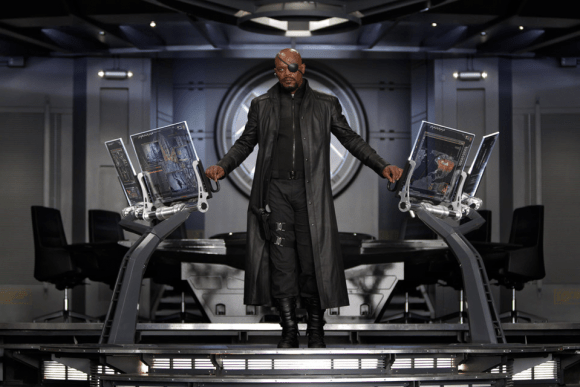
Good caregivers can make people with ALS feel like Helicarrier leader and superhero guide Nick Fury. We can’t always speak or even hold a pen to write a phone number. If we are having a really bad day, yeah, we might be wearing an eye patch. Our minds are still sharp, though. There are days when we need rest, but there are also days when we like commanding the Helicarrier by pitching in, being informed, sharing our opinions.

We are grateful to the caregivers who know how to let us take back some control, the ones who remember that every now and then, even the weakest among us likes to stand at the helm, if only to remember how it felt to fly.


nick_fury_helicarrier

Far From FDR

Lately, I’ve been worrying a lot about my identity. So much is changing at what feels like breakneck speed. My body in particular is alien to me. I swing between thinking I am an ALS research guinea pig, a robot incorporating new mechanisms to extend the life of what is clearly a junker, or, most recently, a plain old invalid.

My sister is not OK with this.


Me: Am I an invalid?

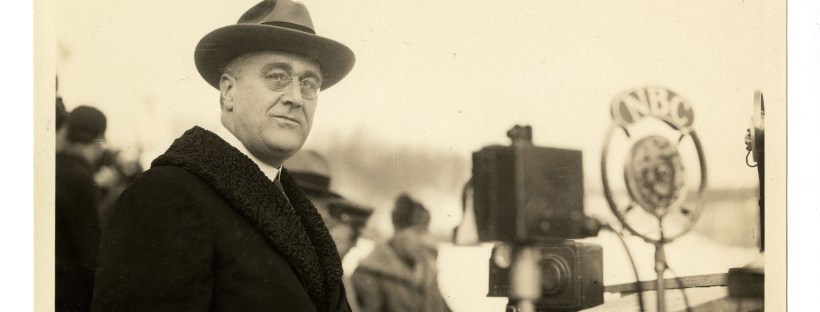
Laura: Rachel, what are you talking about? They haven’t had invalids since FDR. Besides, I don’t we are supposed to use that word anymore.

Me: Oh… then what am I?

Laura: What you’ve always been. You’re a woman with pursuits.


It was pretty unexpected, a little Victorian, and a lot perfect. I remembered then that I’m more than braces, machines,  and physical therapy exercises. Maybe I’m not exactly what I’ve always been like Laura said, but I’m also not less than I was. And as far as pursuits go, I still chase dreams. Now, though, I’m racing after them in a 400 lb vehicle… I like my chances.


Disclaimer: No offense intended towards FDR, who, according to my grandma, totally rocked.