
Category: Uncategorized
The Blue Room
4
When I was diagnosed, I choked on fear beyond any I had ever known. It easily surpassed even the terror I felt when I was raped and almost murdered. At least then there was a chance I could make it out alive. At the moment of diagnosis, blood rushed to my face, making my skin burn. My ears rang, both deafening me and heightening my senses so I could hear the doctor’s tears. A black cloud ate up the edges of my vision, and I thought, “This is death. It’s black and nothing and it’s coming for me now.” I had just enough time to notice the absence of Jesus in the hungry darkness when I saw my chiIdhood Christmas tree in perfect detail. I hoped dearly to see it again.
Imagine, all of that in a matter of seconds.
Then, I collapsed against Evan, and an umbrella came over us. I thought of nothing but him as we sobbed together until we were nauseous. My mind spun on this loop: “I don’t want to leave Evan. He will be so sad to lose me. I can’t let this happen to us.” That train of thought possessed me. It still does. I can’t conceive of being separated from Evan. It shouldn’t be allowed. Doesn’t God know that I love Evan more than any human has ever loved another?
But a person can’t feel such an intensity of horror forever. That alone would be fatal.
This is how I live now. The darker feelings come in small chunks, so I am able to understand them as singular dead leaves moving along, unable to do me any real harm. I give them space in my river until they drift on, leaving the water clear. In the clean river, I am strong enough to hope.
Still, sometimes when I lay in the dark waiting for sleep, I remember the blue cinderblock room where I heard the news, and I feel like I never truly left. It has become both my Hell and my home.
Writing Through It
Ever since Donald Trump won the election, I am a stranger in a strange land. For our next leader, my country chose a man who personifies rape culture. My PTSD from when I was sexually assaulted is already severe because of him. Listening to him for the next four years and knowing he has power over me will make it worse. Plus, Trump wants to slash the health care legislation that allows me to receive wonderful treatment. Without my current insurance, my medical expenses are $200,000 per year. Things could get really bad. My sister has already offered to sell a kidney and her eggs if I lose my coverage.
I hang onto my sanity by writing through the madness. I now have the privilege of writing regularly for The Huffington Post and am currently composing an essay on Portland’s post-election protests and riots. Working on this piece has been an emotional process. It forces me to sort through my heartbreak. It challenges me to experience the election and protests in a way that aligns with one of my core values: choose hope over fear.
Fear’s long, dark fingers are already trailing down my back, though. They tug at me persistently. Giving in would be so easy, it would almost be a relief. But then I think back to that stream, the one that carries my emotions like leaves. There are many leaves in the stream. I picked up fear, but I can put it back in the water and watch it drift away. Maybe this is how I’ll choose hope: by opening my fists and letting everything else go.
“All your darkest sorrows, did you ever just give them back?” – Stevie Nicks, “Has Anyone Ever Written Anything for You?”
White-Knuckle Miracle
I had to work for my miracle, sweat for it, white-knuckle it, but I didn’t mind; I never expected a miracle to be easy. No one promised me a rose garden.
I woke up from a nap today needing to use the bathroom, so I hit the button that pages my sister and planned how we would transfer me to the wheelchair. As she helped me get to the edge of my bed, I felt a rush of strength. Synapses sparked, lighting up my mind with the memory of walking. The path down the hallway ahead of me was clear and bright, and I saw what I could do.
“I want to walk to the bathroom,” I announced. I’ve had ALS two and a half years. At this point, abandoning my wheelchair to go for a stroll is almost as ludicrous as trying to fly.
“OK,” my sister replied without hesitation, pulling my walker in front of me. She got behind me on the bed, pushed me until I was standing, and placed her hands on my hips to steady me. “Whenever you’re ready.”
There will never be a better way to explain my sister than describing her actions in this moment.
I shuffled forward. My stiff ankles and knees, slowly remembering their job, loosened. In my mind’s eye, stringy, dry muscles were being marinated in blood pumped from my eager heart. With each step, the muscle tissue grew more swollen with life.
Over the course of ten minutes, I walked twenty feet. That’s ten minutes of a deathgrip on my walker, of clammy hands and a trembling jaw. Ten minutes of wonder and joy. I landed safely, marveling at what I accomplished.
“I’m not even out of breath,”I said, looking up at my sister. “It’s incredible.”
“I was worried about that,” she confessed, though she seemed so calm, I hadn’t even guessed. ALS affects everyone differently, but it always mounts a vicious assault on the lungs. That’s what kills us all in the end.
“I forgot to be scared,” I replied, enchanted by the sound of my own steady breathing. For those ten minutes, even my thoughts were freed from my disease. This was my very own little miracle, a butterfly dancing briefly on my open palm before fluttering away.
I once heard luck defined as the place where hard work meets an opportunity. After today, I would define a miracle as the place where hard work meets an extraordinary opportunity. This opportunity comes through a tear in reality to bear you forward on a divine wind. There are conditions, though. You must be ready and willing to see the tear in the fabric; that’s called hope. Understand that the wind has the strength of a hurricane (how else could it carry you?) and may batter you even as it saves you. Miracles thrive on perseverance and strong hearts.
I accept this. I am undaunted by exhaustion, bone-grinding effort, or crippling pain. I am not afraid because I have survived it all over the course of my disease and during the drug trial which, most likely, enabled me to walk today. From now on, if you come searching for me, check the crow’s nest. I’ll be perched there, on the lookout for miracles with my father’s binoculars and my mother’s optimism. I’ll be whispering, “Come. Fly over the horizon. Take your time if you must. I still believe in you.”
Cloudgazing
Sitting in my dark apartment, I watched the clock eagerly, biting my lip as I waited for 9:30. Because of my feeding and medication schedule, I rarely go out at night, but I was about to make an exception. Three more ticks from my kitchen clock, and I put my wheelchair on high speed, zooming down to the corner cafe to meet my friend Natalie.
“You’re here,” she stated as I approached. We both know me actually showing up when I promise is a rare occurrence. Natalie doesn’t hold it against me, though. No matter how often I cancel plans or forget to text back, Natalie remains unruffled, and I don’t even think it’s because I have ALS. I get the feeling she is just so complete that I don’t have the power to ruin anything. I’m not sure, though. I have never had a friendship quite like ours before.
We looked up at the sky, and my heart dropped to see a full blanket of lavender clouds. “Not a single star?” I asked.
That night, my city was attempting to bring attention to light pollution by encouraging citizens to use minimum lighting. The goal was to get us out into the streets looking up at the stars and marveling over what we are missing. My neighbors and I followed the rules. Even the cafe closed early, the only light inside the soft blue glow of the beverage cooler. Still, the stars remained hidden.
“Apparently, it takes months for the rays we send into the atmosphere to dissipate,” Natalie shrugged. She settled onto the top chair on the stack of outdoor cafe seating.
Another great thing about Natalie is that she handles disappointment with utter calm, whether she accepts it and lets it go or speaks up to rectify the situation. There was no one to complain to tonight, though. This show had no director to adjust the scene. However, good company can salvage even the darkest day or, in this case, the brightest night.
I settled into my wheelchair, reclining so my feet wouldn’t swell. I imagined that if I had my old strength, I would hop up to sit on the low cement wall of a nearby planter and swing my legs.
After a moment of quiet, she said, “I might move. I hope not, though. I like knowing you’re around.”
Although Natalie and I have only met in person about four times over the past year, there is a certain comfort knowing she lives a block away. I’d hate to lose that.
“We might move, too. Rent is high,” I replied. “Maybe we’ll move in the same direction.”
We looked back at the sky to see if anything had changed. Natalie pointed to a light in the distance. “Airplane.”
“Are you writing?” I asked, giving the clouds a break from my scrutiny.
“Short stories,” she answered. “One about a guy I met who studies UFOs.”
We were silent for a while I rolled ideas for stories around in my head and thought about how my words are too slurred and strained to read aloud in my writing group.
Suddenly self-conscious, I said, “I know it’s harder to understand me now, but I’m working on using my speech computer. That should help.”
“I understand enough,” Natalie assured me.
Plenty of people were out in the streets as promised, but we were the only ones still holding out for stars, still gazing up. In the quiet, my mind wandered. It landed in the section of my brain that catalogues books (as usual), and I remembered a quote from the novel The Probable Future by Alice Hoffman. It goes something like: “People think they have to look up to see the sky, not realizing we are standing in it. They don’t know that the sky begins where ground meets air.” I wanted to share this with Natalie, but my voice was fading.
We stayed staring at the clouds for a while longer before Evan showed up to take me home. He kissed me on the head, then hung back so I could have another moment with Natalie.
“It was good to see you,” Natalie said by way of goodbye. Another thing I like about her: our time together can be valuable even if we only exchange a few words. It’s a liberating dynamic.
“You, too,” I said, my voice muted and rough.
I took a last look at the sky before going into my building, wondering over how, beyond the clouds, there are millions of stars and galaxies that I will never see. Nevertheless, I still have absolute faith that they are there, perhaps closer than I think if I’m already in the atmosphere.
Maybe my cure is like that, I thought as Evan helped me out of my wheelchair and into bed. Tucked in beside my husband, it was easy to imagine the cure is merely just out of sight, waiting an inch beyond my fingertips. Evan makes even the grandest hope possible; his heart is that pure. I gave his hand a love squeeze and silently promised that until the cure comes, I’ll keep looking up.
Fortune’s Fool
When I was sixteen, a fortune teller at a fair predicted I would meet and fall in love with a man who would physically take care of me. At the time, I didn’t understand what she could possibly mean. Would I rely on my husband for money? I was hungry for independence and therefore a bit insulted, but most of all, I was bewildered. I needed more time with the fortune teller in her enchanting red silk tent, but she looked pointedly at her watch, then tapped the cash tray. My empty wallet made me unwelcome.
When I asked about the man I would marry at the beginning of our session, I did not imagine the ten minutes I paid for would pass so quickly and end so mysteriously. I wondered about her words for more than a decade, right up until my ALS diagnosis twelve years later. That day, I finally got the answer I sought. Doors slammed in my face. All around, clock needles spun backward. My end crept forward in every shadow.
Now, I rely on Evan to bathe, feed, and dress me, to keep me steady when I use my walker in the bathroom, even to wipe me after I use the toilet. He holds all the crumbling pieces of my body tight in his hands, as though trying to keep them safe until the miracle pill that can put me back together again finally arrives. My marriage looks nothing like it did when we were twenty-one or twenty-five, or even last year. Playtime is over, and we struggle daily to survive.
However, I realized as Evan delivered medication into my body via my brand new feeding tube, that what really matters remains unbroken. Even after all we’ve lost, he still loves me, and I will always love him. That knowledge is the bedrock of my existence, and it has yet to crack. Together, we chase happiness through a tangle of feed lines and IVs, not ready to surrender to how we live now. Side by side, with white knuckles and bloody nails, we crawl forward.
Benvolio: Romeo, away, be gone! Stand not amaz’d, the Prince will doom thee death if thou art taken. Hence be gone, away!
Romeo: O, I am fortune’s fool!
Romeo And Juliet Act 3, scene 1, 132–136

Always Forward
“If all you can do is crawl, start crawling.” – Rumi
Keeping My Head Up
I don’t have the energy for a full story today, though I have plenty I am eager to tell. Unfortunately, I’m in the middle of a long battle that is taking all I’ve got. Remember that post about me sleeping 18 hours some days and then not at all? My circadian rhythm is still a manic tap dance in my empty, red skull. I did have a brief stay at the hospital, which is providing great material for a post that is both infuriating and hilarious. However, nothing was solved there.
Although I am still struggling with my medications, I smile at least once a day because of the time I spend with caregivers, family, and friends. I’m certain that this too shall pass. Of course, “this” refers to the trial of balancing meds, not ALS. Never forget, my ALS doesn’t end until it kills me or we cure it.
Until my next piece, I leave you with this song, devoted to those who watch over me…
The Two-Headed Frog
“Ecological Fallout: ALS Linked to Toxins and Pollutants” By Laurie L. Barclay, MD

My reaction:
I knew it. Instinct (and the insanely long survey I had to take about toxin exposure) hinted to me that ALS may be triggered by environmental contamination.
I may not be a scientist, but I am a tree-hugger, and we all know that is basically the same thing. Going all the way back to 7th grade, every time I saw pictures of mutated animals in science books, I hypothesized, “This is going to catch up with us one day.”
Lo and behold… I am the two-headed frog.
Other Lives
Once upon a time, this was me.
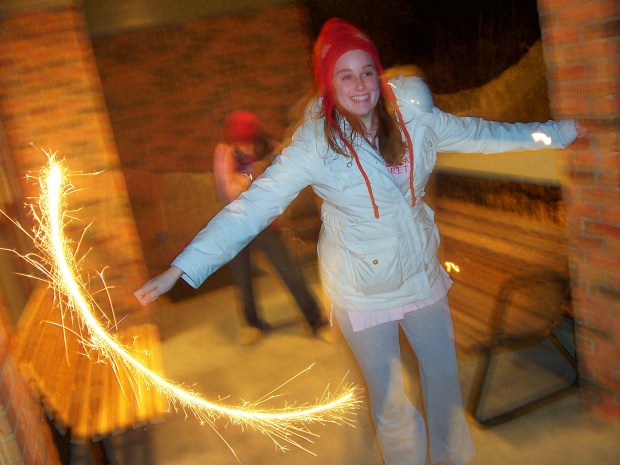
She still lives, but hers is a suffocating, frightened existence inside the shell ALS built around her.
Sitting in my wheelchair, too weak to lift a teacup, I make a resolution: to do anything and everything to be the girl who dances with fire once again. Now, I am on a rescue mission to get her back. I don’t have much time. However, I have hope because I am my own knight. I will keep testing and funding new research until one day…
I am sitting with a new friend from yoga class at a sidewalk cafe. This place is humming with voices, one of them mine. I meant to keep the conversation light, but I can’t resist. After all, it’s my anniversary.
I say, “Would you believe I used to have ALS?”
She’ll gasp, thinking how she never would have known, remembering my perfect sun salutation in yoga class; my recovery was so remarkably complete. I smile. It’s been ten years, and I still feel a thrill in my chest whenever I even think, “I had ALS.” It’s my very own happy ending.
“The Ice Bucket disease?” she asks, then flaps her hands as she reins in her shock, continuing, “I mean, the awful one they cured with the ice buckets? Oh my God! How long did you have it? You must have been so scared!”
I don’t answer fully. The truth is too overwhelming for most people. They are uneasy hearing that for those eight years, I felt like I was aging at cyber speed while watching the end rushing toward me. Then, there was the cure, I’d go on to explain; that was like being snagged at the ankle and dragged back through a tunnel of time. The universe flipped, I’d tell them, demonstrating with excited hands, and I was born back into the world, hardly worse for the wear, learning to exist in a healthy human body again.
After I share all this, people are left speechless (like I was for six years), and the conversation never quite recovers, so I keep my reply short and easy: “Eight years of Hell.”
She shudders at the horror, quickly shrugging off thoughts of suffering in a way I envy. In mere seconds, she shuts it out and steer us back to clearer waters. I don’t mind. I’ve said my piece.
It’s time to move on.
“There will be other lives.
There will be other lives for brand-new suitcases transporting you to strange new people in strange new lands.
And there will be other lives for unpaid debts, for one-night stands, for Prague and Paris, for painful shoes with pointy toes, for indecision and revisions.
And there will be other lives for fathers walking daughters down aisles.
And there will be other lives for sweet babies with skin like milk.
And there will be other lives for a man you don’t recognize, for a face in a mirror that is no longer yours, for the funerals of intimates, for shrinking, for teeth that fall out, for hair on your chin, for forgetting everything. Everything.
Oh, there are so many lives. How we wish we could live them concurrently instead of one by one by one. We could select the best pieces of each, stringing them together like a strand of pearls. But that’s not how it works. A human’s life is a beautiful mess.”

Donate here
 How I Live Now: Life With ALS