The Blue Room

4

When I was diagnosed, I choked on fear beyond any I had ever known. It easily surpassed even the terror I felt when I was raped and almost murdered. At least then there was a chance I could make it out alive. At the moment of diagnosis, blood rushed to my face, making my skin burn. My ears rang, both deafening me and heightening my senses so I could hear the doctor’s tears. A black cloud ate up the edges of my vision, and I thought, “This is death. It’s black and nothing and it’s coming for me now.” I had just enough time to notice the absence of Jesus in the hungry darkness when I saw my chiIdhood Christmas tree in perfect detail. I hoped dearly to see it again.

Imagine, all of that in a matter of seconds.

Then, I collapsed against Evan, and an umbrella came over us. I thought of nothing but him as we sobbed  together until we were nauseous. My mind spun on this loop: “I don’t want to leave Evan. He will be so sad to lose me. I can’t let this happen to us.” That train of thought possessed me. It still does. I can’t conceive of being separated from Evan. It shouldn’t be allowed. Doesn’t God know that I love Evan more than any human has ever loved another?

But a person can’t feel such an intensity of horror forever. That alone would be fatal.

This is how I live now. The darker feelings come in small chunks, so I am able to understand them as singular dead leaves moving along, unable to do me any real harm. I give them space in my river until they drift on, leaving the water clear. In the clean river, I am strong  enough to hope.

Still, sometimes when I lay in the dark waiting for sleep, I remember the blue cinderblock room where I heard the news, and I feel like I never truly left. It has become both my Hell and my home.

Cloudgazing

Sitting in my dark apartment, I watched the clock eagerly, biting my lip as I waited for 9:30. Because of my feeding and medication schedule, I rarely go out at night, but I was about to make an exception. Three more ticks from my kitchen clock, and I put my wheelchair on high speed, zooming down to the corner cafe to meet my friend Natalie.

“You’re here,” she stated as I approached. We both know me actually showing up when I promise is a rare occurrence. Natalie doesn’t hold it against me, though. No matter how often I cancel plans or forget to text back, Natalie remains unruffled, and I don’t even think it’s because I have ALS. I get the feeling she is just so complete that I don’t have the power to ruin anything. I’m not sure, though. I have never had a friendship quite like ours before.

We looked up at the sky, and my heart dropped to see a full blanket of lavender clouds. “Not a single star?” I asked.

That night, my city was attempting to bring attention to light pollution by encouraging citizens to use minimum lighting. The goal was to get us out into the streets looking up at the stars and marveling over what we are missing. My neighbors and I followed the rules. Even the cafe closed early, the only light inside the soft blue glow of the beverage cooler. Still, the stars remained hidden.

“Apparently, it takes months for the rays we send into the atmosphere to dissipate,” Natalie shrugged. She settled onto the top chair on the stack of outdoor cafe seating.

Another great thing about Natalie is that she handles disappointment with utter calm, whether she accepts it and lets it go or speaks up to rectify the situation. There was no one to complain to tonight, though. This show had no director to adjust the scene. However, good company can salvage even the darkest day or, in this case, the brightest night.

I settled into my wheelchair, reclining so my feet wouldn’t swell. I imagined that if I had my old strength, I would hop up to sit on the low cement wall of a nearby planter and swing my legs.

After a moment of quiet, she said, “I might move. I hope not, though. I like knowing you’re around.”

Although Natalie and I have only met in person about four times over the past year, there is a certain comfort knowing she lives a block away. I’d hate to lose that.

“We might move, too. Rent is high,” I replied. “Maybe we’ll move in the same direction.”

We looked back at the sky to see if anything had changed. Natalie pointed to a light in the distance. “Airplane.”

“Are you writing?” I asked, giving the clouds a break from my scrutiny.

“Short stories,” she answered. “One about a guy I met who studies UFOs.”

We were silent for a while I rolled ideas for stories around in my head and thought about how my words are too slurred and strained to read aloud in my writing group.

Suddenly self-conscious, I said, “I know it’s harder to understand me now, but I’m working on using my speech computer. That should help.”

“I understand enough,” Natalie assured me.

Plenty of people were out in the streets as promised, but we were the only ones still holding out for stars, still gazing up. In the quiet, my mind wandered. It landed in the section of my brain that catalogues books (as usual), and I remembered a quote from the novel The Probable Future by Alice Hoffman. It goes something like: “People think they have to look up to see the sky, not realizing we are standing in it. They don’t know that the sky begins where ground meets air.” I wanted to share this with Natalie, but my voice was fading.

We stayed staring at the clouds for a while longer before Evan showed up to take me home. He kissed me on the head, then hung back so I could have another moment with Natalie.

“It was good to see you,” Natalie said by way of goodbye. Another thing I like about her: our time together can be valuable even if we only exchange a few words. It’s a liberating dynamic.

“You, too,” I said, my voice muted and rough.

I took a last look at the sky before going into my building, wondering over how, beyond the clouds, there are millions of stars and galaxies that I will never see. Nevertheless, I still have absolute faith that they are there, perhaps closer than I think if I’m already in the atmosphere.

Maybe my cure is like that, I thought as Evan helped me out of my wheelchair and into bed. Tucked in beside my husband, it was easy to imagine the cure is merely just out of sight, waiting an inch beyond my fingertips. Evan makes even the grandest hope possible; his heart is that pure. I gave his hand a love squeeze and silently promised that until the cure comes, I’ll keep looking up.


sky-stars-magnitude-6-5-limit_st_edited-2

Fortune’s Fool

When I was sixteen, a fortune teller at a fair predicted I would meet and fall in love with a man who would physically take care of me. At the time, I didn’t understand what she could possibly mean. Would I rely on my husband for money? I was hungry for independence and therefore a bit insulted, but most of all, I was bewildered. I needed more time with the fortune teller in her enchanting red silk tent, but she looked pointedly at her watch, then tapped the cash tray. My empty wallet made me unwelcome.

When I asked about the man I would marry at the beginning of our session, I did not imagine the ten minutes I paid for would pass so quickly and end so mysteriously. I wondered about her words for more than a decade, right up until my ALS diagnosis twelve years later. That day, I finally got the answer I sought. Doors slammed in my face. All around, clock needles spun backward. My end crept forward in every shadow.

Now, I rely on Evan to bathe, feed, and dress me, to keep me steady when I use my walker in the bathroom, even to wipe me after I use the toilet. He holds all the crumbling pieces of my body tight in his hands, as though trying to keep them safe until the miracle pill that can put me back together again finally arrives. My marriage looks nothing like it did when we were twenty-one or twenty-five, or even last year. Playtime is over, and we struggle daily to survive.

However, I realized as Evan delivered medication into my body via my brand new feeding tube, that what really matters remains unbroken. Even after all we’ve lost, he still loves me, and I will always love him. That knowledge is the bedrock of my existence, and it has yet to crack. Together, we chase happiness through a tangle of feed lines and IVs, not ready to surrender to how we live now. Side by side, with white knuckles and bloody nails, we crawl forward.

Benvolio: Romeo, away, be gone! Stand not amaz’d, the Prince will doom thee death if thou art taken. Hence be gone, away!

Romeo: O, I am fortune’s fool!

Romeo And Juliet Act 3, scene 1, 132–136

Leaves in My River, Stars in My Sky

I hate crying – it’s an uncontrollable language of pain, and I lack enough control as it is – but I was crying tonight. I’ve heard that no single emotion is inherently good or bad. We should acknowledge them all, pick each up like a leaf from a stream, think, “It’s just sadness,” then put it back down and let the water take it away. However, I like to pick up the Sadness Leaf, crush it, and bury it in the dirt. Out of sight, out of mind.

Scrolling through my Facebook feed after dinner, I found myself thinking about all the people who stopped speaking to me after my diagnosis, and tears, undeniable evidence of sadness, came. Mostly I stay positive. My doctor and I believe I will survive long enough for a treatment or cure to be developed. That possibility and the love of my friends and family keep me fighting. Still, the deafening silence from people I grew up with, celebrated holidays and birthdays with, listened to when they were troubled… it hurts enough to make my throat clench and my eyes sting. It starts a rush of unwelcome memories of staying up late on the phone, talking a friend through a divorce. Then I recall walking down the aisle preceded by bridesmaids who have faded like ghosts from my life, existing for me now only in photographs. Friends I traveled the world with might as well have stayed on the other side of the ocean; they are that distant from me. These people I loved drifted away like debris on a beach in the first high tide after a tempest.

In the quiet after the storm of my diagnosis, my old life washed away, and I learned the truth about those I love. People who are far away or have been out of touch resurface, and I realized that for all the people nearby who are too weak to support me, there are others, scattered like stars on a winter night, who have been glowing for me this whole time.

There is the college friend I met so many years ago and now only speak with occasionally, though we once talked every day. He was the one to hear the news and call, crying. No words, just sobbing because that said it all. I cried under cover of his tears, safe because I couldn’t hear my own.

Then there is the woman I knew only for one summer back in California when together we learned to cook like adults, follow a recipe, peel a mango. She flew to me in Oregon, made her super secret special cake, and promised to stay with me until the end and hold my husband’s hand at the funeral, whenever it may come.

Seven years ago, I met a girl in a karaoke lounge in DC, and we sang Britney Spears (ironically, if that’s what you need to believe to keep reading this post). We both moved, sometimes to the same cities. We campaigned together, hit all the vegan restaurants we could find, and lounged in parks with a pile of books. She stayed up late for a month after my diagnosis to answer my desperate 2 AM phone calls. She’s coming to visit this weekend.

Last month, my in-laws moved across the country to live five minutes away. My mother-in-law feeds me pills in yogurt so I don’t choke on water and helps me clean my teeth. Then there’s my father-in-law, who brings me desserts several times a week to keep my weight up and once spent a whole day assembling my hospital bed.

And last in this post but not in my life, the aunt and uncle who surprised me by sending a box full of starfish. They live at the beach where my family went on vacations. They must remember how I couldn’t end a week at the beach without bringing a starfish home. I brought a starfish with me when my husband and I moved 3,000 miles away to remind me of my childhood, but one night Malka ate it for reasons we cannot fathom. Receiving these new starfish reminded me that I and my precious past are not forgotten.

Allowing my mind to linger on these winter stars introduces some happiness and gratitude to my swirling thoughts. They are more leaves in my river, floating alongside and softly nudging the painful ones. They make it easier to unclench the fist I made around that first sour leaf, to let it go and trail my fingers in the water to feel whatever the current holds. It drifts on, benign and unremarkable.

After all, it’s just sadness.

The Opera and Mosquitoes

This morning I tried to buy opera tickets as a surprise for Evan (he is a major fan), and all accessible seats were sold out. I know it’s not the end of the world, or even cause for tears. Operas are clearly a luxury. Still, incidents like this chip away at my loved ones’ assurances that I am not bringing them down. I remember the countless, tiny limitations hovering around me like a cloud of mosquitoes. I remember I can’t be the wife I was: the one who goes on romantic sunset canoe trips, holds hands with her husband while walking beside him, hikes with him in the afternoon, and goes stargazing in the park with him at night.

Welcome to the Helicarrier

Warning: Excessive Marvel references ahead.

This is not the story I wanted to write today. I planned on sharing something emotional and joyful. It was going to be a bigger piece, and I looked forward to a long stretch of appointment-free hours to get it done. However, ALS doesn’t care about plans. Like Loki in “The Avengers,” it lives for chaos.

helicarrier-ideation-19c_web

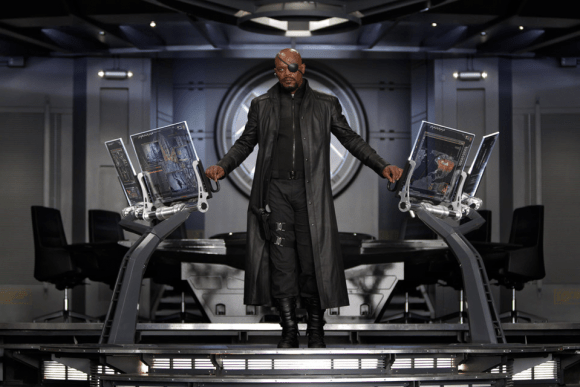
When I got out of bed, it was like stumbling onto the Helicarrier when Thor and the Hulk used it as an arena. The stress had my heart racing and made my speech even messier than usual. Evan was marching around the apartment on the phone trying to get an explanation for an unexpected and rather staggering medical bill. My theory is that marching keeps his energy up during marathon conversations about insurance and durable medical equipment – not naturally thrilling topics. Laura was on the phone at the table hunting down the right type of medical mattress for the hospital bed being donated to me (!!!!). I settled in beside her and she started spooning yogurt and pills into my mouth while on hold. Things must have been going well for her since she still in Bruce Banner mode. God help whoever tried to blow her off; she’s secretly the Hulk, and she’s on my side. Between her fierceness and Evan’s Captain America-esque determination, I felt plenty loved.

I also felt useless.

We finished with the pills, and Laura took the dishes to the sink. Then, as she dialed another number, she slid a piece of paper my way with notes about what she learned so far to catch me up. She went into her room to continue her work, and Evan parked himself next to me, hanging up and diving straight into a summary of where he was in his investigation. I made some notes about emails I could be writing to help, and noticed my voice getting stronger. His phone rang, he kissed my head, and he was off.

Laura’s door flew open at that moment. She raced to the table, skidding across the floor in her rush to get more scratch paper. I laughed hard, and she struggled to remain calm and polite to whoever was on the other end. Business now; laughter later.

Good caregivers can make people with ALS feel like Helicarrier leader and superhero guide Nick Fury. We can’t always speak or even hold a pen to write a phone number. If we are having a really bad day, yeah, we might be wearing an eye patch. Our minds are still sharp, though. There are days when we need rest, but there are also days when we like commanding the Helicarrier by pitching in, being informed, sharing our opinions.

We are grateful to the caregivers who know how to let us take back some control, the ones who remember that every now and then, even the weakest among us likes to stand at the helm, if only to remember how it felt to fly.


nick_fury_helicarrier

Don’t Talk-A-Thon: Part 1

Today is the Don’t Talk-A-Thon, a fundraising event in which participants vow an hour of silence in support of those who are forever silenced by ALS. In honor of this special event, I am sharing a very personal and painful story about the first time that ALS stole my voice. Remember, for me and countless others with ALS, our voices disappear permanently as a result of this awful disease.

The Sound and the Fury

Before ALS, I associated silence with prayer, reading, sleeping, being comfortable with friends. It was full of promise. Now, I know silence can be sheer terror. It falls like a knife from your hands to the kitchen floor, clattering around your bare feet. It paralyzes you with its chaotic power.

I knew it was coming. My voice is fading to nothing; that was established months ago. I hadn’t really imagined what it would feel like, though. I may have had a vague notion that permanent laryngitis awaited me, but I understand now that it’s so much more than that. I learned the truth when I spilled a glass of water by my computer (weak fingers). I couldn’t lift the computer out of the way (weak wrists). I imagined songs, stories, and photos being leeched out of the laptop into the puddle. Panicked, I called to my sister to come help me.

No sound came out. My tongue was heavy in my mouth. I felt like I had been slapped in the face, my breath stolen from my lungs. On the third try, I finally understood. This was my disease, a preview of what’s ahead. My horror rendered me motionless. My sister was in her room talking on the phone, but she might as well have been on another planet. I hit the alarm on my wheelchair, but Laura couldn’t hear me through her door. Malka raced to me, recognizing I needed help, but she couldn’t understand what was happening, and what could she have done anyway? I wanted to scream.

I broke into tears while Malka ran in frantic circles, panting hard in her desperation. A hot, fuzzy tingling sensation climbed the back of my neck, and all I knew was that I needed Evan. Despite my clumsy fingers, I managed to text him that I needed help. He was at work a few blocks away. He flew to me, his footsteps pounding down our hall faster than should have been possible. He crashed through the door and was by my side before I could blink away my tears, as if by moving quickly enough and wanting it badly enough, he could save me.

Evan held me and I sobbed for a while, calming down once I realized I was making a lot of noise with my crying. That was reassuring, but when I tried to speak, my enunciation was too messy to understand. My words sounded like a sad foreign language.

I resigned myself to the fact that I wouldn’t be speaking intelligibly until I recharged. A storm rolled in from the mountains, filling our valley with night dark clouds so it seemed far later than four in the afternoon. The lights in the living room became far too yellow and dim. My bird screamed then, and fluttered around his cage. I checked his food and water; there were plenty of both. His favorite nap area was clean. Laying back down, I felt awful that I couldn’t figure out what he needed. He chirped and squeaked, but it meant nothing to me.

I drifted off watching him flap around, never figuring out what he was trying to say. I remember thinking, though, just as I lost consciousness, that I had only narrowly escaped my own cage. My stomach rolled and I got dizzy imagining the door still open, waiting for me.

A Seat at the Table

Seeing my mom reminds me I am changing, though slowly relative to most other people with ALS. When she visits, there is always a lot for her to learn: the new way to help me dress, which silverware I can handle, what medicine I take at night. The list goes on. My sister and husband swoop in, explaining so much I didn’t even realize they thought about:

“When she says she’s thirsty, you have to grab the pillow under her feet so she can sit straight up. That way she won’t choke,” Laura says, pulling the pillow away and handing me my water.

“Hold the glass for her between sips so her wrists don’t get tired,” Evan says, taking the water from my hands while I swallow.

They must be thinking constantly about my needs. I can look at either of them and when our eyes meet, they burst into action, knowing automatically what I am silently asking. It is amazing, but it can’t be easy, and watching them train my mom, I keep wishing I didn’t need so much, didn’t change so much.

I need to be here in Portland. The care I am getting here is perfect for me, and I am so lucky I made it into the clinic. It is still hard to be away from my parents, though. It’s easier when I think of this time apart as an investment: I will live longer and ultimately have more years with them because of the care I receive here. Watching my mom learn to take care of me as though I am a very strange kind of infant will never feel OK. Neither will seeing my sister and husband throw their time and energy down the drain of my healthcare. I have to believe, though, as the three of them work together, the distance and effort will be repaid one day by my presence at their dinner table, when we all have gray hair and have grown old, just like we hoped and planned long before we ever heard of ALS.

Up All Night

I keep replaying last night in my head. A few hours after going to bed, I started feeling some muscle cramping and spasms. I tried to adjust my position to find comfort, but I could not roll to my side. This is becoming more and more common as the weight of a blanket becomes enough to pin me down. In the past, I have whispered Evan’s name and, half-asleep, he reaches out his hand, clasps mine, and pulls me to relief. I promised myself not to need him last night, though, since he has been up with me each night this past week as I fight a cough. He was clearly worn out.

“I can live with this, I can breathe through this,” I chanted silently.

Evan never complains about the ways my disease wears him down or holds him back. Ever. He is my absolute all, my strength and reason for fighting. He is the steady, calm man I have loved and trusted all of my adult life. Even in his sleep, he looks kind. He deserves sound, peaceful rest at the very, very least. So I lived with the spasms and breathed through them… for an hour. I tried to let his peace and my will be enough, but, like a lung clenching for air after being held underwater, I. Had. To. Move.

I woke him up three more times last night. We will experiment with my medicine tonight to relax my muscles. He will take extra care with my evening stretches. I will bargain with my disease to leave him alone. I will try to forgive myself

A Brave New World

On June 10, 2015, I shared this message with my loved ones…

“Dear family and friends: I am so sorry to have to tell to you that today I was diagnosed with ALS. I am sad and scared, but also hopeful that I will live longer than the average ALS patient because mine is a disease mostly of the upper rather than lower motor neurons. This may mean my lungs will stay functional longer than the average 5 years. No matter how many years I have left, though, I know they will be beautiful because I am so well-loved by my husband Evan and all of you. Please keep me in your wishes, prayers, loving thoughts and light, and know that I am grateful to know you.”

Then my husband and I were swept away into the dizzying rapids of ALS care…

Every three months, I will be attending a multidisciplinary ALS clinic so the progress of my disease can be assessed and I can learn new skills to keep me living comfortably. After a six hour first clinic visit in which I met with my doctor, social worker, occupational therapist, and physical therapist, I am happy to say my breathing and muscle tone are strong and my speech is in a range indicative of slower decline. At my next clinic in September, all of this will be assessed again. We are hoping for a very small amount of change, as this would mean I have slow (rather than average) progression.

“I’m fine,” I insisted, trying to be pleasant even though I was beyond overwhelmed.

Deb shook her head. “Don’t settle. If you are having trouble buttoning jeans or using a fork, tell me. We will figure it out and keep you independent as long as possible.”

Deb, my Occupational Therapist, was the 6th specialist I saw at Clinic the day everything changed. I was exhausted by endless assessments and frightened as I tried to make sense of all the information coming my way. Deb is not one for excuses, though, and I needed her pushing as badly as I needed the follow-up appointments with her where we plowed through a list of tasks that frustrated me and devised alternate ways to complete them. Deb changed my whole perspective on Clinic.

It is, as my neurologist Dr. Goslin says, a place to rewrite the story, even if we can’t change the ending.

We still check my progression, but this disease and the treatment for it no longer simply happen to me.  What I want matters. My goals matter. Deb taught me never to miss a chance to address my concerns and needs so that I can live as well and as long as possible. These hours in clinic, these people who support and hear me, keep me doing what I love. I believe that they may even save my life, keeping me strong until a medication comes out to stop this nightmare.

I have hope, and it is stronger than fear.

My blog’s name is in tribute to Meg Rosoff’s novel, How I Live Now, the ultimate tale of resilience and determination. Just as the main character Daisy learns the true nature of loss (“If you haven’t been in a war and are wondering how long it takes to get used to losing everything you think you need or love, I can tell you the answer is no time at all”), but never gives up, claiming, “Fighting back is what I’ve discovered I do best.”

I plan to use this blog to chronicle my own battle and connect with other ALS warriors. Click How to Help to find ways to join the fight to defeat ALS and care for pALS.


Endless gratitude and love to my husband Evan, who held me when I was diagnosed with a terminal illness, rocked me when I cried myself to sleep for months after, and holds my hand at every single clinic. You are the reason I fight.