Watch My Speech at the CDC National ALS Conference!

3

3

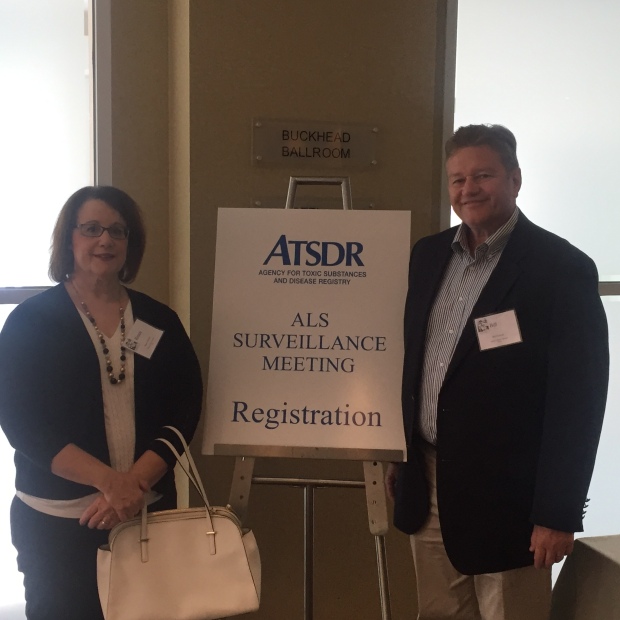
My speech at the National ALS Conference on outreach is tomorrow ( Wednesday ) at 9:30 AM EST! Due to travel complications, I am not able to attend, so my mom will be giving the speech for me! You can watch the event live at this link: http://www.alsregistrymtg.com

IMG_0492

My mom and dad register for the CDC National ALS Conference.

The Power of the Bucket List

5

The approval of Radicava, the first medicine for ALS in 22 years, had me reconsidering my post that labels my belief that I will survive this disease “wild.” Then, the vessel of  my most precious dream was wrecked on jagged rocks I never saw coming.

The federal budget for 2018 calls for the complete defunding of the National ALS Registry, and the shock of learning that my own government would so callously undercut one of the most important parts of the search for a cure left me – and I imagine many others – frightened and enraged. The budget also cut funding to Medicaid and SSDI (social security disability insurance), a fact that barely sunk in. I just didn’t know how to process the realization that the registry was in danger, and Medicaid was as well. Medicaid covers machines, medication, feeding tube supplies, caregiver fees, and so much more that we could never be able to afford on our own. On top of that, if we lost the $600 per month we receive through SSDI, how would we afford the expenses Medicaid doesn’t cover, like my daily injections of B12?

I chose to focus on saving the National ALS Registry155 a campaign I am continuing to expand. Narrowing my focus and taking action gave me a chance to salvage some of my former optimism.

Then came the second hit: a health care bill drafted in the dark that slashed Medicaid so deeply that 14 million of the most expensive beneficiaries – including the ALS community – would lose coverage and very likely their lives. My joy over Radicava seemed distant, even foolish. What good is this new treatment if we can’t afford it because our insurance has been gutted or taken away? Obstacles were coming from all sides. Rising tides of depression and fear threatened to drown me. They still do.

I had to find a path back to joy and hope in the midst of the battles I had been forced to join. Enter my inspiring friend Glynis, who made a bucket list with her husband Vince after he was diagnosed with ALS. The list helped them focus on enjoying the present, no matter how hard it got, and gave them things to look forward to. I decided to follow her example, and I came up with a list that includes both things I can accomplish despite my disease and other dreams I look forward to achieving after I am cured. Now, I have something new to think about as I try to fall asleep and worry creeps in. Have a peek at the list. What would you add to your own?

  • Give people a reason to remember my name
  • Start a new tradition
  • Go to a palm reader
  • See the Northern Lights
  • Celebrate my 50th wedding anniversary

Drug Trial FOMO

I have a serious case of drug trial FOMO (fear of missing out). I just completed my year-long Tirasemtiv drug trial. I don’t know whether I was on the placebo or active drug. However, I have been invited to join the open-label extension of the clinical trial. That would mean I definitely would have an active dose. Meanwhile, the company that created Tirasemtiv is applying for FDA approval at this very moment. I take all of this information to mean that the medication worked: it preserved strength in the diaphragm, preventing a decline in lung function. In that case, being in the open-label trial is a great opportunity because I will have the drug immediately and keep my lungs from deteriorating.

There is a complication, though. If I join the open-label extension, I will take Tirasemtiv for the rest of my life as a way to research long-term safety of the medication. The open-label extension also requires that I not participate in any other trials. There is a trial coming up in April that I have been excited about, but is it promising enough to give up Tirasemtiv? It would help if I knew how well Tirasemtiv works, but I don’t think that is clear yet, even to the research team. I do know that throughout the study, my lung function did not decline at all. So is Tirasemtiv the safe bet?

Reading the news, it seems that possible cures are being found more and more quickly. Tirasemtiv is a treatment, not a cure. Let’s hop back to the experiment I mentioned that will take place in April. That one might be a cure. How can I turn my back on that? It seems like if I play it safe, I could be excluding myself from something miraculous. On the other hand, if the drug trial in April fails, I will have given up lung protection for nothing.

The original plan was to protect my lungs at all costs no matter the collateral damage, and that way, when the cure comes, my vital functions will be strong enough for me to properly heal. And what is this collateral damage? It is pain. For the past year, I have chosen pain in order to be in this trial. Being on Tirasemtiv means I cannot safely take Zanaflex, the medication that completely erases my spasms and muscle cramps. Instead, I am on a cocktail of a narcotic (Vicodin), a controlled substance anxiety medication called Clonazepam, and the muscle relaxer Baclofen. Evan also massages Bengay all over my limbs when my cramps get bad. Plus, I have a sizeable stash of medical marijuana (60% CBD) that is also working to loosen my joints and muscles. That is the price of my involvement in the study, and I will continue to pay it if I join open-label.

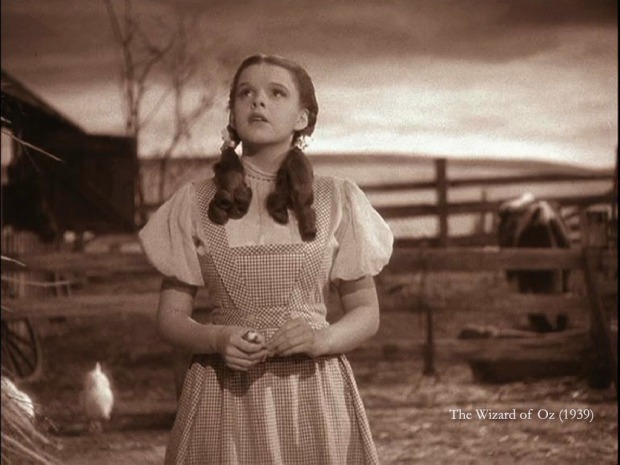
Just like the structure of this narrative has spiraled into dizzying circles, my thoughts are a tornado. It hops throughout my imagination, stirring up awful and wonderful scenarios. It rips through my sleep, and there is no seller with Aunty Em waiting to make it all better. I’m Dorothy out in the storm dreaming of Oz with no idea how to get there.

wizard-2-copy

The Luckiest (Wo)Man: Ales for ALS

Check out this Father’s day brew kit. It’s part of the Ales for ALS program. A few months ago I was trying to decide what I wanted to brew and when I saw a kit with the Ales for ALS logo, I knew I had to do it. Cheers, this one is for you Rachel! – Cookie

The first thing I knew about Cookie was that he had a tattoo. At least, that was the rumor going around our study abroad group as we prepared to leave our college and head to Russia for the summer. At 19 years old, I thought a tattoo meant Cookie must be a pretty tough guy, so when we ended up on the same plane, I was a little nervous. I quickly found out, though, that he lives up to his nickname. One the first leg of our journey from NYC to St. Petersburg, we had not slept for at least a day, and he was still in a good mood, laughing and making friends under the brutal fluorescent lights of the Frankfurt airport. I don’t think I ever really let him know how much I liked him – I was pretty shy – but he always lightened the mood, and that was important when traveling with a small group in blistering heat.

I still remember everyone leaning against a giant statue in Novgorod, hoping for some shade and whining loudly. Cookie pointed out that all the shade was under the trees, but we ignored him and stayed on the path. He shrugged his shoulders, strolled across the lawn of the cathedral we had just toured, took off his shoes, and threw back his head, opening his arms to enjoy the cool shadows. I took a picture of him and remember thinking, “What is so scary about taking off my shoes, walking off the path?”

That sums up who Cookie is. I have remained friends with him for ten years and although he lives far away, he has been unwavering in his support of me as I battle ALS, so although I was surprised to get the message about Ales for ALS from him today, I really shouldn’t have been. He is a true friend, and I am so grateful that despite time and distance, he is on my team.

Today, I learned though Cookie that Loftus Ranches and Hopunion created Ales for ALS to support ALS research:

“They have offered participating brewers access to a proprietary hop blend, free of charge, in exchange for participation in Ales for ALS™. Each brewer will brew special beers with these hops and will donate a portion of the sales to ALS Therapy Development Institute, the world’s leader in ALS research” (http://www.alesforals.com/).

Cookie had a great time brewing and listening to his favorite Russian brewing song. He has more than done his part. Now let’s do ours. Either brew some Luckiest Man Pale Ale for yourself, or find a participating brewer near you, gather some friends, and beat the heat with Ales for ALS!

Don’t Talk-A-Thon: Part 3

“You do not need to leave your room. Remain sitting at your table and listen. Do not even listen, simply wait, be quiet still and solitary. The world will freely offer itself to you to be unmasked, it has no choice, it will roll in ecstasy at your feet” – Franz Kafka.

Those of you who participated in the Don’t Talk-A-Thon are sharing such a wide variety of stories with me. I must thank you again for being both involved and open about your experience. Like any well-designed activity that includes thoughtful people, the results were not entirely what we expected. I heard two main opinions of the hour of silence.

First, the most predictable and popular opinion: silence is uncomfortable! I know this is what I expected to hear, and I imagine the event organizers did as well. Being silent in a checkout line when a clerk is asking questions and you are fumbling for your credit card is awkward to say the least; you can practically hear people behind you wondering what is wrong with you. Or when you see your dog eating garbage and you are too weak to stop him and unable to call to your husband in the next room… that’s enough to make a person panic. Believe me. I’ve been there. Forced, unbreakable silence makes you dependent faster than you can imagine. Your position shifts to observer rather than actor in your own life, especially in a culture that values talking incessantly, quickly, and loudly. In conclusion, silence sucks.

This brings me to the second opinion of the hour of silence, the one that caught me off guard: there is peace in silence; why don’t we embrace it more often?

I know I said that I no longer find peace in silence, largely because choosing when to be silent is a luxury I hate losing. It makes every silence a tiny prison. Still, when a friend wrote the following, her words resonated with me the more I thought about them:

I’m silent a lot of time, between reading, writing and gardening. I wish we lived in a culture that didn’t value talking, incessant talking, so much. It’d be easier to hear what matters.

My first, sleep-deprived, frantic thought was, “This is not about gardening! It’s about my life!” I wrote back to her in what she would probably generously call a snappy tone.

And that’s the thing that got me thinking in those guilty minutes after clicking send… My friend is generous, and wise, and infinitely kind. Her ideas have always been worth hearing, her words respectful, so what was I missing?

I read her note once more and remembered her passion for gardening. Whether she is working alone or with family, it is clear she is most in her element when quietly nurturing precious little things. She’s got wit and sass – plenty of it – but she knows the value of balance. She understands what Franz Kafka meant when he said the world will unfold for those who wait for it quietly. However joyful a chatty dinner with friends can be, revelation and wonder don’t live there. They live in sitting side by side watching a sunset together, letting yourself feel deeply in another’s presence.

This is such an important reminder for both pALS and their loved ones. Those of us with ALS who are losing our speech will continue learning new ways to “talk” and asking for better technologies to give us our voices, but healthy people will always talk faster and louder than we can manage. We will still be in an endless race to keep up. So maybe, every once in a while, give us a rest. Take us to your garden. Put our stiff, curled hands in soil, and for once, let our breaking bodies be a part of creation. Join us every now and then in the silence until we forget to think of it as a cage. After all, the greatest, freest things are silent…

“See how nature – trees, flowers, grass- grows in silence; see the stars, the moon and the sun, how they move in silence… We need silence to be able to touch souls.” – Mother Theresa

Don’t Talk-A-Thon: Part 2

Hello all! I’m already impressed, touched, and overwhelmed by your stories of how your hour of silence went today. I would LOVE to share your stories of silence; it would be amazingly powerful to have them all in one place. Please consider sharing your experience below. If you are not able to spend an hour in silence today, go ahead and share what you would miss or fear if you were stuck in silence. Your empathy can move mountains and inspire ALS awareness!


I didn’t speak for an hour and it wasn’t all that easy… My mom and I were sitting at the kitchen table having coffee reading the paper and being silent. Every once in a while a word would almost come out and I would catch myself. I was mindful of the fact that this Made communication so difficult especially with someone else in the room. A lot of other emotions such as frustration and anxiety. Rachel is so brave and I grieve for her and for Evan every day but at the same time I remain hopeful that one day there will be a breakthrough, the one we all are waiting for.” – Renee (my mom!)


I had planned on taking the vow of silence, but my husband’s feed tube had an issue, and I needed to speak to our hospice team. But that then brings up they thought of, what if he needed to communicate the issues to the team? How frustrating and difficult it would be. So even without taking the vow, I know the horror he would have to go through. ALS may cripple one person’s voice, but thankfully, there is usually a village to roar for them!” – Glynis, author of Life After ALS: A Caregiver’s Journey


“I participated today. I occupied myself with reading a new book next to Harley on the bed, and to be honest it was hard. For one, I drifted off for 5-10 minutes, and it was hard not to talk to Harley, as I normally would, as I petted him with one hand and held my book in the other. At first, I was frustrated by my forgetfulness, but then I reassured myself the whole point was to think about what it would be like if I couldn’t verbally express myself. I was ‘trying on’ silence and checking myself in the mirror, so to speak. I did share my mission with a friend this morning at church, and it moved her. So I don’t win any awards today for successfully keeping silent, but my intention was pure.” – Mitzi


I wasn’t able to do the hour of silence today but if I did it would be so difficult to not be able to tell my family I loved them.” -Sarah


Don’t Talk-A-Thon: Part 1

Today is the Don’t Talk-A-Thon, a fundraising event in which participants vow an hour of silence in support of those who are forever silenced by ALS. In honor of this special event, I am sharing a very personal and painful story about the first time that ALS stole my voice. Remember, for me and countless others with ALS, our voices disappear permanently as a result of this awful disease.

The Sound and the Fury

Before ALS, I associated silence with prayer, reading, sleeping, being comfortable with friends. It was full of promise. Now, I know silence can be sheer terror. It falls like a knife from your hands to the kitchen floor, clattering around your bare feet. It paralyzes you with its chaotic power.

I knew it was coming. My voice is fading to nothing; that was established months ago. I hadn’t really imagined what it would feel like, though. I may have had a vague notion that permanent laryngitis awaited me, but I understand now that it’s so much more than that. I learned the truth when I spilled a glass of water by my computer (weak fingers). I couldn’t lift the computer out of the way (weak wrists). I imagined songs, stories, and photos being leeched out of the laptop into the puddle. Panicked, I called to my sister to come help me.

No sound came out. My tongue was heavy in my mouth. I felt like I had been slapped in the face, my breath stolen from my lungs. On the third try, I finally understood. This was my disease, a preview of what’s ahead. My horror rendered me motionless. My sister was in her room talking on the phone, but she might as well have been on another planet. I hit the alarm on my wheelchair, but Laura couldn’t hear me through her door. Malka raced to me, recognizing I needed help, but she couldn’t understand what was happening, and what could she have done anyway? I wanted to scream.

I broke into tears while Malka ran in frantic circles, panting hard in her desperation. A hot, fuzzy tingling sensation climbed the back of my neck, and all I knew was that I needed Evan. Despite my clumsy fingers, I managed to text him that I needed help. He was at work a few blocks away. He flew to me, his footsteps pounding down our hall faster than should have been possible. He crashed through the door and was by my side before I could blink away my tears, as if by moving quickly enough and wanting it badly enough, he could save me.

Evan held me and I sobbed for a while, calming down once I realized I was making a lot of noise with my crying. That was reassuring, but when I tried to speak, my enunciation was too messy to understand. My words sounded like a sad foreign language.

I resigned myself to the fact that I wouldn’t be speaking intelligibly until I recharged. A storm rolled in from the mountains, filling our valley with night dark clouds so it seemed far later than four in the afternoon. The lights in the living room became far too yellow and dim. My bird screamed then, and fluttered around his cage. I checked his food and water; there were plenty of both. His favorite nap area was clean. Laying back down, I felt awful that I couldn’t figure out what he needed. He chirped and squeaked, but it meant nothing to me.

I drifted off watching him flap around, never figuring out what he was trying to say. I remember thinking, though, just as I lost consciousness, that I had only narrowly escaped my own cage. My stomach rolled and I got dizzy imagining the door still open, waiting for me.