Back to Basics: What I’m Grateful for This Thanksgiving

This is not the Thanksgiving piece I intended to write, but this year I’m grateful and lucky simply to be alive. I’ve been hospitalized 3 times this fall. The first time I had double pneumonia. My lungs were a total white out when I was admitted. Lungs are supposed to be black on an x-ray, but mine were completely white and filled with fluid. No matter how much oxygen they gave me, I felt like I was suffocating.

The second time, one of my nurses saved my life because she noticed very quickly that my secretions – what I cough up – were getting too thick and had a blood tinge. I almost died during that hospital visit when my blood pressure dropped 80 points all the way down to 46, but I’m not ready to talk about that.

The third time I was hospitalized, Evan took my BP for morning vitals, and it was 72. He kept giving me midodrine to raise my BP, but it didn’t work. I was unconscious and Evan couldn’t wake me up for more than a second to answer questions like what my name was, so he called 911. I woke up in the ER. He explained why I was there. It is disturbing not to remember. I vaguely recall getting a CT scan, but it was like a dream.

I have a 10 cm wound from the rough treatment at the hospital. Evan and I are worried because I can’t feel anything at all on the wound, not even when Evan puts cream on it, and that is a sign of nerve damage. It’s getting wider and deeper every day. It’s a Stage 3 wound that is currently 3 cm deep.

I had planned to write Evan a letter of love and gratitude for my Thanksgiving post, but I’m exhausted so this will have to suffice:

Evan teaches me how to love every day. He has been taking care of me for 8 years without a break, and he is on call 24/7. There are no words to describe and thank him for the countless sacrifices he has made to ensure he gives me the best possible care. His love and devotion are almost beyond comprehension.

“Love is patient, love is kind…
It is not self-seeking,
It is not easily angered,
It keeps no record of wrongs…
Always protects, always trusts,
Always hopes, always preserves.
Love never fails.”

1 Corinthians 13:4-8

This is perhaps the most loved section of Paul’s letter to the Corinthians. Paul was writing about Evan. He just didn’t know it.

Photo by Tima Miroshnichenko on Pexels.com

My FDA Advisory Committee NurOwn Statement

Dear Drs. Califf and Marks,

I am a young woman living with ALS, and I am writing in strong support of the approval of the ALS treatment debamestrocel, which has proven to be both safe and effective in clinical trials.

ALS is a brutal enemy. This equal opportunity killer destroys the nerves that allow us to move, speak, eat, swallow, and eventually breathe. It is 100% fatal and has no cure. It can strike anyone at any time.

When I was diagnosed with ALS at age 28 in 2015, I lost everything. My body, without warning or reason, turned on me, and that meant the end of so much. My career as a 5th grade English teacher and dreams of motherhood and growing old with my husband were all swept away like sand when I believed they were stone.

Let me paint you a picture of my life with ALS. My day starts with 40 minutes of breathing treatments to prevent infection in my lungs that leave me feeling like I’m suffocating. We stop when my oxygen drops to 92.

I’m on a ventilator which is supposed to provide me with full, even breaths, but if the settings are even slightly off, it either doesn’t provide me with enough air or pushes too much too fast, forcing me to hyperventilate and pass out.

I survive on a feeding tube and haven’t enjoyed real food in 7 years. We start my “food,” a beige nutrition solution that comes in cartons, after my breathing treatment. It’s delivered to me through a pump over the course of 20 hours, often leaving me nauseous.

Because I am on a ventilator, I can’t produce sound, not even a whimper when I’m in pain. I communicate with a device called a Tobii that uses eye gaze technology. I am actually typing this letter with my eyes.

Why not write to you with my hands like a healthy person? I forgot to mention that because of ALS, I’m a quadriplegic, meaning I can only move my face. I miss being able to touch. I haven’t hugged my husband Evan in 6 years. I can’t even hold his hand. I’m totally paralyzed and totally dependent on others to meet my every need.

Imagine you can’t scratch yourself when you’re itchy, can’t adjust the thermostat or even cover yourself when you’re cold, can’t clean yourself after using the toilet. That’s my life. ALS has stripped me of my independence. I’m utterly helpless without others, and I am nothing without my machines.

The ALSFRS-R is a tool to attempt to quantify how ALS is affecting a person. A 1 score increase could be the difference between choking and eating normally or requiring a walker and walking with a minor foot drop.

The ALSFRS-R is imperfect at best. One person can have a score of 37 and be walking and breathing normally but have their hands, swallow, and voice impaired, while another person with a score of 37 could have significant shortness of breath and require a power wheelchair but have full function of their voice, swallow, and hands. It is not an accurate representation of every individual’s unique case or the changes that are occurring.

My 2015 score was 34, and my 2021 score was 1. Does a score of 1 accurately reflect me? I still communicate, live, love, smile. I have rich friendships and a healthy, passionate marriage. I’m a talented writer who raises awareness of the reality of ALS by blogging (howilivewithals.com). A score of 1 is completely unfair attempt to display ME.

Debamestrocel has achieved remarkable feats in clinical trials, including maintaining and even increasing ALSFRS-R points. Every point matters in preserving an individual’s independence and dignity. Debamestrocel also improved CSF biomarkers in ALS. No other drug has accomplished this. The benefit to those in the early phases of ALS is clear in P3 trials.

Debamestrocel is a beacon of hope to members of the ALS community, and with rapid disease progression ending in death within an average of 2 – 5 years, we don’t have the luxury of time to wait for treatments.

Give those in the early stages of ALS a chance to have more years on earth and make precious memories with their loved ones. Approve debamestrocel.

Sincerely,
Rachel Doboga

You’re Invited!

Consider this your invitation to write your own statement urging the FDA to approve NurOwn / debamestrocel! The deadline is September 20th, so get moving! The organization I AM ALS has created a wonderful guide to writing a powerful statement. Check it out! And remember, you MUST include the following:

Docket No. FDA-2023-N-2608 for Cellular, Tissue, and Gene Therapies Advisory Committee; Notice of Meeting; Establishment of a Public Docket; Request for Comments

The 4th of July – ALS Style!

This is a photo I took on our cross-country road trip just before we crossed the Mississippi River.

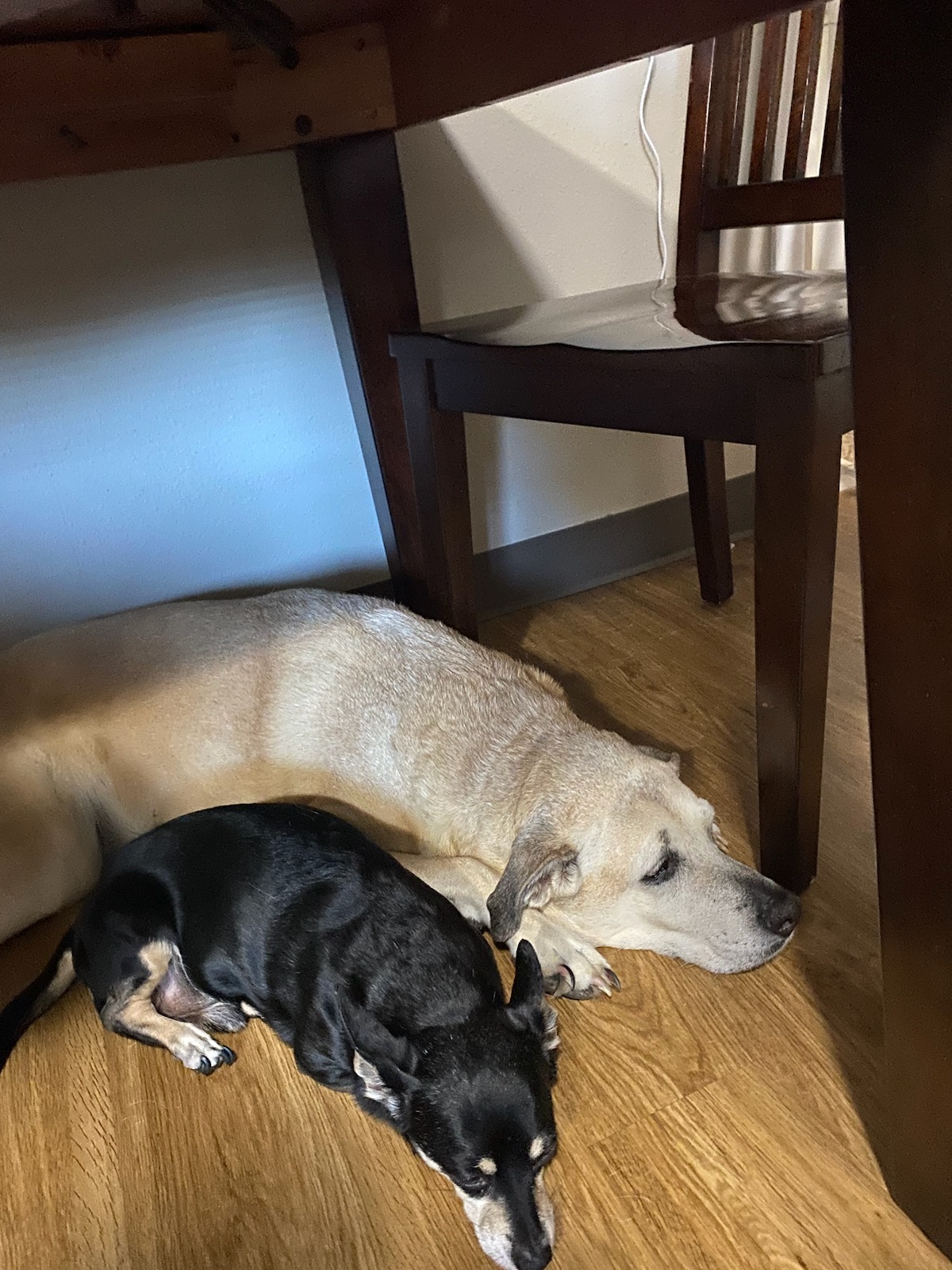
Ever since we adopted dogs, I haven’t been a fan of fireworks. They terrified Malka, our dog who passed away on September 26th, which was surprising because she was a fierce protector. She used to huddle with our other dog, a chihuahua named Pickle, to hide from the fireworks. We’re not surprised Pickle is afraid, though. As Evan says, we raised a coward. Here’s a picture Malka and Pickle huddled together. By the way, our bird Jasper is a saint during fireworks.

Pickle always got to be the small spoon.

Now that you know how our pets celebrate, it’s time to hear my idea of how to celebrate the fourth, and to me independence means a cure! Let’s start with getting me off life support – goodbye ventilator! No more food pump for my feeding tube pushing food in my stomach 24 hours a day. I want to EAT!

I will start with enchiladas from Los Gorditos in downtown Portland next to Powell’s Books. Then Thai food and falafel in the huge city block of food trucks. I will finish with Indian and Ethiopian food before heading home where Evan will make all my favorite dishes. I will end the feast with a nap with Evan.

And since I’m cured, we might as well imagine my nerves have regenerated so I can cuddle with Evan during my nap. Our last hug was 7 years ago! I want to hike and climb. We once climbed a 50 foot cliff in Great Falls, Virginia. I was strong! I want to dig for fossils and row Carlos the red canoe at sunset, splashing Evan and singing all the while. I want to drive for hours and hours on a thousand road trips. We did four major road trips, but my favorite was our cross-country trip. We went the northern route to end in San Francisco, but I want to do the southern route, too. I want to see and do everything!

Happy fourth of July!

Here’s a picture of us in Carlos the red canoe setting out for a sunset paddle on the York River in southern Virginia.

Rejoice, for Yesterday a Miracle Happened!

Photo by Pixabay on Pexels.com

When I read the news, I immediately started sobbing. We were about to start trach care and Evan was holding all the materials, but as soon as he saw the first tear fall, he put it all down.

“What happened? What’s going on, honey?”

I could hear the mounting panic in his voice, but I was crying too hard to type my answer – that these were tears of joy because the FDA had made the right decision and approved Tofersen, a miracle drug for people with SOD1 ALS and familial ALS. Thank God, Goddess, and Jesus Christ I don’t have either of those. I’m very, very lucky. Still I am overjoyed! I know one family who lost 33 people to ALS. They cut through generations and you’re almost guaranteed to get it.

Evan wiped my tears so I could type. “I’m so happy! Tofersen just got accelerated approval from the FDA. It’s almost like a cure for familial ALS! Everyone has been been campaigning so hard for this on Twitter. It’s a dream come true!”

I feel bad for not including him in my passion over the past few weeks, but we have been consumed by our efforts to put together a fundraiser for our dog Pickle who desperately needs veterinary care.

I go on and on. “One man was on life support and now he’s ice skating with his daughter! And another woman’s ALS clinic score hasn’t changed in 2.5 years! Mine went down every 3 months until they stopped measuring. She cooks, does laundry, does everything she shouldn’t be able to do!”

Evan raises his eyebrows, speechless.

“The FDA approving Tofersen is a huge deal for the whole ALS community because it’s the FDA recognizing a biomarker for ALS. Who knows where that could lead?! This is the 3rd ALS treatment to be approved in 6 years. Things are really ramping up! I’m not eligible for any of them because I have sporadic ALS and I’m on a ventilator, but I’m still absolutely thrilled for the rest of my community!

“I’m proud of you, honey. You contributed to this.”

“Barely. Just a few tweets and reading a lot.”

“That’s still something. I love you.”

I’m suddenly very tired. All the crying and the roller-coaster of emotion wore me out. I have a feeling this is just the first wave of joy and tears today. Evan closes the curtains and peaceful sleep takes over my Tofersen dream come true.

Getting Back My Voice?

3

2

This news is both moving and a profound reason for hope! When I was diagnosed three years ago, voice banking would have taken eight hours, and I simply didn’t have the strength – or money – for such an endeavor. As you will see in the video,141136 this company was able to recreate this man’s voice with only three hours of recording. Maybe one day, my half hour of recording will be enough to get my voice back!

Draw on the Magic of New Years to Improve Your Health (Even if You Have ALS)

2

3

I have never really been one to get excited about New Years. Early on, my mom instilled in me a lasting fear of the hordes of drunk drivers careening about all night. I am now 30 years old, and to this day, I have never been to a New Years Eve party I couldn’t walk to. I will probably continue this habit for the rest of my days because no one can prove that it hasn’t saved my life.

Rachel does a Sparkler Dance

2006 ; The acceptable distance to a New Year’s Eve party = My front porch

As for New Year’s resolutions, I remember my dad saying every single year, “I don’t see the point of making resolutions. If you need to make a change in your life, don’t wait. Do it immediately.” This advice, combined with my perfectionist tendencies, made me a reflective, proactive individual.

Lately, though, I have been thinking about the value of making resolutions. I still agree with my dad’s advice because, frankly, if you’re only taking stock once a year, you’re not living your best life. However, when everyone around you is examining their lives and discussing changes they want to make and goals they want to set, a uniquely supportive environment forms. If you randomly tell someone at any other time of year that you want to be better about keeping in touch with family or watching less TV, you just don’t get the same reaction as you do if you share those goals as resolutions around New Year’s. This time of year lends gravity to decisions. It signals that this is a Big Deal to you, which can elicit bolstering enthusiasm from your social circle or prompt advice and conversation. Best case scenario, you may end up with a resolution buddy who loves your idea and hops on board. Having someone to help you through rough patches, prevent backsliding, and celebrate successes with can make all the difference in the world.

Because mental health is on my mind more and more, I have been thinking about what gets me down, what triggers my depression and PTSD, and how I handle (or more accurately, don’t handle) stress. I began research new-to-me ways to improve my mental health and maybe even my physical health as a result.

3

This NY Times article offers suggestions on ways to be healthier in 2018 that even those of us with ALS can try. The ones that appealed to me the most were:

  • GETTING BETTER SLEEP 147154 – There is a LOT of information on this page. It is divided into five sections, which you can navigate by clicking on the submenu text immediately beside the title in the black bar. Or you can just hit the down arrow. I especially liked “How to Wake Up,” which is nested under the section called “Morning Lark or Night Owl.” (See what I did there? Nest? Lark? Owl? You’re welcome.)
  • CONQUERING NEGATIVE THINKING 151155 – The art of acceptance is a tough one to learn, but if I want to stop the cycle of dark thoughts that keep me up at night, I better start learning.
  • REDUCING STRESS 151156 – Whatever your anxious little mind likes to obsess over, from relationships to your health, there’s something here to help. Now the key is not to stress about reading this whole article.

One of the ways that the article lists to decrease stress on the body and mind is yoga. That may seem impossible for many of us with ALS, but chair yoga is real thing. I recommend exploring video guides on YouTube by searching “gentle chair yoga,” which will yield countless results. I especially enjoyed this ten minute wheelchair yoga video. The neck stretches felt heavenly (using the Tobii requires me to keep my head very still, and after a few hours of writing, I get vicious neck cramps).  I could not actually do most of the movements because I can barely move my arms, but I think a caregiver could help me. I’m super excited to see if I can get in Eagle Pose. Before ALS, that was my favorite way to ease back pain. Note: it  is important that you do close your eyes when the instructor tells you to. This will allow you to focus on the sensations of the practice.

3 Things to Be Grateful for This Thanksgiving If You Have ALS

3

2

Gratitude

Those of us living with ALS or loving someone who has it are gratitude experts. Don’t misunderstand me. We have our dark, bitter moments. As we catalogue our blessings – the precious time we have had on earth, our remaining abilities – we inevitably think about the other side of the coin. Yes, I have lived 30 full years, but how many do I have left as this disease does its wicked work? I can still move my legs, but God, do I miss walking and dancing.

This post is meant to break us and our loved ones out of this cycle. This Thanksgiving, let’s be grateful for the following:

1. The exciting research currently underway

In the three years since the Ice Bucket Challenge, we have seen more progress in research about the causes of and treatments for ALS than I ever dreamed of when I was diagnosed. Just a few months ago, the FDA – with guidance from the ALS Association – approved Radicava, the first new drug for ALS in over 20 years! To keep up with advances in research as well as drug trial news, follow these organizations on Facebook or Twitter: The ALS Association, ALS TDI, and ALS News Today.

2. We are not alone

In addition to the local monthly support groups hosted by The ALS Association, did you know that this fantastic organization arranges fun events for ALS families year round? My chapter hosts a Zoo Day and a picnic gathering at a local farm. Follow your local chapter on Facebook or Twitter so you don’t miss out! You can also get support without even leaving home by joining online support groups. I belong to six on Facebook!

3. Caregivers show us love every day

I am constantly amazed and humbled by the devotion of my caregivers. Whether they are family members, friends, or professionals we hired through an agency, they work tirelessly to see to my personal needs, from feeding me to toileting. What’s more, they do it in a way that preserves my dignity. Then, I think of all the ways they support Evan. An ALS spouse is never truly off duty, so it’s easy to get behind on housework and neglect self-care. My caregivers make such a difference in Evan’s quality of life by helping out with laundry and staying with me while Evan runs errands or takes a little time for himself. Make a list of everything that your caregivers do for you. It will give you something to do during the four hours your turkey is it the oven.

On that note, remember that November is Caregivers Appreciation Month. It’s not too late to thank your caregivers with a heartfelt note or some flowers!


This post is dedicated to my caregivers: Amelia, Aubrey, Brenda, Cindy, Evan, Mallori, Melissa, Paige, and Renee (AKA my mom).

Unabridged: “Is Your Doctor Hurting Your Mental Health? Why You Need an Emotionally Intelligent Doctor and How to Find One”

3

3

2

If you are anything like me, you do a little research before choosing a doctor. Patients can easily learn about the traditional aspects of their doctor’s qualifications, such as the college they attended, years practicing, and awards earned, with a simple Internet search. However, it’s quite a bit harder to get a feel for a doctor’s emotional intelligence. Emotional intelligence is the ability to think and gather information about emotions, and then to use that information to achieve goals. Goals may include managing one’s own or others’ emotions, like staying calm, cheering someone up, or deciding how to share important news.

Whether or not your doctor practices emotional intelligence will make an enormous impact on the quality of your care and mental health. At best, a doctor lacking emotional intelligence can make you feel unheard, unimportant, or confused. At worst, you may end up feeling completely devalued or even traumatized.

Let’s travel back in time one week. Zoom in on me lying on the table in the OR. Right away, things started going wrong. I stayed on the table for a half hour while nurses darted around me like frightened birds, trying to find out where the surgeon was through every phone and pager in the room. One nurse even ran out into the hall to ask random people the question on everyone’s lips: “Where is Jeff?” I knew the instant he finally arrived because he owned that room. Even though my face was covered, I could feel him walk towards me, the nurses falling silent as he passed. He never paused his diatribe about paperwork and how he refuses to do another page today. He didn’t even stop when he put his hands on me. I remember thinking, he should see my face, speak my name, explain the procedure to me, anything to indicate that he knew he was touching a sentient, feeling being. That’s what an emotionally intelligent doctor would do. When he touched me, I felt like a piece of meat.

Next, the team couldn’t sedate me because of my low blood pressure. I was paralyzed when I heard this. That’s right, heard as in, overheard. No one said, “Your blood pressure is pretty low. Has this ever happened before?” No one said, “If we do this procedure right now, you won’t be able to have a sedative. How do you feel about proceeding?” Taking care of a patient means approaching him or her with empathy. A cornerstone of emotional intelligence, empathy consists of admitting ignorance about a person’s inner life and taking steps to remedy that ignorance by asking questions and imagining a different perspective. However, Dr. Jeff was too busy ranting about his least favorite nurses and why they should get fired to address me, much less ask for my opinion.

The team gave me Lidocaine, which didn’t cut it – pun intended. Apparently, Dr. Jeff remembered he was operating on a person because he finally spoke to me: “You are going to feel just a little pressure here.” I braced myself. Then, a fire alarm went off in my brain, screeching, “Sharp! Sharp! Sharp!” as red strobe lights blinded me. I cried out when I felt the blade going in and out of my skin.

“You are going to feel pressure, there’s nothing wrong with that,” Dr. Jeff patronized. Did he forget I was not sedated?

The next thing I heard was, “Wow, she is bleeding all over the place.” This is not what you want to hear immediately after someone slices your jugular. It seems that one of my medications contains an anticoagulant. At that point, an emotionally intelligent doctor would have addressed me to manage my emotional experience of the surgery and reassure me. You probably know Dr. Jeff well enough by now to realize that this didn’t happen. In fact, after he closed the artery, he joked, “Now don’t go repeating anything you heard in here.” Naturally, I interpreted this comment to mean, “Hey, Right Shoulder and Side Neck, thanks for being such a good sport. Feel free to publish this experience as a non-example in your article on emotional intelligence in ALS News Today.” So here we are.

Apparently, a lot went right with the surgery. The results were exactly as hoped for. Still, imagine my surprise when I returned to my room to find my mother and husband smiling. They squeezed my hand, kissed my forehead, and told me how brave I was. “The surgeon stopped by and said that the procedure was a success!” my mom said.

It was then that I started to cry. The experience of being helpless to pain and violence dragged me back eleven years to the night I was nearly murdered. My PTSD symptoms flared to life; anxiety and depression crept in, first through nightmares, then into my waking life. I kept thinking about how different my mental state would be if Jeff had just spoken to me. I remembered how my would-be killer barely spoke to me, either. Why would he? I was meat to him, too.

How does the term “medical success” not take patient experience into account? Answer: when the success is being described by a doctor who shows zero emotional intelligence. No one deserves this treatment, especially not those made vulnerable by disease. Emotional intelligence in doctors is an absolute must, just as vital as the medical degree that allows them the privilege of being in the room with you.

Lucky for me, the doctor I see most frequently, a neurologist named Dr. Goslin, is an expert at practicing emotional intelligence. From the moment I stepped into her office, I felt like I was the most important person in the world to her. She wanted to know all about me, way beyond my ALS story. In fact, she knows as much about me as some of my friends do. The day I met her, all she wanted to do was listen. Then, she asked me about my emotional state and medical goals. I told her I felt positive, ready to fight, and I wanted to survive this terminal, currently uncured disease.

Her response? “I think that’s a great goal, and with the way research is going we definitely have reason to hope.” I knew what I had said would be laughable to many people, but she managed to respect my feelings without making me promises she couldn’t deliver. That conversation set the tone for every future interaction we had. We follow a treatment plan that focuses on the goal of survival by staying ahead of the disease and minimizing its strain on my body while I wait for the cure. Dr. Goslin used emotional intelligence to learn about me and achieve her goal of designing a treatment plan for me, not just my disease. Now every time I see her, I feel empowered. She is an important part of keeping my mind healthy.

When I decided to write about how the emotional intelligence of doctors can affect a patient’s mental health, I asked Dr. Goslin if I could interview her. She agreed with enthusiasm.

At the beginning of the interview, she said, “I think that emotional intelligence as you have defined it is one of the most important aspects of being a good clinician. Acknowledgement of the importance of emotions is part of treating the whole person and not just the disease. [However], my medical training did not address this aspect of care at all.  There wasn’t any acknowledgement of the importance of emotions (of the patient or of the self) in caring for patients.”

Well, that explains Dr. Jeff, but what about Dr. Goslin? Where did she learn about emotional intelligence and how to practice it?

“I have attended various educational meetings regarding awareness of this topic, particularly based on mindfulness, meditation, and being in the moment. It is definitely something that I cultivate,” Dr. Goslin said.

She went on to explain, “A lot of emotional intelligence comes from experience and a willingness to be open to emotions, both mine and others. When emotions arise that would typically be unpleasant or uncomfortable I tend to allow them to flow over me, and I sit with them, without actually judging them as negative. I then use awareness of the emotions to help determine what the patient finds most important to have addressed and how best to do this.”

Being a doctor who practices emotional intelligence sounds difficult, even draining, but Dr. Goslin can’t imagine treating her patients without interacting with their emotions. “I believe that patients’ emotional response to disease and to their care factors heavily into how effectively they can be treated. Fear and anger are two common emotions that occur in the setting of illness and that can impede medical treatment. Often when a doctor can recognize and address these emotions, road blocks to treatment can be removed.”

“How does practicing emotional intelligence affect you on a personal level? Is it challenging?” I asked.

“I think that emotional intelligence sometimes allows me to have a closer relationship with patients, which can make my sorrow for the patients more extreme. It is also important but sometimes difficult to recognize my own emotions and not let them interfere with patient care. For example, before going into a room to give a patient a diagnosis of ALS, I might be feeling fear and anxiety about how the patient will accept the diagnosis and how well I will be able to respond to the intensity of emotions that are likely. I have to control these emotions so that the patient can be the appropriate center of focus.”

When I asked her what emotional intelligence brings to the table when dealing with a terminal disease like ALS, she answered with the optimism that is perhaps her defining characteristic: “While ALS is terminal, it is not without treatment and hope. I think that use of emotional intelligence results in a closer patient doctor relationship and builds a level of trust and openness. I hope that the positive emotions that I bring to treating diseases (even terminal ones), increases the likelihood that patients will also have positive emotions.”

So, how can you find the emotionally intelligent doctor you need and deserve to keep your mind mighty? Dr. Goslin, of course, has the answer. “In some ways, I think the web based assessments of doctors can reflect their emotional intelligence because I believe that patients have greater satisfaction when treated by a doctor with emotional intelligence. Of course these assessments can be also be done by patients who are unhappy with a doctor for  unrelated reasons, like the doctor wouldn’t prescribe narcotics.”

Keeping that caveat in mind, I recommend using the following free sites for finding reviews: healthgrades, RateMDs, Yelp, and Zocdoc. Once you have a list of a few you like, you can call each doctor’s office or sometimes even email the doctor directly to ask if he or she follows what I call “The Goslin Equation:” mindfulness + meditation.

Need help planning what to say during your phone call or in your email? Check out this script:

“I am interested in working with a doctor who practices emotional intelligence. How is emotional intelligence part of the way you treat patients? Can you tell me if you have had any mindfulness or meditation training?”

Now go get the fantastic care you deserve!

Abridged version originally published by ALS News Today on October 2, 2017


The Surprising Reason I Need to See You Dump Ice Water on Your Head

For me, the Ice Bucket Challenge is not just a way to raise money for ALS research. It’s not just about hope. The effect on me goes much deeper when I watch the videos. I know I have a vast support system that includes you, my dear readers. However, I can’t see you read my blog and articles. I get statistics on how many people read my words, and occasionally there are kind comments, but there’s a certain distance between us.

When I watch your Ice Bucket Challenge videos and you say my name, I feel seen. I feel less alone. The gift you give me when you make and post those videos is long-lasting and powerful. You kindle my heart, and I hold that light in my chest until next year when it’s time to repeat the challenge.

This year, I have only seen one video, and that weighs heavily on me. I feel forgotten, like the challenge was just a short-lived trend, not the promise of support and camaraderie that I originally believed it to be. I am holding on to hope that the last few days of August will surprise me, though.

Won’t you let your heart kindle mine?

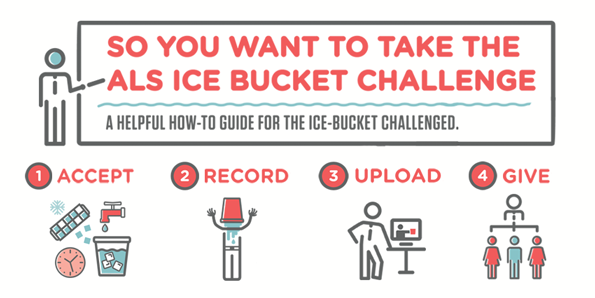
If you need a reminder of how the Ice Bucket Challenge, follow the instructions below. Don’t forget to challenge three people in your video and tag them when you share the video on Facebook. If you are able to make a donation, you can do it at alsa.org.

ibc-howto595px

Are you wondering what the donations have accomplished so far? Check it out!

ALSProgressInfo_WhiteBoard_071416


On the Delivery of my CDC National ALS Conference Speech

This slideshow requires JavaScript.

This morning, my mom and dad attended the CDC National ALS Conference to deliver a speech I wrote. I had hoped to attend the conference myself and have my husband speak for me since my voice is almost completely lost. However, my ALS threw a few wrenches, a hammer, and a screwdriver in that plan. At first, the trip seemed so manageable. However, as I learn more about the process of transporting the breathing machines and my wheelchair, and the damage that could be done to them, I have become uncomfortable with the idea of travel. It just seems a bit too risky to me. If my wheelchair is disassembled, I would be up a creek without a paddle. And there would be piranhas in the creek. And a hole in the boat. Plus, my intense spasms could make for a rough and painful flight. This is the nature of my beast.

Watching my mom give the speech, I felt no bitterness or envy. Her practice with my dad showed in her fluency. She delivered my words perfectly all of the jokes landed, and she addressed the room with conversational warmth that engaged the audience and fit my message. I was thrilled, smiling like a lunatic as I watched her do what I couldn’t in exactly the way I hoped. My dad handed out my business cards at the break while my mom texted that everyone raved about my speech and promised to email me. I have already heard from the VP of Public Policy at the ALS Association! The gratitude I feel for my parents is bigger than words.

I hope to get a recording of the speech soon to share with you. Stay tuned!