The Empty Chair

Dedicated to the grieving families of Seth Poling and Sandra W. Marlowe. May peace be with you.

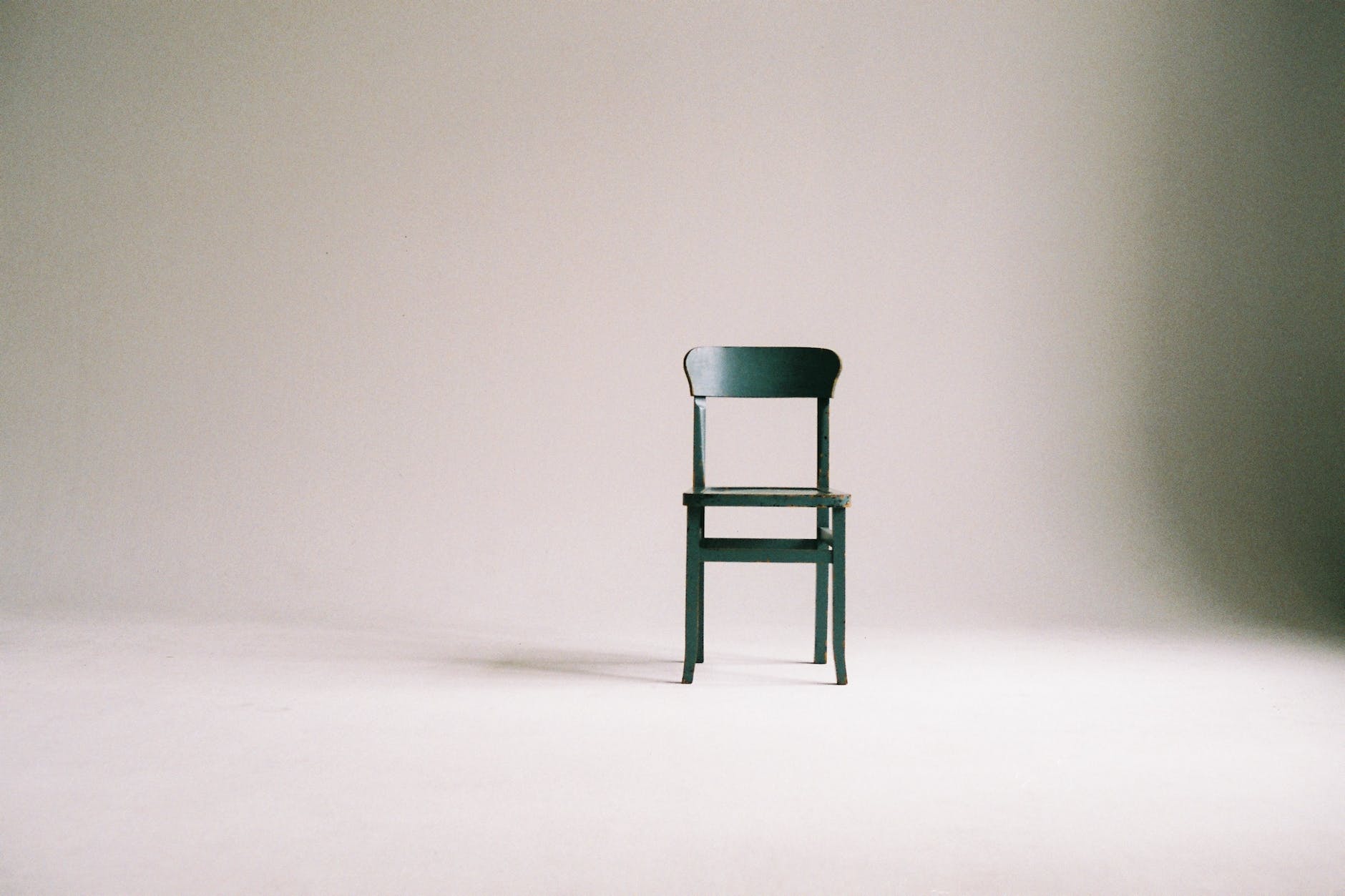
Does anyone ever sit in the place the missing loved ones had at the table? No. It will never just be a chair again. I had a place, you had a place, but that chair that was your favorite is now free for anyone to sit in. There is no chance I will see you sit in it again. No more memories will be made. I have to try to close the hole. I should at the very least take back this spot, sit once in your chair. Otherwise I will always be staring at a gap in space. But I can’t. It will always belong to you. So will I.

Photo by Paula Schmidt on Pexels.com

Can AI Voice Cloning Be Used For Good?

Photo by Polina Kovaleva on Pexels.com

I’m pleased to present the link to the story for which I was recently interviewed, “Can AI Voice Cloning Be Used For Good?” by Kaleef Starks, Mark Armendariz-Gonzales, and Clera Rodrigues. The interview focused on the changes ALS has caused in my communication, as well as my experience with AI voice cloning and preservation. To read my full interview, click the book icon on the left. It’s under the heading, “Rachel’s Story.” Enjoy reading!

Eight Years In…

Photo by Hakan Erenler on Pexels.com

Eight years ago on June 8th, I was diagnosed with ALS. At diagnosis, I was given 2 – 5 years to live. We all are. I was just 28 years old.

After my diagnosis, I immediately said goodbye because that’s what I was told to do. I was told there is no cure for the monster that had taken over my body, my life. I posted something on Facebook to the effect of, “I’ve just been diagnosed with ALS. Thank you all for being a part of my life.” I didn’t know there were other options, that even without a cure I could fight.

My fantastic ALS clinic connected me with the local chapter of the ALS Association and suddenly I had a power wheelchair, a Tobii eye gaze computer, and a cough assist machine, and I was trained to use it all. I had many long conversations with my neurologist, pulmonologist, social workers, husband, and family, and decided to go on a ventilator when the time came. I’m now a bedbound quadriplegic on life support and survive on a feeding tube. I’m very lucky because I live at home despite my high needs. My husband Evan works tirelessly, seeing to my every need. He is the reason I fight. I would do anything to stay by his side.

When I was diagnosed, we were about to start a family. I can’t have kids so we were researching adoption agencies. We decided to adopt siblings because they are hard to place. I even made a Pinterest board with resources for adoption and raising creative, resilient, grateful, vegetarian children. I also had a list of 27 parenting books we were planning to read together. We were going to be READY, but you know what they say about the best laid plans…

Eight years in, I’m starting to forget what it was like to speak and move. I guess it’s for the best since I will never talk or walk again. I remember certain things, though, like playing Who’s the Judge with my family at the kitchen table after dinner. We would sit in a circle and when it was your turn, you said a silly phrase in an even sillier accent. Everyone else had their eyes closed and would try to guess who the speaker was. Looking back, it was a ridiculous game. It was only my parents, sister, and me so it was easy to tell who had spoken by location alone. Plus, we always took turns in the same order. We all had fun, though.

I remember the first time I spoke Russian in Russia and someone understood me. It was like the best magic trick ever. My first words were to the taxi driver bringing me from the airport to my new home for the summer.

“I’m afraid,” I told him.

“Why?” he asked.

I explained I was worried the door to the apartment wouldn’t open. He promised to stay until I got inside. The magic trick worked.

I remember dancing with Evan with my Walker between us in the living room, his strong hands firm on my hips keeping me safe as we swayed softly, softly to Frank Sinatra. No more swing dancing for us. In our first Ice Bucket Challenge, Evan said, “I’m doing this so I can dance with my wife again!”

I remember dancing with dad on his feet in a living room across the country 30 years ago, usually to something loud like Eric Clapton. “Layla” was my favorite because every time it came to the part where Eric Clapton sings, “You got me on my knees Layla!” dad would set me down and fall on his knees in front of me.

These losses don’t hurt anymore unless I focus on precise moments I’m able to fish out of the murky depths of my memory. I have learned better than to do that. They only ache now.

I miss my old self, the creative, playful teacher, the fossil hunter, the singer, the traveler. I’m reminded of the lyrics to “Summertime Sadness” by Lana del Rey: “Think I’ll miss you forever like the stars miss the sun in the morning sky… Even if you’re gone I’m gonna drive!”

My Depression Diary

3

4

4

4

2

Trigger Warning!

Forward:
When just over a month ago I sensed that my mind was changing, I was overcome with a frenzied need to record everything I thought and felt. Even before I understood that I was depressed, I realized I was going somewhere that outsiders could never truly visit. I became consumed by the need to write a message from the inside that could maybe serve as a map or even just a sign that says “Keep Out! Here Be Dragons!”

Not so long ago, sharing my diary with strangers online never entered my mind, not even in my worst nightmares or wildest dreams. It was that impossible. However, that was before ALS. The same rules – even my own most personal code – no longer apply. I am braver because I am a soldier now. I take risks because that’s how you fight. This way, even if I die before the cure comes (and it will come), I’ll go knowing I made the path less lonely for my fellow soldiers and just a little easier for those who come after me.

I didn’t sign up for this war, but my enemy means to kill me, so I must give everything I have and am in this fight. Privacy is a luxury long gone. I will share my most secret thoughts and vulnerable moments in service of my fellow soldiers and the people who make my life worth fighting for. Right now, that means showing you what it’s like inside the beast that senses we are battle worn and easy prey. My hope is that if you read my diary and recognize yourself or a loved one in these words, you will realize it’s time to call for reinforcements, whether in the form of a psychiatrist who prescribes antidepressants, a therapist who talks you through the climb out of the pit, or a priest or pastor who provides solace and guidance.

To learn more about preventing and identifying depression, read my ALS News Today column12212627122128. I will share a follow-up post in the next few weeks on different types of intervention and how to choose which is right for you.

Now brace yourself. We’re going in.

Entry 1:

I am choking on the strength of this episode. It wraps ever tighter around my throat, just like his hands. As I write this, I am sitting in bed, watching a funny show while checking my email, text messages, and Facebook notifications. It is the middle of the night, a time of terror for me, so I need the safety of the blue electronic light of my devices. I bask in the glow, then I drown my thoughts in sitcom banter and a whirlwind of multitasking.

Burying my dark thoughts is a high stakes game; if I don’t use the right maneuvers, the shadows win. No matter how scared I am now, it is nothing compared to how I will feel if the memories creep in. The memories open the floodgates of flashbacks, which will sweep me far away and back in time to that room where I was raped and nearly murdered.

I escaped with my life, but certain parts of me died there, namely the part that believed no one would ever hurt me. Well, actually I had never really considered that I could be a story on the news as easily as any other human. I held myself apart in the way we all must to some degree if we want to function in the world. Dwelling on our abject vulnerability would reduce us to terrified shells of ourselves.

Like me.

Entry 2:

I can’t close my eyes in the dark. I can no longer write, I can’t focus on reading. All I can do is mindlessly watch TV. I am afraid to sleep because I want to remain vigilant, and I know nightmares are waiting for me. I am resuming therapy, or at least that’s what I tell myself, but I am desperate for a quick fix. I know that no miracle pill exists to give me relief, but I have been living with PTSD for eleven years, never knowing when it will become active and derail my life. I’m exhausted.

Entry 3:

Thinking about “the event” again. I guess writing “rape and attempted murder” became too clunky since I keep doing it again and again. I wish there was a word for that crime.

Here’s something weird: I had actually been in that room before. It had a great view of the Gulf of Finland, so I took a picture. I put in black and white because I thought it made the photo look artsy. During “the event,” I turned my head so I was looking out the window at that same view. I remember making that choice because I wanted to escape my body. Maybe I succeeded because when I look back, I can only remember the black and white photo. The memory lacks color and sound. In fact, that whole night remains in perfect silence, as if I stepped into the photo because inhabiting my skin was that unbearable.

I also sensed if I looked up, I would not survive. I couldn’t articulate it then, but in hindsight, I realized that it I were to look, I would have to confront what he was doing, and I didn’t want that image in my head. If I looked at him, the image would take over my brain like a fungus I saw on a nature show. The fungus commandeers the ant so that it becomes disoriented, out of touch with reality and its purpose. Ultimately, its new biological imperative is no longer survival. It follows the final orders of the sadist in charge by climbing as high as it can. Then, when the ant is paralyzed by vertigo and weakness, it gives in. The fungus cracks the ant and blossoms, sending its spores far and wide, aided by its victim’s lofty position.

Summary: if I looked up him, the images would have devoured my mind until I forgot who and why I was, creating so much pain that suicide started to look attractive.

That kinda happened anyway, though…

Entry 4:

My doctor came to see me. I can’t believe that I didn’t realize what’s going on until she talked to me. It is classic crying, lack of interest in anything, wanting to stay in bed depression. It is not the most severe I’ve had. On a scale of one being fine and ten being suicidal in the mental hospital (true story), it’s a five.

The PTSD fuels the depression by isolating me. I’m so mad at myself. I want to be stronger and fight this off with logic, but everything is scary. It makes me think of Alias Grace by Margaret Atwood. There’s a great quote when Grace says something like, “Quilts are so bright like war flags, I think we put them on beds so you take notice. You see the warning that the bed is a most dangerous place.”

That’s how I feel when I get in bed. I still feel the danger of a crime long since committed against me, so I stay awake on guard all night. When dawn comes, I finally surrender to sleep. The end result of all this fear and hyper-vigilance is loneliness. I am only awake when my friends, family, and beloved husband are asleep. I want to have friends over, go write in the beautiful library, and spend awe-filled hours in the art museum. I perpetuate my isolation by refusing to reach out to them.

I also play this game where I don’t contact them and then wait to see how long it takes for them to contact me. The longer it takes for them to contact me, the less they obviously care about me. It’s a shitty game, but I can’t stop playing.

Entry 5:

I feel like a raw nerve in pain after any interaction. I wish I could read substantial books. My intellectual hunger still rages (a good sign), but my concentration is too poor to make it through even the first page of any appealing titles.

Also, lately the library doesn’t have e-book versions of what I want, and I took this REALLY personally. I reacted as though this was a commentary on how little society values me as a disabled person. I am hung up on that anyway because of all the times President Trump has negated the value of the people with disabilities. From mockery to attempts to gut Medicaid and defund ALS research… I don’t want to let him me this way. It’s just that everything hurts me more now that I am depressed.

Entry 6:

I am starting to think this is happening because I am repressing sadness, which is a pattern for me, which I discussed in the post Leaves in My River, Stars in My Sky123127128123129.” I mean, the major thing that I have been crushing for years is sadness for Evan. If I really think about his situation of watching me slowly crumble, if I empathize and imagine myself in his shoes, I feel like I’m dying in a way ALS has never achieved. Knowing he cries in the car makes me sick. I sob hysterically until I can’t breathe. Imagining I’m the one crying in the car because I am losing him is unbearable, and I am grateful that I am the one who has ALS.

Entry 7:

Evan says to go easy on myself. Getting frustrated with myself does great harm and zero good. I can’t berate myself into ending the episode. I guess it’s time to learn to show myself the compassion I apparently think everyone but me deserves. After all, if I am not on my own team when I’m at my weakest, how will I fight my way through this? I know that logically. Now I have to figure out how to live that truth.

Wish me luck. I need it.
Fortune’s Fool

When I was sixteen, a fortune teller at a fair predicted I would meet and fall in love with a man who would physically take care of me. At the time, I didn’t understand what she could possibly mean. Would I rely on my husband for money? I was hungry for independence and therefore a bit insulted, but most of all, I was bewildered. I needed more time with the fortune teller in her enchanting red silk tent, but she looked pointedly at her watch, then tapped the cash tray. My empty wallet made me unwelcome.

When I asked about the man I would marry at the beginning of our session, I did not imagine the ten minutes I paid for would pass so quickly and end so mysteriously. I wondered about her words for more than a decade, right up until my ALS diagnosis twelve years later. That day, I finally got the answer I sought. Doors slammed in my face. All around, clock needles spun backward. My end crept forward in every shadow.

Now, I rely on Evan to bathe, feed, and dress me, to keep me steady when I use my walker in the bathroom, even to wipe me after I use the toilet. He holds all the crumbling pieces of my body tight in his hands, as though trying to keep them safe until the miracle pill that can put me back together again finally arrives. My marriage looks nothing like it did when we were twenty-one or twenty-five, or even last year. Playtime is over, and we struggle daily to survive.

However, I realized as Evan delivered medication into my body via my brand new feeding tube, that what really matters remains unbroken. Even after all we’ve lost, he still loves me, and I will always love him. That knowledge is the bedrock of my existence, and it has yet to crack. Together, we chase happiness through a tangle of feed lines and IVs, not ready to surrender to how we live now. Side by side, with white knuckles and bloody nails, we crawl forward.

Benvolio: Romeo, away, be gone! Stand not amaz’d, the Prince will doom thee death if thou art taken. Hence be gone, away!

Romeo: O, I am fortune’s fool!

Romeo And Juliet Act 3, scene 1, 132–136

A Pashmina For My Appendix

Today I bought shoes for the first time since my diagnosis. It was also the first time I bought shoes I would not actually wear for walking. My new sandals will just serve as a barrier between the soles of my feet and my wheelchair’s foot plates. No more worries about arch support or gaping at my heel. No test runs to make sure the shoe doesn’t rub the small bulge on my toe where I once snapped it during ballet. Shopping for shoes was like getting a frivolous accessory for a vestigial organ, a pashmina for my appendix. It was a novel experience, but ultimately too bizarre and sad to look forward to repeating.

The Kingdom of Childhood

For some reason, this lovely spring weather makes me remember all the things I love about teaching: morning meeting and yoga, book club and literature circles, zumba and dance breaks every half hour to keep our energy flowing, writing workshops, and of course, just being with the kids. Listening when recess ended in tears, geeking out over Harry Potter, eating lunch together…

Maybe it’s rushing back to me because this is science fair season. I have so many memories of wearing my very best “thrilled and impressed” face for hours during the fair. Then there were the months beforehand when I was a test subject for at least five experiments in which I learned I am not colorblind and I do like chocolate chip cookies.

I miss it all. How lucky I was to spend my days this way before ALS stole it all away.

A Brave New World

On June 10, 2015, I shared this message with my loved ones…

“Dear family and friends: I am so sorry to have to tell to you that today I was diagnosed with ALS. I am sad and scared, but also hopeful that I will live longer than the average ALS patient because mine is a disease mostly of the upper rather than lower motor neurons. This may mean my lungs will stay functional longer than the average 5 years. No matter how many years I have left, though, I know they will be beautiful because I am so well-loved by my husband Evan and all of you. Please keep me in your wishes, prayers, loving thoughts and light, and know that I am grateful to know you.”

Then my husband and I were swept away into the dizzying rapids of ALS care…

Every three months, I will be attending a multidisciplinary ALS clinic so the progress of my disease can be assessed and I can learn new skills to keep me living comfortably. After a six hour first clinic visit in which I met with my doctor, social worker, occupational therapist, and physical therapist, I am happy to say my breathing and muscle tone are strong and my speech is in a range indicative of slower decline. At my next clinic in September, all of this will be assessed again. We are hoping for a very small amount of change, as this would mean I have slow (rather than average) progression.

“I’m fine,” I insisted, trying to be pleasant even though I was beyond overwhelmed.

Deb shook her head. “Don’t settle. If you are having trouble buttoning jeans or using a fork, tell me. We will figure it out and keep you independent as long as possible.”

Deb, my Occupational Therapist, was the 6th specialist I saw at Clinic the day everything changed. I was exhausted by endless assessments and frightened as I tried to make sense of all the information coming my way. Deb is not one for excuses, though, and I needed her pushing as badly as I needed the follow-up appointments with her where we plowed through a list of tasks that frustrated me and devised alternate ways to complete them. Deb changed my whole perspective on Clinic.

It is, as my neurologist Dr. Goslin says, a place to rewrite the story, even if we can’t change the ending.

We still check my progression, but this disease and the treatment for it no longer simply happen to me.  What I want matters. My goals matter. Deb taught me never to miss a chance to address my concerns and needs so that I can live as well and as long as possible. These hours in clinic, these people who support and hear me, keep me doing what I love. I believe that they may even save my life, keeping me strong until a medication comes out to stop this nightmare.

I have hope, and it is stronger than fear.

My blog’s name is in tribute to Meg Rosoff’s novel, How I Live Now, the ultimate tale of resilience and determination. Just as the main character Daisy learns the true nature of loss (“If you haven’t been in a war and are wondering how long it takes to get used to losing everything you think you need or love, I can tell you the answer is no time at all”), but never gives up, claiming, “Fighting back is what I’ve discovered I do best.”

I plan to use this blog to chronicle my own battle and connect with other ALS warriors. Click How to Help to find ways to join the fight to defeat ALS and care for pALS.


Endless gratitude and love to my husband Evan, who held me when I was diagnosed with a terminal illness, rocked me when I cried myself to sleep for months after, and holds my hand at every single clinic. You are the reason I fight.