Feeding Tube Foodie; or How I’m Being Lured to the Dark Side

The sound of the microwave whirring to life sliced through my interest in the book I was reading in the living room. I made a beeline for the kitchen where my husband Evan was clearly up to something delicious. (it was a good day for me in terms of hand strength, so I was able to steer Ruby, my beloved power wheelchair, myself) Just as I suspected, Evan was warming up some leftover pizza.

“Hey, hun. Is that your dinner?” I asked. I knew I had to play it cool to keep Evan from becoming suspicious.

“That’s the plan,” he replied, settling in at the kitchen table.

“I think I’ll just hang out here while you eat,” I said, rolling up to the table. “Hey, as long as I’m here, can I watch you eat?” I grimaced. Real smooth, Rachel.

“Um, I guess.”

“Cool, cool, cool.” Yes, keeping it casual. This time, I would control myself. I would NOT make it weird.

Evan took a bite, then another. I was riveted.

“You’re really starting at me.” He shifted in his chair.

I made a conscious effort to blink before saying, “You know, I was just wondering if you can try chewing slowly.”

With obvious discomfort, Evan complied with my request. One bite later, he stopped. “You’re leering at me. It’s freaking me out. I am going to eat in the living room.”

I huffed in frustration when he walked away. I miss food desperately, and I am always looking for ways to hold onto at least the memory of the joy of eating.

At my most recent clinic, my speech therapist put me on a pureed foods diet after she discovered that I can no longer move my tongue from side to side. Losing that motion makes me unable to sculpt my food and move it between my teeth. As a result, I have little control over where the food in my mouth goes. I am at risk of choking if I deviate from the pureed foods diet because anything I eat can slide to the back of my throat and block my airway. Even crumbs are a danger. Then there is the possibility that tiny particles of food may slip into my lungs without me even knowing it. This puts me at risk for pneumonia, which can be fatal to someone with ALS.

To protect my lungs and prevent choking, I get most of my food all of my hydration through my feeding tube (I can’t drink water because it moves so quickly that aspiration is inevitable). I eat orally at dinner, usually a pureed soup my mother-in-law Brenda made for me that morning – she concocts everything from broccoli and feta soup to savory butternut squash puree – or a fruit smoothie. I get a decent variety of flavors, but the lack of texture is starting to get to me, I fantasize about chewing on a piece of cheese or sinking my teeth into crisp slices of tomato, bell pepper, zucchini, and apple. Lately, I am nursing an obsession with all things toasted, specifically paninis. The longing keeps me up at night, and I suspect it’s chipping away at my sanity, which led to this, ahem, eccentric text exchange with a friend. Read on to witness the burgeoning madness of a Foodie on a feeding tube…

Me – I would do unspeakable things for a panini.

Melissa – Has anyone ever invented something like a chew toy for humans?

Me – Someone really should. I want to bite something and feel it crunch.

Melissa – I feel like I could put a panini in some mouth safe baggy and hold it in your mouth to feel on.

Melissa – Or I could just put a panini in your mouth and then take it back out, over and over, with purée in between so you get full.

Melissa – These might be very foolish, even offensive ideas. I just would love to please your mouth. I feel so strongly for food and I can just imagine the panini longing.

Me – no, I love it! I would drool all over a panini bag.

Me – I am desperate and the more desperate I get, the more violent I am willing to be to get what I want.

Me – I am like bargaining with some powerful dark force. ” if you let me eat a panini, I will burn down Chicago.”  **

Melissa – I can’t say I know what you’re going through, but i know it can’t be easy! When I’ve had to not eat solid food for just some period of time, i went mad.

Me – I always saw myself as a force for good, but it has taken so little to push me over the edge. Am I truly a slytherin when all my life I thought I was a hufflepuff?

Melissa – Serious hunger can push any human to the brink.

Me – Exactly. My teeth are depressed. They have lost their purpose and they are not taking it well. I think I feel at least two spite cavities forming.

Me – Can I put this conversation on my blog? I think it is a wonderful representation of my life as a feeding tube foodie

Melissa – I’d be honored.



Save Medicaid from Being Slashed!

The health care bill draft currently being reviewed by the Senate slashes Medicaid to the bone. If the bill is passed, 14 million of the most expensive beneficiaries – particularly, the elderly and disabled, including those suffering from ALS – will be kicked off Medicaid! Use the following text to write to or call your representatives and let them know that you expect them to oppose this health care bill (contact information here138). We must act quickly since senator Mitch McConnell intends to have the Senate vote by JUNE 30th!

The Honorable [NAME]
United States House of Representatives (or: United States Senate)
United States Capitol
Washington, DC

Dear Representative (or: Senator) [NAME]:

I am writing to ask for your help to ensure that people with Amyotrophic Lateral Sclerosis (ALS), also known as Lou Gehrig’s Disease have the coverage and health care they need and deserve. If passed, the Better Care Reconciliation Act will seriously impact the lives of people suffering from ALS and their families. In fact, it may even be a death sentence since many will be kicked off Medicaid.

The cost of living with ALS is staggering. Depending on the level of care a person needs, expenses can reach $250,000 per year. If patients are left with the burden of paying all the costs that Medicaid currently covers, these people will go without the feeding tube surgery and supplies that prevent them from starving to death. They will lack the medicine that relieves their tremendous pain. They will not be able to afford the caregivers who help them with toileting, medication, tube feedings, bathing, and monitoring vital machines such as ventilators. Most cruel of all, thousands will face the decision to go on a ventilator, or forgo the life-saving procedure in order to avoid bankrupting their families. In short, thousands of Americans with ALS will lose their dignity and their lives an agonizing death if they are deprived of Medicaid. (Optional: insert personal story of the impact of ALS on your life).

This is a matter of life and death, not politics. This health care bill is inhumane. I know there are a number of initiatives and programs under review. However, I think, and I hope you do as well, that Medicaid, which saves the lives of countless citizens, must be preserved and well-funded.

As a resident of (STATE), I hope that I can count on your support and look forward to watching closely as the health care bill moves through the legislative process.

(Optional) If you need more information on the impact of ALS on the people in our state, please don’t hesitate to contact the ALS Association of (STATE ORGANIZATION) at: (insert chapter website).

Sincerely,

Your Name

Pacing Myself

3

I have always struggled to acknowledge and accept my limitations to the point that I often push myself far past them. From middle school through college, I participated in at least three extracurricular activities each year. OK, that’s a lie. It was more like four or five. I was in a leadership position as often as possible, too. Of course, that all came on top of a driving need to get straight A’s (and yes, I know that is a misplaced apostrophe, but I stand by it as a legitimate way to make a letter grade plural).

Latin

In high school, I was president of Latin Club. In this photo my dad and I are on a Latin Club field trip.

My first year teaching, I started the middle school book club, served on the information technology curriculum committee, proposed and planned an interdisciplinary curriculum fellowship and a fellowship to rework the English curriculum to include multicultural literature.

I love being busy, operating at full speed, running out of room in my planner, making multiple to-do lists and slashing through each item before falling into bed exhausted.

Now, though, at least half the days of the week, just functioning leaves me too tired to do anything productive. ALS puts such a strain on the body that simply existing is like running a marathon every day. Three years into this nightmare, I’m finally coming to terms with the fact that I can’t set the same amount of goals for myself as I used to. Doing that sets me up for depression, frustration, and failure. If I want to preserve my mental health and use my time well, I have to learn to prioritize and decide where to scale back. I’ve got to stop spreading myself too thin. Thus, without further ado, my freshly pruned list of goals:

1. Enact Phase 2 of my “Save the Registry” campaign (you didn’t really think I would stop at an article and blog post, did you?)

2. Fundraise for The Walk to Defeat ALS

3. Write one essay or section per week for my book on living with ALS

What I expect to sacrifice to accomplish all of this is the frequency of my blog posts and social media updates. Rather than posting every few days, I think it will only be manageable to post once every 1.5 weeks. I consider this a loss since connecting with readers is such a source of joy for me. However, I am hopeful that after I torpedo Trump’s attempt to defund the National ALS Registry and complete my fundraising efforts at the end of September, I will be able to write for my blog weekly. Getting my muscle spasms under control would also be a big help since I wouldn’t spend half the week sedated by Baclofen and Vicodin. The plan right now is to increase the amount quinine sulfate I take and undergo a test to see if installing a pump to push Baclofen directly into my spinal fluid would eliminate the spasms. The pump should increase the effectiveness of the Baclofen while diminishing the sedating side effects. I will definitely keep you posted on that.

For now, I will conclude by thanking you for your support of my writing, my health, and my dream of a world without ALS. I’ll write again soon(ish)!

A Wild and Lonely Belief

7

5

8

8

9Dedicated to Dr. Goslin for giving me permission to believe, and my husband Evan, who shields me from the worst of the winter winds.


I am a voracious reader. I always have been, thanks to my parents and grandparents, who planted books around my house in places I could reach even when I was still crawling. They were treasures I was allowed to discover on my own, and as a result, they felt special and personal to me. The books I read in my childhood became a part of me in that they showed me how to dream, hope, and believe. Even now, those stories influence the way I understand the world and cope with the rocks and daggers it throws at me. When I spot trouble coming my way, I snatch up one of these books, opening it wide to use the front and back covers as a shield while I confer in hushed, hurried tones with the characters inside.

Lately the shield I crouch behind is the work of one J. M. Barrie, and Peter Pan is whispering in my ear: “Every time a child says, ‘I don’t believe in fairies,’ a fairy somewhere falls down dead… Do you believe in fairies? If you do, clap your hands! Don’t let Tinker Bell die!” I watch the children bring Tinker Bell back by clapping and shouting, “I believe!” But what good can Peter Pan’s words do me, a young woman dying of ALS? More than you might ever imagine.

You see, I have this conviction that I will not succumb to my disease. I believe I will survive this. I can count on one hand the people who share my belief. I often hear other pALS (people with ALS) talk about their sadness over the special moments they will miss after the monster we are all battling cuts their lives short. On the earth beneath which we have been laid to rest, our loved ones will blow out birthday candles, throw graduation caps into the air, walk down the aisle, paint nurseries, and build cribs. We can only hope they think of us now and then as the flowers of their lives continue to unfold long after our own blooms have wilted and shriveled.

That’s not my story, though. My blossom is wilting because winter has come, not because I am dying. Bitter winds may batter my petals, but my roots are safe and strong. They remember spring and are waiting for it to come again. I have been told not to get my hopes up, and my answer is always the same: “What harm can believing do? If I am wrong, I won’t be around to cry about it.” The fact of the matter – which I rarely endeavor to explain anymore – is that believing is a source of strength for me. After all, Peter Pan said belief can save a life. If you need to hear about the power of belief from someone with more authority, consult another prominent book from my childhood. Open the Bible to Matthew 17:20 where you will find the following words: “If you have faith as small as a mustard seed, you can say to this mountain, ‘Move from here to there,’ and it will move. Nothing will be impossible for you.”

To me, belief is so powerful because of what it inspires. The magic of belief lies in the way it empowers us to live, and when necessary, fight. I believe that I will be cured, but that doesn’t mean I expect an easy path. I know that only if I work hard and plan carefully, I will survive long enough to be cured. This conviction shapes how I live now. In order to last until the cure, I need to keep my lungs strong and clear with daily use of the cough assist and AVAPS machines. Each day, I also complete two dozen physical therapy exercises and follow my feeding tube meal program. I can bear all this and more – hours spent in the hospital for clinics and drug trials, daily vitamin injections, even a tracheotomy if my lungs fail – because I know that my story will have a happy ending.

This is my wild lonely belief: that I am not a withering rose, but a winter one, waiting with patient certainty for the sun.

Summer Dreams

4

Something about spending time on a covered porch always leads me reminiscing and daydreaming. As the rain clears to make room for the summer sun, I spend hours out there, watching my dogs play and letting my mind float on the afternoon breeze, I remember, and I plan.

This beautiful weather makes me miss canoeing with Evan terribly. The sound of the water as our paddles slid through the gentle waves slowed my thoughts so I could exist in that moment, working in perfect synchronization with Evan. I especially loved our sunset excursions when the world we knew drifted off to sleep and another secret world began to stir, a nocturnal kingdom we could only glimpse before we lost the light and our way.

When I am cured, Evan and I will return right away to the water. We will buy a red canoe and name it Carlos, and he will take us on dozens of new adventures.

The other activity I am missing is something I only did once. I was shy and nervous, so I didn’t get up the nerve to try karaoke until rather late in the game. When I finally sang into that microphone, though, I was hooked. I especially loved singing duets with Evan (he makes everything at least ten times more fun). When I have my voice back, I am going to hit every karaoke bar in town!

Three Dreams and A Dragon

When I was thirteen, I bought a small, blue, canvas-bound book whose title, scrawled in loopy silver script, read, “The Interpretation of Dreams.” I purchased it because every morning, I awoke with vivid memories of three, sometimes four, dreams. About half of them were nightmares, but they didn’t trouble me as much as what I called the Sagas. In those dreams, I lived entire lives, and when I woke up and realized that none of it was real, the resulting devastation was almost as intense as if I just lost actual friends, a husband, children. I hoped that I would find answers about what the Sagas meant and achieve peace by way of the knowledge.

I never found my answers; when I started taking anti-depressants at age fourteen, the Sagas disappeared, so I abandoned my research. However, the nightmares began to run rampant.

Lately, my nightmares have been especially painful. I have three that take turns playing in my nocturnal theater. First, I dream that fierce predators escape from the zoo, lurking the city’s streets, lying in wait for unsuspecting humans to cross their path. Unfortunately, I’m the only one who knows this, so it falls to me to protect my husband and sister even though I don’t have a single weapon.

Next up, I awake on a dark beach. I lay on the rough sand, utterly confused by my surroundings. Then a pair of hands reach down to help me up. I realize too late that they belong to my rapist. Raising a hand to caress my cheek, he says, “We’re the last people on earth. It’s just us. Now we can be together forever.” It’s then that I notice I’m wearing my wedding dress.

The worst dream starts before I even fall asleep. As I drift, memories of the words of my last Lower School Director and the Head of School echo in my head…

“Your students are bored.”

“Their parents lack confidence in you.”

“Maybe your personality is the issue. Go observe the Spanish teacher. Try to be like her.”

“You lack presence in the classroom.”

“Have you considered being a librarian? Then you won’t work with children every day, and you can be around those books you love so much.”

“You’re too academic.”

“Try not to look so frail. Stop hunching over your cane.”

“Are you really teaching if the kids aren’t learning? ”

“Fifth grade is an important year, and we need a teacher so fantastic that families don’t even think of transferring to another school for sixth grade. There are five families thinking of leaving – you’re not a strong enough teacher.”

“I’ve been disappointed in you from day one.”

Then, when sleep finally comes, I am teaching in a classroom with glass walls. I don’t have a lesson plan, and when I see the Lower School Director and the Head of School watching me, I panic, making one stupid mistake after another, knowing each is a nail in my coffin. The dream fades when memory wipes away the fear and reminds me that it’s over now. I survived being kicked to the curb, and – awful as it was to end my career on a low note – they can’t hurt me anymore.

I don’t need the book to pick up the themes these dreams share; in each one, I am caught off guard and helpless. That is the essence of ALS. No one is prepared for the diagnosis (most cases can’t be tied to a family history, and lifestyle seems completely irrelevant). To make matters worse, the diagnosis comes with a decree of helplessness since there isn’t a thing you can do to fight back. I’m guessing that I am reliving the trauma of the diagnosis, but I don’t think it has to continue.

I recently realized that I am not helpless, not by a long shot. How many pieces have I written detailing my commitment to my range of motion exercises, my eagerness to participate in drug trials 135164, my openness to new medications and protocols 136165 to manage my symptoms? I use the cough assist 137166 to keep my lungs strong, my feeding tube to maintain proper nutrition and hydration, and my tobii to prepare for when I lose my ability to speak. I am not sitting on the sidelines watching this monster consume me. I am fighting the dragon with a small dagger, slashing and slicing bit by bit until I bleed it dry. From now on, I will hold this gruesome, glorious image in my mind as I fall asleep. Maybe then I’ll dream of slaying the beast.

Rag Doll


At the recommendation of ALS Worldwide 129147 and with the approval of my beloved neurologist, I have begun an unconventional course of medications. I use the word “unconventional” because some of the medicine is either not typically used in cases of ALS or is being used outside of the FDA approved dosing. Additionally, none of this is covered by insurance. Our hope is that the new protocol will better manage my symptoms and even gain back some of the strength and mobility I have lost.

I began taking quinine sulfate to manage my excruciating muscle cramps. Even though my mouth now constantly tastes of bitter tonic water, it’s worth it because I am getting near total relief.

I am taking Nuedexta three times a day rather than the standard two in order to better control my PseudoBulbar Affect, which causes involuntary fits of laughing and crying. We are seeing good results so far.

Next week, I begin daily injections of B12 into my arms and legs. I am not absorbing the B12 I ingest orally thanks to ALS messing with my blood-brain barrier, so we will be delivering it directly to my muscles. This should restore some of my strength and mobility.

And so it goes. We experiment to manage the untreatable, to keep me going by patching up the tears until I am more rag doll than woman. Still, as long as I am, I will be grateful.

Learning Helplessness

Today while out on a (st)roll, I witnessed a toddler run out into the street in front of a car. I was unable to do what every molecule in me demanded: race to the boy and snatch him up out of harm’s way. I couldn’t even scream in horror or point and shout so a neighbor would notice and intervene. I could only watch.

Luckily, just as the child reached the middle of the road, the boy’s mother realized he had wandered off and saved him.

I thought by now I knew what it is to be helpless. When I fall, I can’t get up. I am not able to feed, bathe, or dress myself. I can’t even be left alone for more than one hour. I had no idea, though.

Now, I know.

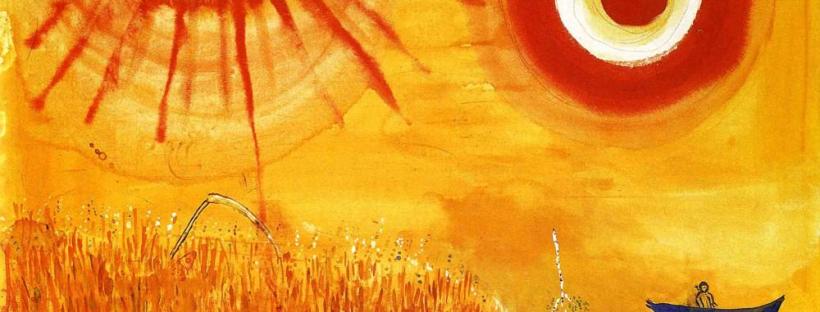
Image credit – Marc Chagall’s “Un champ de ble apres-midi d’un ete”


A Lesson on Joy

In the movie adaptation of my life, the climactic scene would go like this: the camera slowly sweeps up to where I am snuggling into a warm plaid blanket on a rustic porch.  The sun peeks out from where it slept behind the mountain range. The soft light on my face shows I’m at peace. I struggled throughout the whole movie with how to carry on living, but last night I found the trick. My friends pushed my wheelchair out into the meadow behind my sister’s cabin, and we stayed up all night watching the stars, singing, laughing, and telling secrets. I know now that this is the key: live in the moment, live for today, and let no adventure pass me by until I close my eyes for the last time.

That’s what dying people are supposed to do, right? It’s our bittersweet version of happily ever after.

9224,-Teton-Barn-and-Mauve-Dawn,-30x40

Hanselmann Photography

For me, though, there was no mountain cabin, no midnight epiphany. For the longest time, there was only the looming specter of my death. When I was first diagnosed with ALS, I described the doctor telling me the news by saying, “He told me I’m dying.” I used to get those two things mixed up: having ALS and dying. They do sound the same. After all, there is currently no cure or treatment for this ruthless disease. Immediately after diagnosis, I planned everything from who would get my beloved cameo necklace passed down from my great grandmother to the type of funeral I want. I imagine a ceremony around a sapling which my family and friends can visit and tend to as it grows into a memory tree. I hoped my loved ones would picnic there, and children would climb my branches.

biodegradable-burial-pod-memory-forest-capsula-mundi-3

Of course, not all of my death thoughts were so serene. The prospect of dying young fueled what became an obsession with fading into a distant memory as my loved ones grow old without me. I worried most about what I would become to my husband, Evan. I imagined being a brief chapter of his life before he meets the woman who will be the main act, the mother of his children. She will succeed where I failed, giving him the family and future he deserves, transforming me into a tragic footnote in his biography. With my mind drenched in such excruciating fears, how could I surrender to the beauty of the present?

A series of fortunate events saved me from despair. First, we moved to Portland, where I received the exact kind of care I hoped for at my new ALS clinic. I now work with a creative, emotionally intelligent doctor who is full of hope regarding treatments currently being tested. She immediately empowered me by involving me in one such trial. Finally, I was doing something to fight back, and I dared to dream that the end of my story might not be written on a tombstone.

Then, a few months later, I found the next rung of the ladder that I would climb towards joy. ALS Awareness Month crept in, and a flurry of fundraising activity swept across my Facebook feed. Guilt pressed down hard on my shoulders; I was the one with ALS, but my family was doing all the advocacy work. As a last minute attempt to get involved, I decided to write a little note on Facebook every day about my life with ALS. I didn’t expect to generate much interest, especially since I wasn’t sure how much had to say on the subject. Flash forward three days, and I was pouring my heart out to a shockingly large and invested audience. I became enamored of power those posts gave me over my experience. That power, just like the power I gained from the drug trial, gave me the bravery to fight like never before. I dove into fundraising for the ALS Association, and my doctor and I collaborated with ALS Worldwide to learn new ways to preserve my speech, strength, and mobility. As my hope blossomed, I realized I couldn’t honestly fight for a cure without spending at least as much time imagining my life after ALS as I had spent fixated on my death.

I came to understand that joy will remain a distant dream if a person can’t give equal head space to the best and worst outcomes.

Real, lasting joy pumped from my heart to every inch of my failing body when I gave myself permission to dream. Now, I imagine that Evan and I will make up for all the years we have spent bound to our home and hospital by renovating an Airstream trailer and roaming all over the country, exploring national parks, chasing northern lights, and following music festivals. I will return to writing novels because the miracle of a cure will mean that a blog about ALS will be unnecessary. Evan will play guitar in the evenings, and I’ll sing along like I used to. Everything will be beautiful, and nothing will hurt.

orvis-airstream

A few months after I started my blog, I got a feeding tube. Lying on table looking at the distant ceiling of the operating room, it occurred to me that this would be the first scar ALS left on my body. I got sad thinking about how I would never get rid of it, even if one day I no longer needed the feeding tube. But then, I thought of myself leaning out the window of the car on a sunny day with hundreds of miles ahead of me, Evan looking handsome in the driver’s seat,  our Airstream trailing behind us, glittering in the sun like a mermaid tail, and I didn’t mind a small scar at all. Some day, it will be the only reminder of what I suffered, and should I ever get scared embarking on my new adventure, I can look to the hole sewn up right beneath my heart and know I will survive.

Sleepwalking

Tonight, after reading and listening to a podcast for a few hours, I felt stir-crazy from sitting for so long. I needed to get up. Specifically, I felt like trying out the Movements I saw on the Netflix series “The OA”. I was just about to do that when I remembered I could not get up.

This is not the first time I have forgotten my limits. Sometimes when I wake up, I plan on walking to the closet to pick out my clothing. It takes a few seconds of trying to swing my legs the edge of the hospital bed (how I miss the ankle-aching cold of morning floorboards beneath my bare feet!) to remember I can’t walk that far.

Perhaps I forget because I can walk in my dreams. Every time. However, even in my dreams, I am aware that walking is unusual for me. Usually, I dream that I am walking and then suddenly remember that, like Cinderella and her pumpkin and rag dress, my legs will return to being essentially useless by midnight. Sometimes, I even feel them weaken and my knees buckle. Even in my dreams, I cannot escape my disease.

Shrugging off the crushing weight of realizing my disability anew, I force myself to forget that I am stuck sitting and will continue sitting for the rest of my life, or until a cure is found. I look at Evan and my pets and try to let the feeling of being loved overwhelm the feeling of being trapped.