My FDA Advisory Committee NurOwn Statement

Dear Drs. Califf and Marks,

I am a young woman living with ALS, and I am writing in strong support of the approval of the ALS treatment debamestrocel, which has proven to be both safe and effective in clinical trials.

ALS is a brutal enemy. This equal opportunity killer destroys the nerves that allow us to move, speak, eat, swallow, and eventually breathe. It is 100% fatal and has no cure. It can strike anyone at any time.

When I was diagnosed with ALS at age 28 in 2015, I lost everything. My body, without warning or reason, turned on me, and that meant the end of so much. My career as a 5th grade English teacher and dreams of motherhood and growing old with my husband were all swept away like sand when I believed they were stone.

Let me paint you a picture of my life with ALS. My day starts with 40 minutes of breathing treatments to prevent infection in my lungs that leave me feeling like I’m suffocating. We stop when my oxygen drops to 92.

I’m on a ventilator which is supposed to provide me with full, even breaths, but if the settings are even slightly off, it either doesn’t provide me with enough air or pushes too much too fast, forcing me to hyperventilate and pass out.

I survive on a feeding tube and haven’t enjoyed real food in 7 years. We start my “food,” a beige nutrition solution that comes in cartons, after my breathing treatment. It’s delivered to me through a pump over the course of 20 hours, often leaving me nauseous.

Because I am on a ventilator, I can’t produce sound, not even a whimper when I’m in pain. I communicate with a device called a Tobii that uses eye gaze technology. I am actually typing this letter with my eyes.

Why not write to you with my hands like a healthy person? I forgot to mention that because of ALS, I’m a quadriplegic, meaning I can only move my face. I miss being able to touch. I haven’t hugged my husband Evan in 6 years. I can’t even hold his hand. I’m totally paralyzed and totally dependent on others to meet my every need.

Imagine you can’t scratch yourself when you’re itchy, can’t adjust the thermostat or even cover yourself when you’re cold, can’t clean yourself after using the toilet. That’s my life. ALS has stripped me of my independence. I’m utterly helpless without others, and I am nothing without my machines.

The ALSFRS-R is a tool to attempt to quantify how ALS is affecting a person. A 1 score increase could be the difference between choking and eating normally or requiring a walker and walking with a minor foot drop.

The ALSFRS-R is imperfect at best. One person can have a score of 37 and be walking and breathing normally but have their hands, swallow, and voice impaired, while another person with a score of 37 could have significant shortness of breath and require a power wheelchair but have full function of their voice, swallow, and hands. It is not an accurate representation of every individual’s unique case or the changes that are occurring.

My 2015 score was 34, and my 2021 score was 1. Does a score of 1 accurately reflect me? I still communicate, live, love, smile. I have rich friendships and a healthy, passionate marriage. I’m a talented writer who raises awareness of the reality of ALS by blogging (howilivewithals.com). A score of 1 is completely unfair attempt to display ME.

Debamestrocel has achieved remarkable feats in clinical trials, including maintaining and even increasing ALSFRS-R points. Every point matters in preserving an individual’s independence and dignity. Debamestrocel also improved CSF biomarkers in ALS. No other drug has accomplished this. The benefit to those in the early phases of ALS is clear in P3 trials.

Debamestrocel is a beacon of hope to members of the ALS community, and with rapid disease progression ending in death within an average of 2 – 5 years, we don’t have the luxury of time to wait for treatments.

Give those in the early stages of ALS a chance to have more years on earth and make precious memories with their loved ones. Approve debamestrocel.

Sincerely,
Rachel Doboga

You’re Invited!

Consider this your invitation to write your own statement urging the FDA to approve NurOwn / debamestrocel! The deadline is September 20th, so get moving! The organization I AM ALS has created a wonderful guide to writing a powerful statement. Check it out! And remember, you MUST include the following:

Docket No. FDA-2023-N-2608 for Cellular, Tissue, and Gene Therapies Advisory Committee; Notice of Meeting; Establishment of a Public Docket; Request for Comments
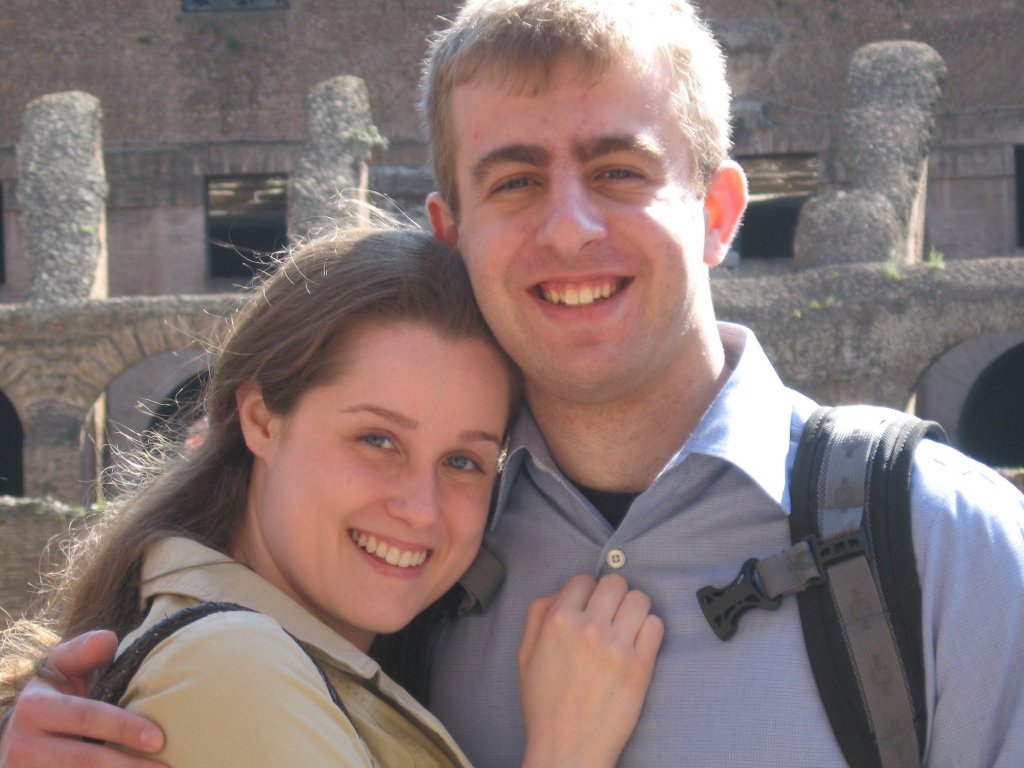
On My Husband’s 37th Birthday

“Nothing prepared me for the privilege of being yours.” – Sleeping at Last, “Turning Page”2

What you have to understand about the way I love Evan is that I am desperate for him. I can’t shut up about him, and I don’t want to. People say that the sign of a strong relationship is that it doesn’t appear on social media because the couple has nothing to prove. That makes me laugh because I am not writing about Evan for you. The truth is, I’m obsessed with my husband.

He is my laughter and smile and safety. He is the oxygen filling my lungs, yet he snatches my breath when I catch sight of him unexpectedly. When I fell in love with him, I felt like my real life had finally begun. I understood everything, who I was and what I could be with him beside me.

It feels like this: my heart beats him out, and he saturates every river of my blood until he marinates each cell. That’s not pretty language. It’s science, a completely accurate description of a biological phenomenon that I live every single day.

He is absolutely brilliant, an avid reader of Russian literature and history books that dwarf encyclopedias, relaxing by cruising biology journals. He also does hilarious impressions. I especially love when he puts on my glasses and becomes John Lennon. He is, in my correct opinion, the best caregiver in the world. I will always remember him telling me, “Stop saying you’re sorry. You don’t need to add qualifiers. I love you, and I’ll do whatever you want.”

My mom once said to Evan, nodding towards me in my hospital bed, “I know how this would have gone without you. She wouldn’t be alive.”

He looked at the floor and said, “I don’t want to think about that.”

Evan, you are why I fight. Happy birthday, darling.

On our honeymoon in Rome.

Can AI Voice Cloning Be Used For Good?

Photo by Polina Kovaleva on Pexels.com

I’m pleased to present the link to the story for which I was recently interviewed, “Can AI Voice Cloning Be Used For Good?” by Kaleef Starks, Mark Armendariz-Gonzales, and Clera Rodrigues. The interview focused on the changes ALS has caused in my communication, as well as my experience with AI voice cloning and preservation. To read my full interview, click the book icon on the left. It’s under the heading, “Rachel’s Story.” Enjoy reading!

My California Kitchen

Photo by Ella Olsson on Pexels.com

This piece is about the last summer I could eat before losing the ability to chew and going on a feeding tube.

Summer in Amber

We held that whole summer
In our strawberry sticky hands,
Trapped it in our tiny kitchen
Where sunbeams tangled with our legs
Around too much furniture,
Each piece an island
Of earth-born treasure:
Paper cartons of berries on the unfinished wood cart,
Artichokes and avocados, mangoes, tomatoes, and ginger roots
On the battle – scarred table.
Sometimes a lone carrot
Hid from our merciless knives.
We hid from the diagnosis that confirmed,
Even scheduled, my end.
During those hours, our fears dulled to hum as
We took turns navigating
The narrow channels of the archipelago,
My hips and your feet too wide to sail in tandem.
We worked on recipes and honesty,
Rushing to use all the food before it spoiled
Sharing fragile secrets before they
Rotted us.
September stole those golden months away,
Leaving us gripping memories of
Overflowing brown paper bags from the local farm,
And hanging baskets by the window
For pounds of onions, beets and sweet potatoes.
They’d spent long enough underground
Dreaming of the sun.
Best of all, I imagined
The round prints of your toes
On the flour-coated floor:
Our very own happy paths.

Every Breath You Take

“Every breath you take just proves how blessed you really are.” – John Landry

“This is Rachel Doboga’s ventilator just after starting the nebulizer, and her oxygen is dropping to 95, now 93,” Evan says, holding his phone up to film my ventilator readings.

He stops filming and turns off the nebulizer.

“My head is on fire!” I say.

“I’m sure,” Evan replies. “Your oxygen just dropped to 89. How are you feeling? Are you catching your breath?”

I blink, my signal for “yes” and “good.”

“Hopefully this video will help the pulmonologist,” he says, putting the phone down.

I am having daily migraines because of the nebulizer, a machine that pumps medicine into my lungs. Tuesday morning I just couldn’t handle the feeling of suffocating. I felt like I was dying and at the same time I wanted someone to end the suffering and kill me. Fortunately, Evan and my nurse figured out that this was not just anxiety, that something really was wrong and I wasn’t getting enough air. Times like these make me think of Lou Gehrig and all those who came before me. How horribly they must have suffered being deprived of oxygen.

I’m in a classic Catch 22 situation. I need the medications the nebulizer delivers to my lungs to breathe, but the nebulizer literally takes my breath away. Evan made an adjustment on the machine that helped, but I still get short of breath and have migraines. Today we had to stop because my oxygen dropped to 92. Now we have to solve the mystery of why this is happening. We have tried every possible combination of 2 different nebulizers with 2 different ventilators, and no matter what machines we use, my oxygen drops.

In the meantime, I have to ration my imitrex, a drug that helps with migraine pain, because I only get 12 pills a month. Originally it was 9, but my provider at the ALS clinic fought insurance to get me more. She’s an amazing advocate.

Lots happening. My ventilator was dying so I got a new one and a backup. However, the settings were wrong so the machine forced me to hyperventilate and I passed out. While I was out, Evan had a video conference with my pulmonologist. Now we’re slowly adjusting the ventilator to get me to a healthy place. We have 3 days left of titration. My husband is amazing. He’s managing the process.

I do have some good news. My provider and I discussed the amount of meds I’ve been stacking to get through trach changes – the number is 5 – and decided it would be best if I could just have 2 medications – a painkiller and something for anxiety. She wrote me a prescription for a painkiller, but I asked her to give me just 4 pills. That will last me the rest of the year for trach changes. I told her I don’t feel comfortable having more than that in the house.

I have great support, but I could really use all the prayers, crossed fingers, and good vibes I can get!

Eight Years In…

Photo by Hakan Erenler on Pexels.com

Eight years ago on June 8th, I was diagnosed with ALS. At diagnosis, I was given 2 – 5 years to live. We all are. I was just 28 years old.

After my diagnosis, I immediately said goodbye because that’s what I was told to do. I was told there is no cure for the monster that had taken over my body, my life. I posted something on Facebook to the effect of, “I’ve just been diagnosed with ALS. Thank you all for being a part of my life.” I didn’t know there were other options, that even without a cure I could fight.

My fantastic ALS clinic connected me with the local chapter of the ALS Association and suddenly I had a power wheelchair, a Tobii eye gaze computer, and a cough assist machine, and I was trained to use it all. I had many long conversations with my neurologist, pulmonologist, social workers, husband, and family, and decided to go on a ventilator when the time came. I’m now a bedbound quadriplegic on life support and survive on a feeding tube. I’m very lucky because I live at home despite my high needs. My husband Evan works tirelessly, seeing to my every need. He is the reason I fight. I would do anything to stay by his side.

When I was diagnosed, we were about to start a family. I can’t have kids so we were researching adoption agencies. We decided to adopt siblings because they are hard to place. I even made a Pinterest board with resources for adoption and raising creative, resilient, grateful, vegetarian children. I also had a list of 27 parenting books we were planning to read together. We were going to be READY, but you know what they say about the best laid plans…

Eight years in, I’m starting to forget what it was like to speak and move. I guess it’s for the best since I will never talk or walk again. I remember certain things, though, like playing Who’s the Judge with my family at the kitchen table after dinner. We would sit in a circle and when it was your turn, you said a silly phrase in an even sillier accent. Everyone else had their eyes closed and would try to guess who the speaker was. Looking back, it was a ridiculous game. It was only my parents, sister, and me so it was easy to tell who had spoken by location alone. Plus, we always took turns in the same order. We all had fun, though.

I remember the first time I spoke Russian in Russia and someone understood me. It was like the best magic trick ever. My first words were to the taxi driver bringing me from the airport to my new home for the summer.

“I’m afraid,” I told him.

“Why?” he asked.

I explained I was worried the door to the apartment wouldn’t open. He promised to stay until I got inside. The magic trick worked.

I remember dancing with Evan with my Walker between us in the living room, his strong hands firm on my hips keeping me safe as we swayed softly, softly to Frank Sinatra. No more swing dancing for us. In our first Ice Bucket Challenge, Evan said, “I’m doing this so I can dance with my wife again!”

I remember dancing with dad on his feet in a living room across the country 30 years ago, usually to something loud like Eric Clapton. “Layla” was my favorite because every time it came to the part where Eric Clapton sings, “You got me on my knees Layla!” dad would set me down and fall on his knees in front of me.

These losses don’t hurt anymore unless I focus on precise moments I’m able to fish out of the murky depths of my memory. I have learned better than to do that. They only ache now.

I miss my old self, the creative, playful teacher, the fossil hunter, the singer, the traveler. I’m reminded of the lyrics to “Summertime Sadness” by Lana del Rey: “Think I’ll miss you forever like the stars miss the sun in the morning sky… Even if you’re gone I’m gonna drive!”

I don’t want to marry Edgar Allan Poe!

By Rachel Doboga

Photo by Tyler Quiring on Unsplash

Alright, here’s the scoop. In early March, we knew one bacteria had colonized my lungs, meaning it will never go away. We just have to manage it with hour-long nebulizer / breathing treatment sessions in the morning and evening, and I have to do regular tests. We also knew that a second bacteria was present.

The secondary infection worked very fast and by the morning of Monday, March 6th, I was coughing up blood. My first thought was, “I don’t want to marry Edgar Allan Poe!” His wife died of tuberculosis, and so did his mother. Talk about trauma! Did I mention I was an English teacher before ALS? I digress.

I got my bactrim fast and my awesome primary provider at the ALS clinic fought insurance to get my tobramycin. Slowly, blood clots replaced the fresh blood. I don’t understand why, but at the height of my illness I experienced paranoia and severe nightmares. I even hallucinated there was a tarantula on my stomach, but just as I was about to hit my alarm, it jumped down and skittered away. Evan very patiently explained again and again that the Pacific Northwest doesn’t have tarantulas, but I still am not sure… At any rate, my mind eventually cleared, though I am still recovering.

My pulmonologist is doing an in-home chest x-ray since I am bedbound (very cool!), a blood test, and I already had a sputum test. Sputum is the gunk I cough up, gunk being the scientific term. I was on bactrim and tobramycin for two weeks, and now I take tobramycin every other month preventatively to manage the bacteria that have colonized my lungs. Unfortunately, the second bacteria colonized my lungs as well, but I’m trying to stay positive and remember I’m in good hands!

And you won’t believe this, but those good hands at Pulmonary Critical Care just told me my sputum test came back completely clean – no colonization whatsoever! We’re still doing the nebulizer treatments and the tobramycin, as well as the chest x-ray just to be safe, but I don’t mind. I’m just ecstatic the bacteria are gone for the first time since October! Rejoice with me!

  • I can’t post comments or reply to them, but I can read them and I love them. Keep writing!

If you have fond memories of Rachel as a teacher in her life before ALS, or if a post on this blog has ever moved you, please consider making a contribution to Rachel’s out of pocket caregiving fees, medical expenses not covered by insurance, and transportation costs through Friends of Rachel. From your PayPal account you can donate to FriendsofRachelDoboga@gmail.com

On the Other Hand

2

It can be hard to “live my truth.” Just because I have had a revelation or realization does not mean I can instantly incorporate it into my lifestyle.

Especially because my hope just got a kick in the teeth. The latest bump in my pump did not work. This means more time on oral baclofen, which, remember, is heavily sedating. Being sedated is different than being fatigued because I can’t fight it. Chemicals overtake my body and my will. They rush through me, making me heavy, blurring my thoughts. I take baclofen four times a day. It knocks me out for two hours. Being unconscious so much hurts my mental health, relationships, writing, and hope.

I say “being unconscious” because being sedated isn’t always the same as sleep. I sometimes wake up fully rested, ready for an hour of activity before it’s time to pass out again. However, sometimes I wake up feeling like I have only been out a second. It’s disorienting to say the least.

Everyone, from caregivers to family, is overjoyed when I am awake, and they all want to see me. I should be flattered and feel loved. Instead, I feel pressured. Imagine if, as soon as you wake up, whoever is near you is full of energy and ready to play. When I wake up, all I want is a few minutes to myself to check my email, catch up with Evan, maybe send a few texts – all the things you do to slowly come back to the world in the morning. Because it is perpetually morning for me. In an ideal world, whoever finds me awake would express their joy, then ask if I need a few minutes. I think that would help reduce the pressure I feel and make me ready to fight through my discomfort like I decided to in my last post in order to be present for the people who love me.

I’m beginning to fear I will always need the baclofen, that the pump will never work. I honestly don’t know how much longer I can handle this. Choosing hope is harder with each failed bump.

But I know I will go on because I have no other choice. I have up to three years before my lungs fail, and even if I live like this, the time I steal with Evan makes any amount of suffering worthwhile.

The Sun’ll Come Out April 19th

3

I haven’t written a lot about the problem that has rendered me bedbound for quite a few months now. You may think you understand the severity of the situation. However, what you know is the tip of an iceberg that you soon discover is actually the edge of a glacier that is moving inevitably into the sea to raise and heat the ocean around you. In other words, you don’t know the full story. Yet.

The first two minutes of this video offer an explanation of what has been happening to my body.

The spasms affected me first in predictable ways, like decreasing my mobility and flexibility. Then my caregivers began to struggle to dress because of the extreme rigidity of my joints. Bye bye to my fitted retro clothes. Hello baggy sweaters. Maybe this doesn’t sound like a real loss, but when you have ALS, or even just live in a wheelchair, there’s already so little you can control about the way you present yourself to the world and the impression you make. A teal camisole under a blue tunic topped with a gold 1960s cardigan was my way of telling new people, “I may look kinda funny, and yeah, I need a computer to talk, but I’m happy and playful!” Those clothes made me feel like my old self. Losing the clothes was a stinging paper cut type of hurt: sharp, yet invisible.

Soon, the effects of my spasms took unexpected, dangerous turns:

– I spasmed in my shower chair and nearly fell. I would certainly have broken a bone since my limbs were locked.

– My jaw clenched so hard that I can’t brush my teeth anymore. This put me at risk for more than cavities. Dental hygiene is a first line of defense against pneumonia, which is all too often fatal for people with ALS.

– I became bedbound because moving me became too risky with how violently I shake. As a result, I am vulnerable to circulation problems, bed sores, and serious mental health issues.

I am now officially on every antispasmodic and pain medication my mind can handle. I had another one, but it causes nightmares so violent about the pets, I am haunted by them. I can’t even tell Evan, that’s how bad they were. Still, despite all the medicines, my spasms are so bad that I even sense them in my dreams and wonder why my dream body is shaking. Other people in my dreams avoid me because they are afraid or judgmental. The new medicine disturbs me. I wake up suddenly because, for example, I hear a crow and see it rushing at me out of the dark with the face of a human. I also have a black owl with raven feathers who guides me through the dark forest that is now my dreamscape. (clearly, I’ve been reading too much Rosamund Hodge). I wake up in pain, exhausted, and breathless.

I wasn’t supposed to get to this point. My doctor recommended that I have a Baclofen Pump implantation eight months ago, which my insurance denied immediately. So began an epic struggle with my insurance on one side and my doctor, the amazing team of nurses at the clinic, and my mom fighting valiantly on my behalf. Guess who finally won? Are you guessing the good guys? I can’t see you. You should be guessing the good guys.

BUT BEFORE THE SURGERY… I needed to do a successful Baclofen Pump trial.

The trial will look like this. No needles are actually shown in the video, only syringes, the tubes that hold medicine at the top of a needle. There is no blood. You can safely watch this while eating lasagna and your weak little tummy won’t so much as turn.

The trial was four hours of pain, but I got through it. Evan was with me, and Evan makes all suffering 50 – 75% better according to the latest study in the Harvard Medical Review (2017 Nov. Volume 4). The pain wasn’t caused by the needle in my spine – been there, done that – but by the fact that I can’t have any baclofen – my main antispasmodic – before the procedure, and it took four hours for the baclofen pumped into my spine to take effect. That meant four hours of spasms so intense that my whole body shakes and cramps, my jaw rattles, my teeth start chattering so wildly that I actually chew skin off my lips, and I beg Evan to cut off my limbs (usually starting with my right arm).

It was worth it, though, because it worked. The trial worked.

I forgot how luxurious it is to feel comfortable in my own skin, and after April 19th, the date of the surgery, I will feel that way all the time. the other side of the surgery…

I imagine that’s where sunshine lives, the daylight outside my bedroom window that I so long for. It’s where holding hands with Evan on the back porch watching the dogs play has been waiting for me, and so too the quiet scent of the poetry paperbacks in the last aisle of the Blue Room at Powell’s City of Books.

On the other side of the surgery is everything I love and live for, and I am overjoyed that I will have it again.

I will keep you posted on the events around the surgery. For now, start around minute two where the pump first shows and stop before the explanation of side effects to gain a better understanding of how the implant works.

https://www.youtube.com/watch?v=IeS-Wr4iz

Draw on the Magic of New Years to Improve Your Health (Even if You Have ALS)

2

3

I have never really been one to get excited about New Years. Early on, my mom instilled in me a lasting fear of the hordes of drunk drivers careening about all night. I am now 30 years old, and to this day, I have never been to a New Years Eve party I couldn’t walk to. I will probably continue this habit for the rest of my days because no one can prove that it hasn’t saved my life.

Rachel does a Sparkler Dance

2006 ; The acceptable distance to a New Year’s Eve party = My front porch

As for New Year’s resolutions, I remember my dad saying every single year, “I don’t see the point of making resolutions. If you need to make a change in your life, don’t wait. Do it immediately.” This advice, combined with my perfectionist tendencies, made me a reflective, proactive individual.

Lately, though, I have been thinking about the value of making resolutions. I still agree with my dad’s advice because, frankly, if you’re only taking stock once a year, you’re not living your best life. However, when everyone around you is examining their lives and discussing changes they want to make and goals they want to set, a uniquely supportive environment forms. If you randomly tell someone at any other time of year that you want to be better about keeping in touch with family or watching less TV, you just don’t get the same reaction as you do if you share those goals as resolutions around New Year’s. This time of year lends gravity to decisions. It signals that this is a Big Deal to you, which can elicit bolstering enthusiasm from your social circle or prompt advice and conversation. Best case scenario, you may end up with a resolution buddy who loves your idea and hops on board. Having someone to help you through rough patches, prevent backsliding, and celebrate successes with can make all the difference in the world.

Because mental health is on my mind more and more, I have been thinking about what gets me down, what triggers my depression and PTSD, and how I handle (or more accurately, don’t handle) stress. I began research new-to-me ways to improve my mental health and maybe even my physical health as a result.

3

This NY Times article offers suggestions on ways to be healthier in 2018 that even those of us with ALS can try. The ones that appealed to me the most were:

  • GETTING BETTER SLEEP 147154 – There is a LOT of information on this page. It is divided into five sections, which you can navigate by clicking on the submenu text immediately beside the title in the black bar. Or you can just hit the down arrow. I especially liked “How to Wake Up,” which is nested under the section called “Morning Lark or Night Owl.” (See what I did there? Nest? Lark? Owl? You’re welcome.)
  • CONQUERING NEGATIVE THINKING 151155 – The art of acceptance is a tough one to learn, but if I want to stop the cycle of dark thoughts that keep me up at night, I better start learning.
  • REDUCING STRESS 151156 – Whatever your anxious little mind likes to obsess over, from relationships to your health, there’s something here to help. Now the key is not to stress about reading this whole article.

One of the ways that the article lists to decrease stress on the body and mind is yoga. That may seem impossible for many of us with ALS, but chair yoga is real thing. I recommend exploring video guides on YouTube by searching “gentle chair yoga,” which will yield countless results. I especially enjoyed this ten minute wheelchair yoga video. The neck stretches felt heavenly (using the Tobii requires me to keep my head very still, and after a few hours of writing, I get vicious neck cramps).  I could not actually do most of the movements because I can barely move my arms, but I think a caregiver could help me. I’m super excited to see if I can get in Eagle Pose. Before ALS, that was my favorite way to ease back pain. Note: it  is important that you do close your eyes when the instructor tells you to. This will allow you to focus on the sensations of the practice.